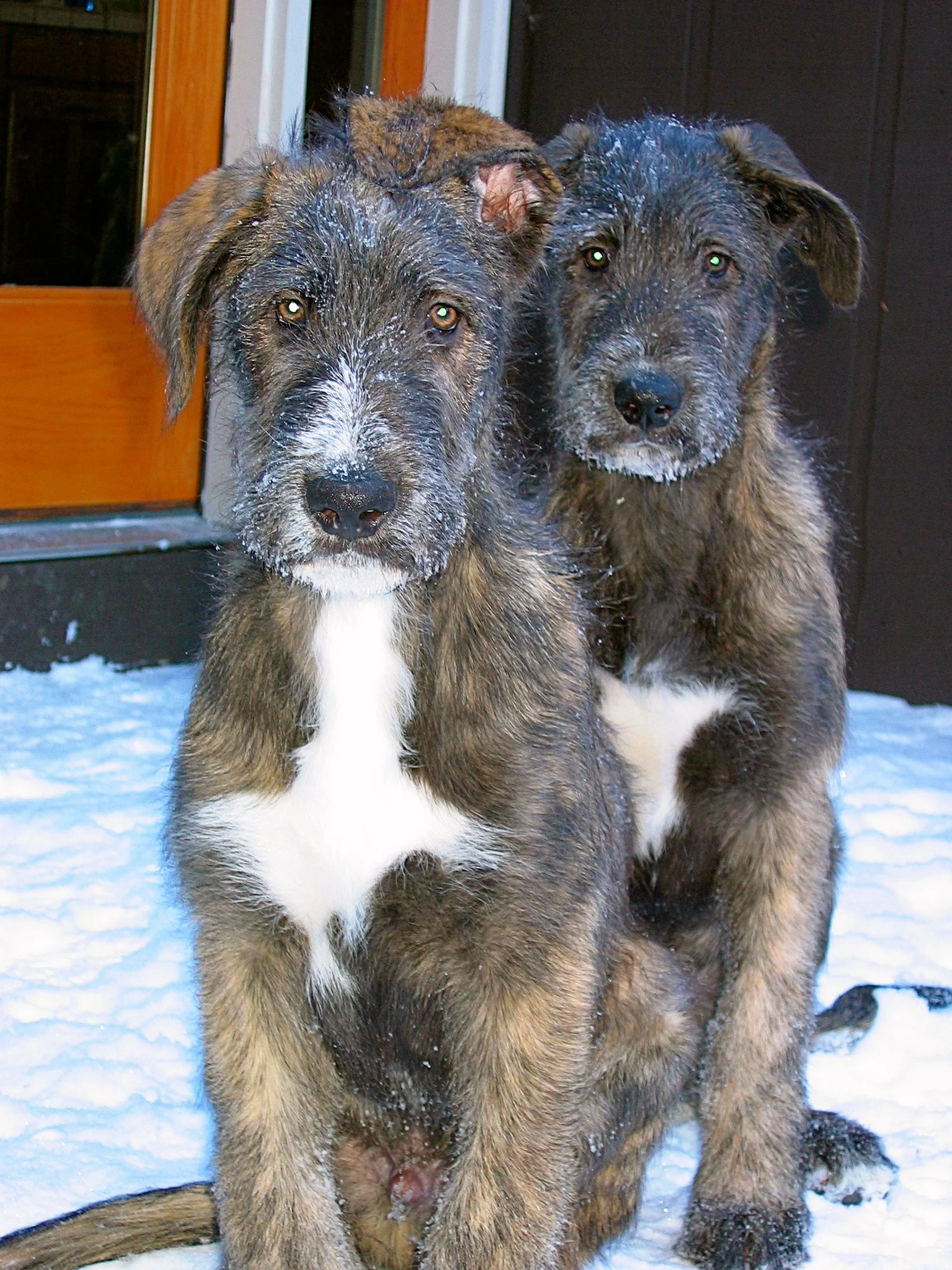
Irish Wolfhound Puppies & How To Find a Breeder
If you are looking to obtain a puppy, please submit the Irish Wolfhound Puppy Questionnaire. Please know that I receive many queries regularly, and it may take some time to respond.
Attention
Before you submit the Questionnaire, please be aware that prospective IW owners MUST own a MINIMUM of one acre of land to have a wolfhound. Of this one acre, at least half an acre (not including the home) must be unwooded and fully secured, which is necessary for galloping, stretching, twisting, and turning. We will not consider any home with less than a MINIMUM of one acre of land.
IW Puppy Buyers Beware
It is difficult to believe, but we are aware that many disreputable individuals are placing Irish Wolfhound puppies at 8-9 weeks of age now. As a puppy buyer, you need to understand that these actions are abhorrent, intolerable, and likely to cause problems or have adverse consequences for new owners. Why?
-
12 weeks or even 15 weeks. Irish Wolfhound puppies require the constant interaction, socialization, stability, and reprimanding that littermates and their Dam provide. Lacking this litter socialization can permanently affect a dog’s behavior. Temperament is one of the most crucial characteristics of a giant, hunting Sighthound, one who is extremely athletic and powerful. Any Irish Wolfhound MUST be well-adjusted, confident, and sound in mind, body, and soul. If not, there could be grim consequences in the future. An 8-week-old IW pup has NOT yet received all the benefits of these now lost precious influences and processes of learning. The socialization that occurs with the Dam and littermates up to 12-15 weeks teaches the puppy how to play, along with meaningful limits of acceptable or tolerable roughhousing, to name just a few invaluable lessons.
-
If a pup is removed from its litter and placed at an early age of 8-weeks, it can suffer the consequences of early disconnection, detachment, and be prone to separation anxiety and many other serious behavioral issues. Please read my Blog article "Prospective Wolfhound Puppy Buyers Beware" on this subject to understand more about this utterly unacceptable and very risky practice of placing pups at 8-9 weeks of age.
-
You should understand that Irish Wolfhounds mature, physically and mentally, at a different rate than almost all other breeds. Despite their phenomenal physical growth over 18 months, their mental maturity is much slower than that of other breeds. I do not refer to intelligence, but to their mental development from puppyhood to adulthood with its wisdom, sensibilities, and discrimination.
-
It is unethical to place a wolfhound puppy at the age of eight weeks. This act is unconditionally unacceptable for a giant breed Irish Wolfhound, which is underdeveloped — both mentally and physically -- at such an immature stage. It is paramount that Irish Wolfhound puppies are well socialized and spend quality and quantity of time with their Dam and siblings. For other long-standing, conscientious breed guardians and me, it is inconceivable to place a wolfhound puppy before ten weeks of age. Personally, I DO NOT release any Wolfhound puppy before 12 -15 weeks of age. Read more of my popular Caveat Emptor Blog article here.
Unethical Breeding of Older Females
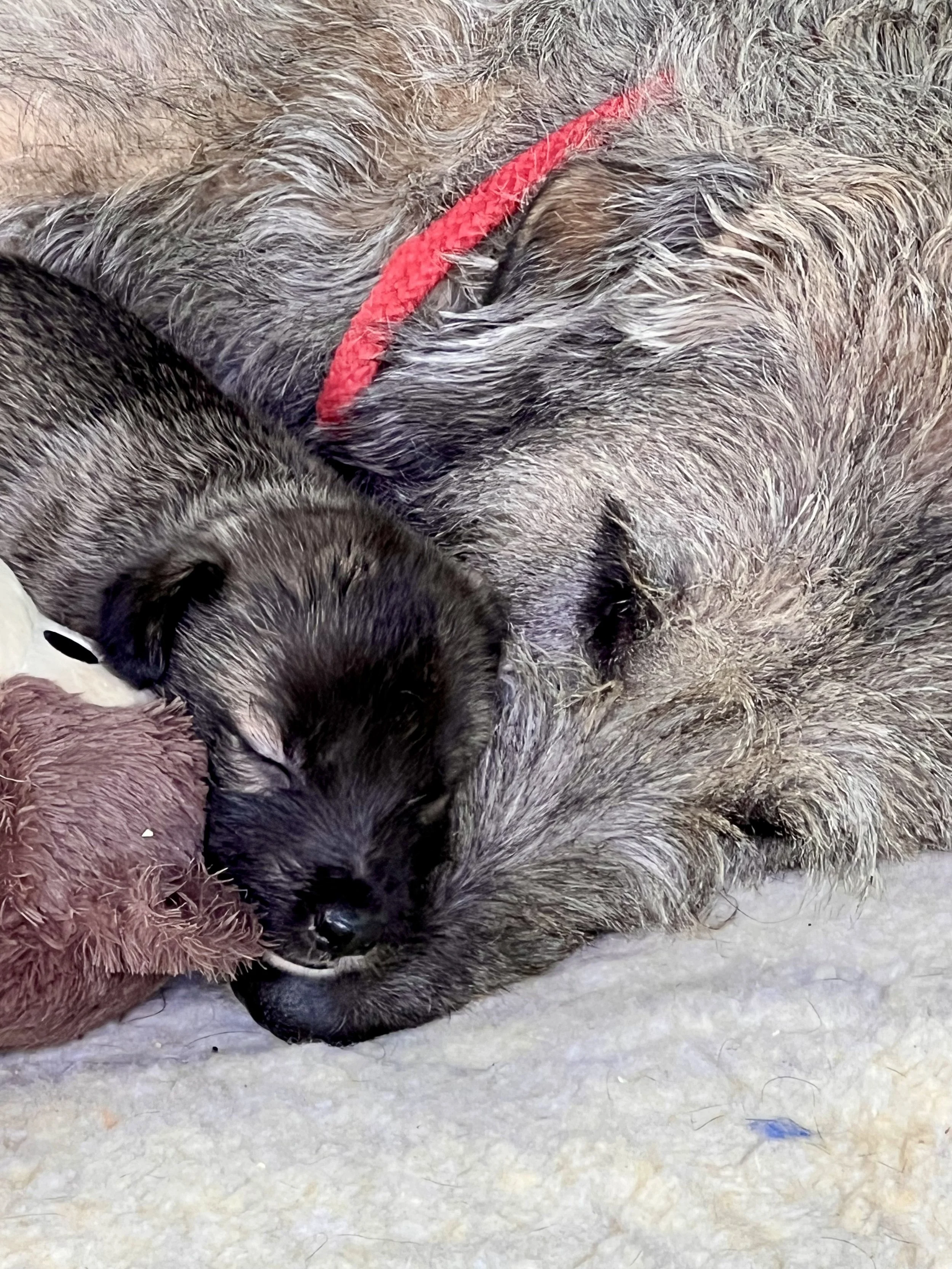
The Unethical Breeding of Older Females by Dog Profiteers and Substandard Breeders
Comparing a private, ethical breeder to a dog profiteer, mating dogs. The age at which a female Irish Wolfhound should be bred, as stated in The Standard of Behaviors for Breeders, is:
"Breed only those bitches that are in excellent health, generally between the ages of 24 months and 6 years."
An unprincipled breeder or dog broker whose primary concern is profit will breed an older Irish Wolfhound dam, 7 or 8 years of age, regardless of the possible harm and danger to the female wolfhound. The reality is that wolfhounds are considered veterans at 6 years of age in the U.S. and Canada. In foreign countries, the Veteran age is reached at seven years.
Breeding an Irish Wolfhound female at such a veteran age is rarely done over the age of 6, except for exceptional circumstances and only by highly experienced, seasoned breeders. Those would include a Dam who previously whelped a litter (no more than twice in her lifetime), who was a superb instinctual mother, and who had excellent health and vigor. Even then, doing so at this age is rarely done and only to perpetuate a specific and jeopardized bloodline by the "old-guard" breeder.
The Tragic Exploitation and Commercialization of the Irish Wolfhound Breed
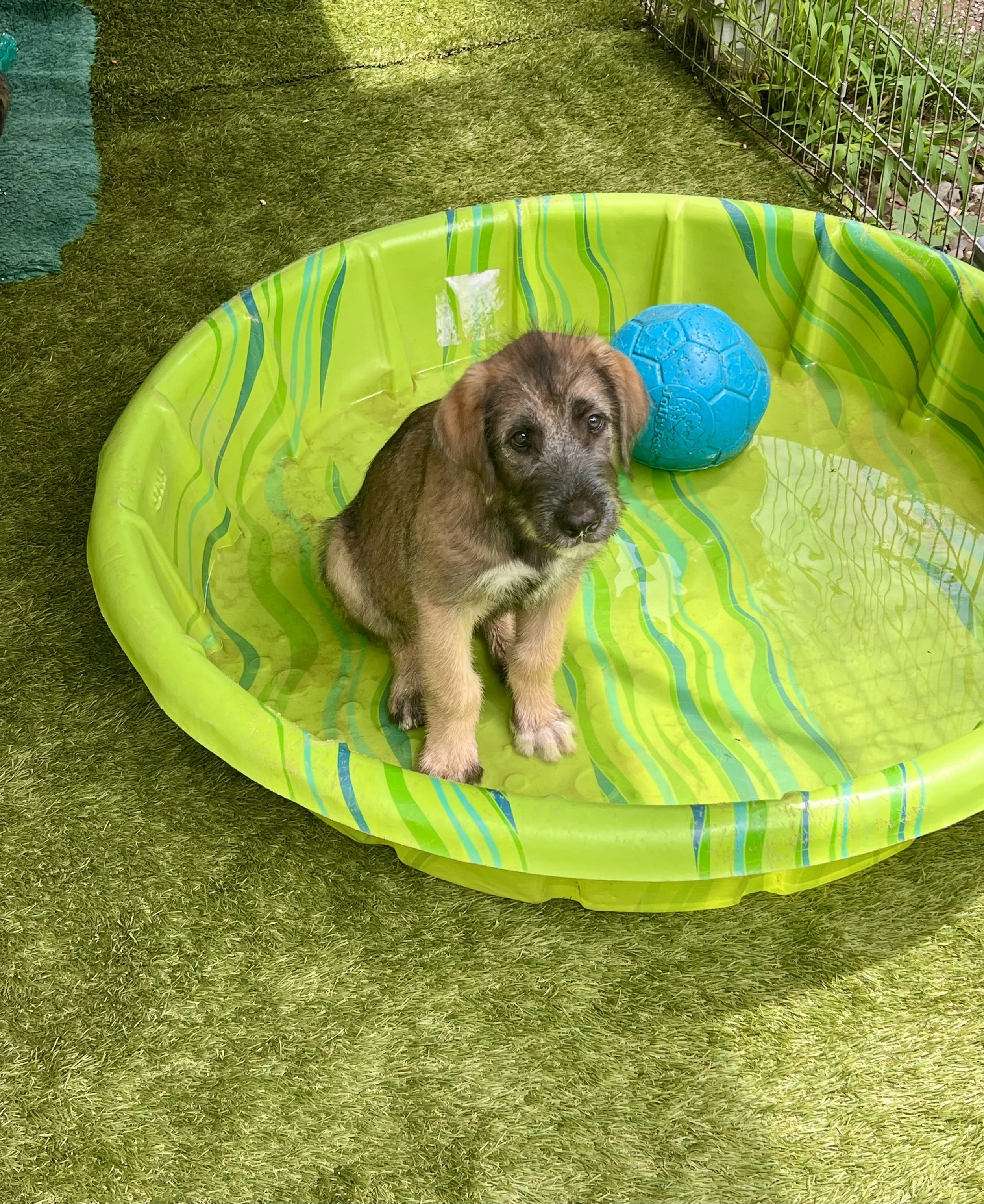
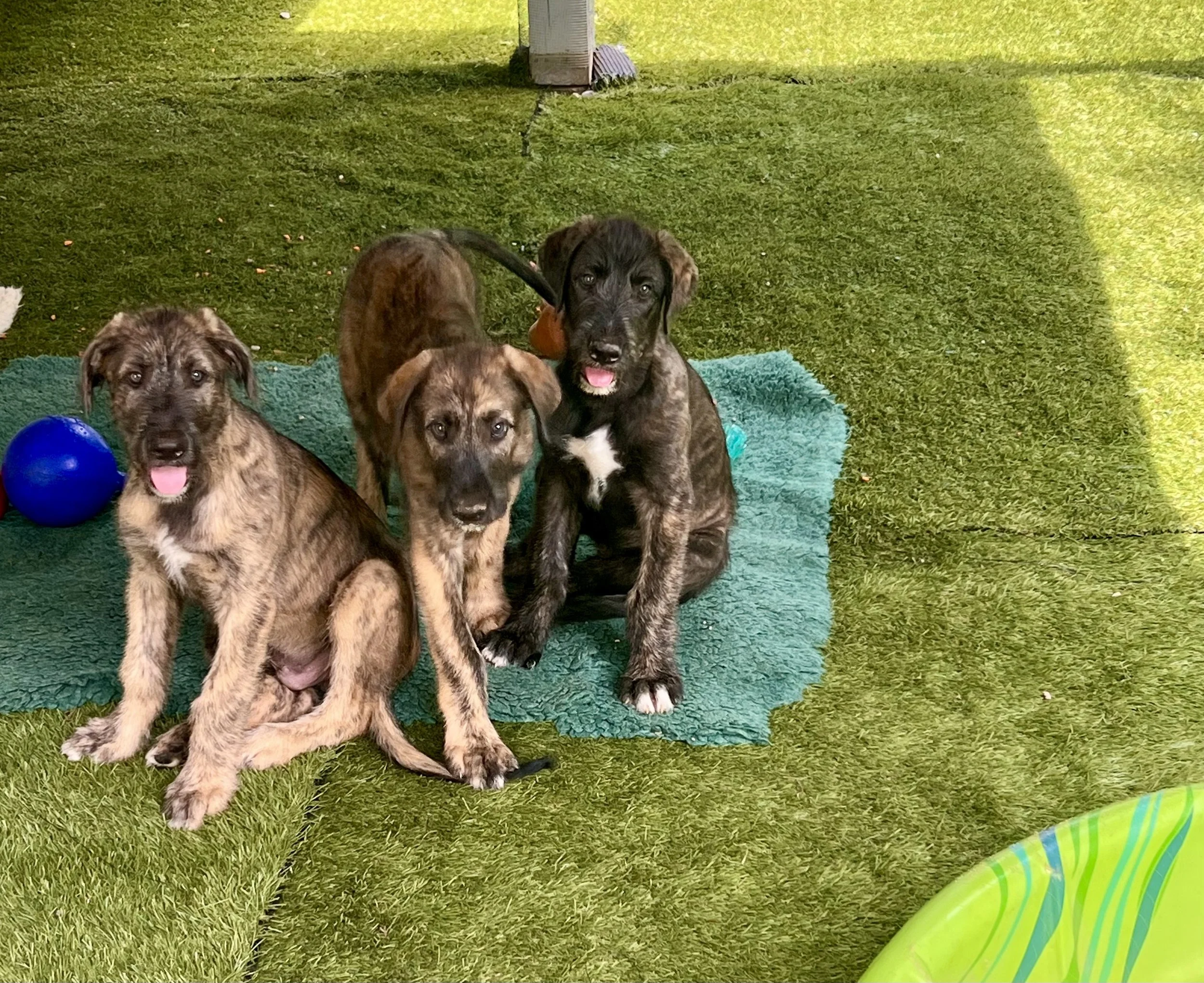
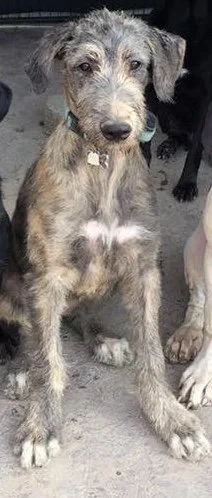
Example of a likely mixed-breed IW puppy selling as a purebred IW for $3,500. Note its poor pigmentation, the twisted foreleg (an angular limb deformity due to poor nutrition and/or premature growth plate closure)
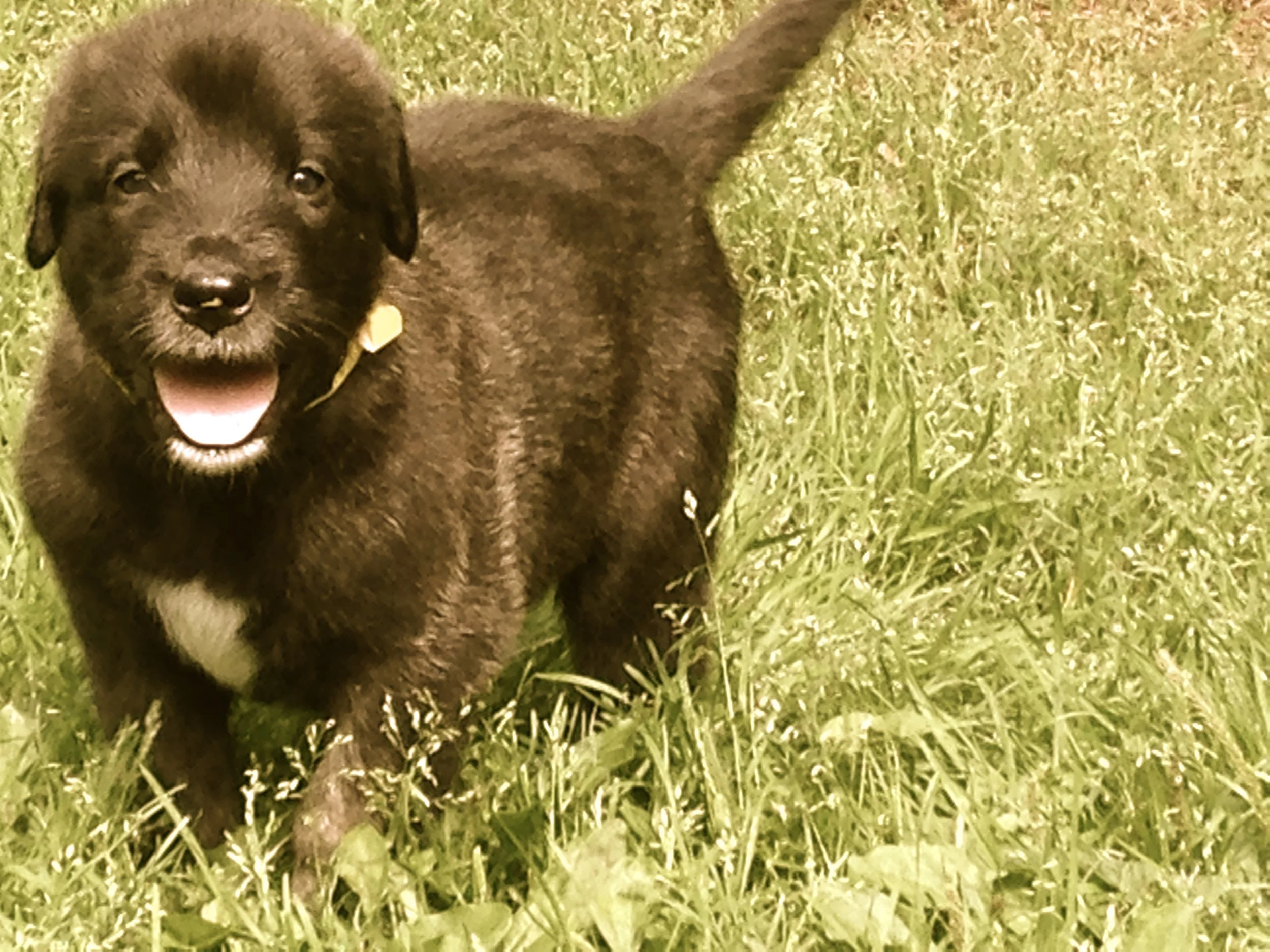
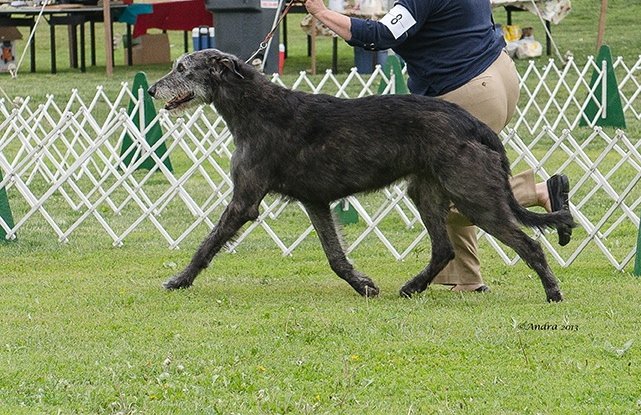
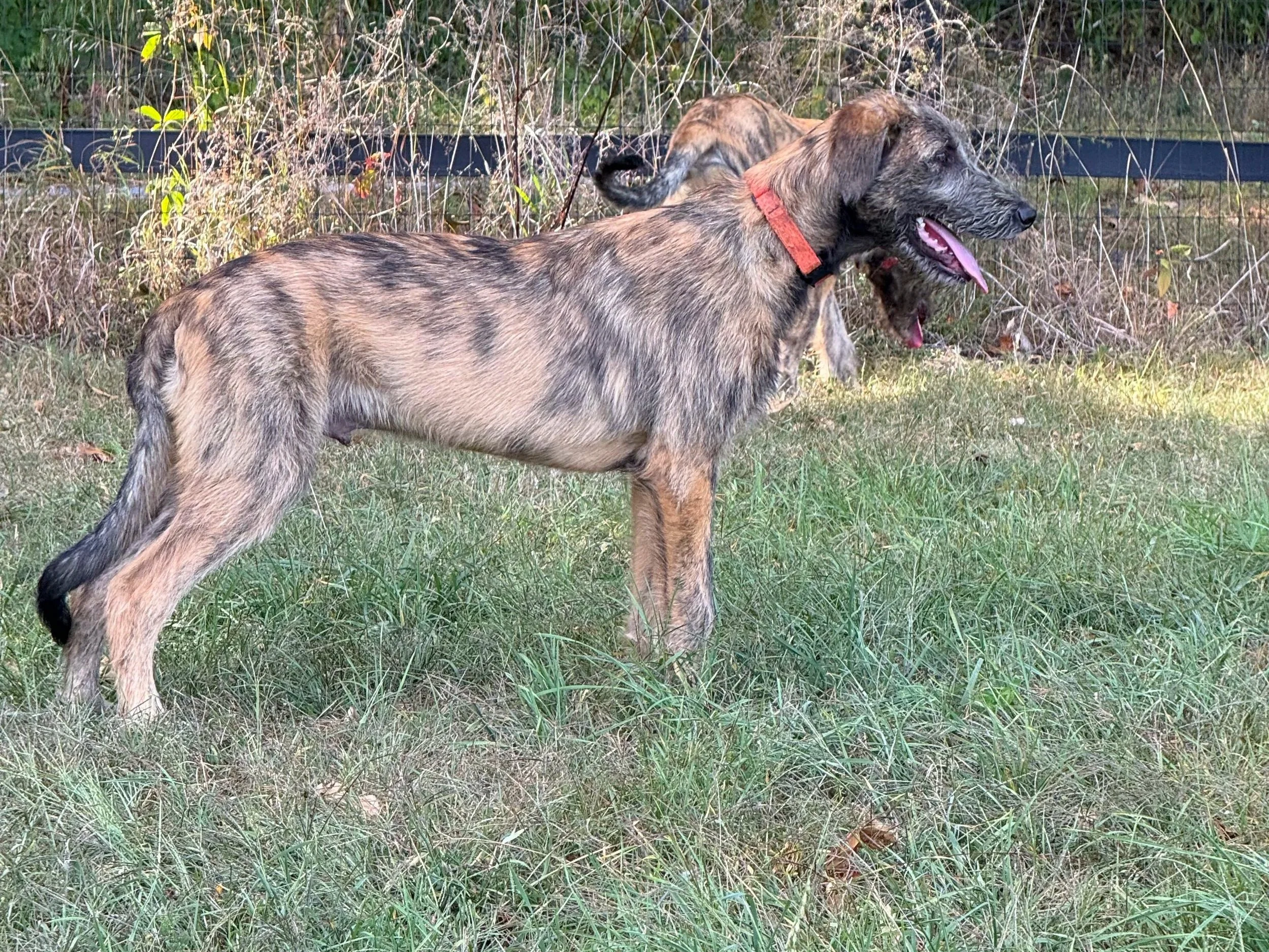
In comparison to a healthy, beautifully purebred IW of a similar age.
Breeder John Doe (not his real name, but the story is true) advertises puppies under the kennel name XXXX. His first Irish Wolfhound litter was in 2018, and he has had six wolfhound litters in total. Since then, he has bred one litter of Irish Wolfhound/Great Dane mixes, two litters of Great Danes, three litters of German Shorthaired Pointers, and three litters of Wirehaired Pointing Griffons.
15 litters in less than eight years. John Doe’s puppies were sold at eight weeks old, regardless of breed, which means that no Liver Shunt Bile Acid tests have been performed on the IW pups. No indication that health tests have been done on the sire or dam. They claim to be a family-oriented business that has bred Irish Wolfhounds since 2017. John Doe lists many happy buyers.
Buying An IW Puppy?
-
Never purchase a puppy over the Internet or on the phone. The Wolfhound has become a favorite victim for dog brokers and profiteers due to its appearance, size, nobility, and gentleness with people.
Honest, well-respected conscientious breeders are aware that there is an increasing number of fraudulent people mating Irish Wolfhounds and selling puppies. They are calling themselves "Breeders"; however, do not be fooled. Highly motivated by profit, these indecent racketeers are only Dog Brokers mating dogs for financial proceeds. Some may produce just a few litters over time, but the majority produce several litters annually.
Typically, these Dog Brokers have minimal knowledge or concern for the IW breed's major health concerns, nor the disease's ancestral genetic mode of inheritance. They have little interest in phenotype and correct skeletal structure, nor do they breed for longevity and temperament. They exploit the Irish Wolfhound breed's essential goodness and famed disposition for profit, with one or more exclaiming that they quit their full-time employment because they were making so much money selling IW litters!
Typically, Dog Brokers or Backyard Breeders have substandard breeding programs. They lack selective specimens, and they will use unethical breeding customs and policies. Beware slick websites marketing IW's! Verify the authenticity of the Breeder by asking for references and doing some research on them. Please read through the broad sample questions I provide within the section, "When interviewing a Breeder.....". Decide on several questions to ask the Breeder before committing to any new puppy.
Remember, not everything promoted on the Internet is what it seems. Consider a website showing Wolfhounds running through green fields and IWs lying around on dog beds inside someone's home. Sounds idyllic, but in many cases, these websites are deceptive. I receive phone inquiries from people who have visited such locations and go on to describe entirely different environments. Many savvy Dog Brokers employ Search Engine Optimization (SEO) and keyword marketing to increase their visibility so they can rank higher in search results. They also attempt to blend in with respectable Breeders websites. Brokers usually provide manufactured or ghost testimonials from previous puppy buyers, and on occasion, if a smart Buyer attempts to speak with a reference, it can be a "set-up."To increase the Broker's credibility, several promote that they are members of one or more Irish Wolfhound Clubs, they require puppy purchase sales agreements, and proclaim that they place their pups at 10-12 weeks of age. But do they?
Because of my popular website, I have heard, first-hand, stories from duped Buyers. For example, a puppy buyer interviews a “Breeder” who initially states that all puppies go to their new home at 12 weeks of age. The puppy buyer commits to this Breeder (usually requiring a deposit), and the Buyer anxiously waits for that time when they can pick up their long-awaited IW puppy. Unexpectedly, when the pup is approximately 8-weeks of age, the puppy buyer receives a call from this so-called "Breeder" who is saying there was an emergency (illness or death in the family) or yet another pretext, and that the Buyer needs to come and pick up their 8-week-old puppy, immediately. If not, the puppy must be sold to another buyer, and the Buyer may or will lose their deposit!
Yet another scam that I am aware of is the above scenario combined with the "bait and switch." One case involved a puppy buyer who visited her chosen “Breeder” and their breeding operation. The Buyer reported that they were permitted to pick out a male pup at around four weeks of age (something nearly all reputable Breeders would never allow), and the Buyer discreetly took photographs of that puppy. The Buyer kept in touch with the Breeder while the young pup grew and made plans for both she and her husband to return to pick him up at 12-weeks of age. One day, she received a call from the Breeder who announced that they had to go out of town, unexpectedly, and she, the Buyer only had a small window of time to arrange to pick up their puppy. The baby pup was only eight weeks of age. The Buyers arrived after a 12-hour drive and, curiously, saw that there were many other puppies still present. Wasting no time, the Breeder handed them over a female puppy, to which they reminded the Breeder that they were getting a male. Then the Breeder handed them a male pup. The woman who had previously taken photos of her chosen male pup stated this was not the puppy she selected. The Breeder argued, telling her she was wrong. The woman revealed her photos, which depicted a different male pup, and only then did the Breeder relent.
What really happened? Firstly, while dealing with a Breeder who is well-respected and conscientious, it is common practice for that Breeder to pair a puppy with their new owners based on personality and lifestyles. For example, some IW pups may have a more sensitive or quiet personality who would not flourish in a busy, noisy environment with children. But pairing does not appear to be a motive in this incident — it could potentially have been a "bait and switch." Not a conventional bait & switch for "buying up" to a higher-priced puppy, but rather, a substitution of a lesser quality puppy from a litter that was neither displayed nor shown to the Buyer on their initial visits.What typically happens is that on their first meet & greet visit with the Breeder, the Buyer(s) are originally shown a Dam with a litter of puppies who appear bright, active, of good weight, and having outgoing personalities. However, when the Buyer returns to pick up a puppy from this litter, they are unknowingly sold a puppy from an altogether different litter. One that the Buyer had not previously seen. These puppies may be of lesser quality in vigor, substance, shape, soundness, and personality. I have even heard of a Dog Broker who put the same Dam in with another female's litter to perpetuate the scam.
On occasion, a savvy Buyer may sense something is afoot. The Dog Broker or Backyard Breeder claims this was the same litter the Buyer viewed previously, saying that all IW puppies’ coat color will darken or lighten, and that pups experience growth spurts, which will affect their weight, and that pups’ personalities can go through phases. Some of what the Breeder said is correct about coat color, and growth stages can affect the distribution of weight, but 12-week-old IW pups are usually well-rounded and not thin. Regardless, the puppy(s) being sold are not from the litter the Buyer was initially shown. Perhaps they are not as active and bright, nor as friendly, nor as plump, have dull coats, and have eye discharge, and are somewhat sluggish.Since most Buyers are at a disadvantage because they generally cannot gauge and identify puppies' apparent weaknesses, nor can they rate a litter's overall quality, they do not listen to their gut telling them that something is wrong or different. Determinedly, the Buyer is emotionally committed and purchases the puppy.
When I am finally consulted, the new IW owner is frustrated with the health issues and is very worried about the behavioral problems they are observing as they rack up huge veterinarian bills. The Breeder will not return their calls for help, or often will feign ignorance about ever having that health or temperament problem. For me to assist these people, I ask for all the details surrounding the purchase. The common thread in each story is that they picked up the puppy at 8-9 weeks of age. The second most prevalent common denominator is that the Buyer did not research the so-called “Breeder’s” reputation and level of experience within the reputable IW community.Lastly, many did not even bother to visit the Breeder's kennel!
-
You should always visit the Breeder’s home and kennel to confirm that the puppies appear well-socialized in a pleasant, home environment. Expect or anticipate staying for one or more hours — not a 15-minute visit, and then being shown the door. Ask yourself if the breeder appears to have the disposable income to properly care for this giant, special-needs, high-maintenance Wolfhound breed, whose medical care, high-quality food, and exercise take lots of money and time?
Are the hounds well-exercised, and if they live in kennels, are the accommodations very clean without urine and waste odor?
Did you see the Wolfhounds being exercised while you were there?
Ask to see where the puppies are raised and inquire how long the Dam was with them?
Ordinarily, a well-tempered Dam will be patient and willing to mingle with their offspring. For example, my Dam’s hang out with their puppies even at 12-weeks of age onward. In contrast, I have received reports about a dog broker who sells quite a few IW puppies annually, who removes the puppies from their Dam at 2 weeks of age! Doing so is both outrageous and cruel, not to mention the detrimental effect on the temperament and personality development of such young babies. These could be ticking time bombs.
Unfortunately, Buyers such as yourselves are unwittingly supporting these immoral individuals with your money.
You must be your own advocate! The consequences for purchasing puppies from indecent, indiscriminate, disreputable people will follow you or even haunt you for years. Medical bills in the multiple tens of thousands of dollars for constant trips to the vet for issues such as repetitive diarrhea and IBD, skin & coat issues involving allergies, poor eaters, skeletal defects such as Elbow & Hip Dysplasia, Luxation of the Patella, Eye Diseases PRA and Cataracts, Cranial Cruciate muscle tears requiring very expensive surgeries, concerning behavioral issues and so on. Even if you have Pet Health Insurance, you have an annual limit or cap that the insurance policy will cover. You could reach your cap in two days with a giant breed. I had an IW owner contact me for a pup after he lost his best buddy to Bloat, and the Veterinary Bill was $16,000! (More on Pet Health Insurance Under Typical Expenses or Breed Health Concerns
-
First, familiarize yourself with the common health problems by reading my webpage, Irish Wolfhound Health Concerns. Make yourself familiar with Osteosarcoma, Lymphoma, Dilated Cardiomyopathy, Ventricular Premature Contractions, and Bloat/Gastric Torsion, which are the leading causes of death in our breed.
Ask what health testing the breeder performs on all the puppies? Breeders are urged to perform health testing before puppies go to new homes for diseases such as:
Portosystemic Shunt: Breeders should screen all of their puppies for portosystemic shunts using a bile acid test at approximately 9-10 weeks of age before the pups are placed in a new home.
A Full protocol Bile Acid testing includes:
*-pre-prandial Fasting blood test (blood sample is taken before feeding)
*-post-prandial blood sample test (blood sample is taken two hours after feeding)
Click here for critical information on liver shunt testing available in my Health Concerns page. Suffice to say that such testing should be performed at least 9 weeks of age, up to 16 weeks of age, and is customarily ALWAYS at the Breeder’s expense. It is NOT the new owner’s responsibility to screen their puppy.
Cardiac auscultation: All puppies’ hearts should be listened to by a veterinarian, using a stethoscope, to check for heart defects before they go to their new homes.
Ask to meet the mother of the puppies and, if possible, the father. Ask for pictures and health information on both parents and grandparents, and test results. Ask the following important questions:
Has the breeder continuously performed annual Advanced Cardiac Screening on all their hounds, especially the ones they have mated, by Board Certified Veterinary Cardiologists? Buyers should understand that screening and testing a Wolfhound just once is pointless, as advanced cardiac screening needs to be performed annually from the age of 2 years and upward. Some people only have Cardiac auscultation done by a general veterinarian, which is only a basic step for identifying heart disease. Only annual Advanced Cardiac Screening can detect arrhythmias and Ventricular Tachycardia. Advanced Cardiac Screening must include EKG, Echocardiograms, and even a 24-hour Holter Monitor (ambulatory). Every conscientious Breeder performs annual advanced heart screenings even if they do not have current hounds with heart disease! If a Breeder indicates that they do not, then this should be a concern for you. The repercussions might be that your beloved companion can die a premature death from cardiac arrest. Please read my Blog article called Cardiovascular Disease in the Irish Wolfhound
Many Breeders screen their adult wolfhounds for bone diseases such as Hip Dysplasia and Elbow Dysplasia. Has this breeder done so?
Have the Sire and Dam had their eyes screened for Progressive Retinal Atrophy (PRA)? Find out more on my Health page.
Ask if the Breeder has obtained a Risk Analysis on the breeding for Epilepsy, PRA, Primary Ciliary Dyskinesia (PCD), Portal Systemic Liver Shunt (PSS)? What were the risk percentage results? Many Breeders utilize disease risk ratings before breeding.
Has Epilepsy occurred in their breeding stock? If so, in how many hounds and in what generation(s)? Currently, a wolfhound carrier or producer 7-generations back in the pedigree is generally believed to be an acceptable distance.
Has the Breeder produced Megaesophagus? If so, are the puppies related to this Wolfhound? An individual contacted me who told me that he imported an IW puppy from Ireland that was diagnosed with Megaesophagus. The owner finally euthanized him at 4 years of age from pneumonia complications caused by the disease, which is an enlargement of the esophagus resulting in weak to no muscular motility to push any food or liquid down into the stomach. As such, it necessitates that the animal must eat in a vertical position so the food enters the stomach via gravity. It is a terrible way to live and die.
Is the breeder active in the National and/or Regional breed club?
Does the breeder attend National and Regional Specialties?
Gauge how familiar this breeder is with the history and purpose of the Wolfhound?
Does he/she participate in conformation exhibition, lure coursing, and/or obedience?
Does he/she ascribe to the IWCA Code of Ethics and Standard of Behavior for Breeders?
Inquire if the breeder has attended Irish Wolfhound Breeder Education programs at these National and Regional Specialty Shows? Keep in mind that simply because a breeder exhibits dogs at conformation shows DOES NOT define them as reputable, conscientious dog breeders. You can exhibit dogs and still be a puppy mill or backyard breeder.
Does the breeder stand behind the puppies he/she places? Will he/she require that a pup or an adult hound must be returned to them without question if, for any reason, you are not able to keep it?
Is the Breeder receptive to and are you able to freely call with questions about feeding, grooming, or health concerns?
Can he/she give you information about regional clubs and dog activities you might enjoy with your new puppy?
Does the Breeder discuss or seem knowledgeable about the genetic mode of inheritance for diseases, because every person mating dogs should have a basic understanding of genetics?
Does the Breeder have experience with the primary diseases affecting our breed that do not have a confirmed mode of inheritance, such as Dilated Cardiomyopathy (DCM), **Atrial Fibrillation (AF), Premature Ventricular Contractions (PVC), Osteocarcinoma and/or Lymphoma, or other fairly new exotic diseases like Immune Mediated Diseases? If the breeder tells you they have never bred a wolfhound who was diagnosed or had any problems with any of the above diseases, then a huge red flag is being waved at you, and you'd better take notice!! **Atrial Fibrillation is now believed to be passed from a parent to their offspring. So, if a dog is diagnosed with AF, then one or both of its parents also had AF.
Update on Cancer studies (see my DogBlogMusings Post) showed that a unique form of bone cancer that strikes Irish Wolfhounds at a young age (less than 5 years old) is highly heritable, with 65% of disease development attributed to genetic factors. Future studies will explore the specific genetic mutations that contribute to this form of cancer.
You’d be surprised that some IWCA club members/breeders have no idea about the genetic diseases that appear in carrier or affected hounds contained in their pedigrees. Ignorance is blissful, especially when the puppies are placed in companion homes, and you, as the new owners, are footing huge medical bills in the multiple thousands or tens of thousands of dollars.
Ask them to evaluate the puppies and tell you why they are considered show or companion quality. Are companion quality puppies sold with limited registrations and/or spay/neuter agreements? If they cannot describe or demonstrate with proficiency the virtues and faults of the puppies, then they have no idea what they are doing, which is another red flag!
Does the breeder provide information on the risks/benefits and timing of spaying/neutering Wolfhounds? Does their information concur with the information I have provided on my Ballyhara website, Spay/Neuter Concerns?
Are the puppies well-socialized in a pleasant, home environment?
Does the breeder appear to have the disposable income to properly care for this giant, special-needs, high-maintenance Wolfhound breed? Medical care, high-quality food, and exercise cost money and time.
Are the hounds well-exercised, and if they live in kennels, are the accommodations very clean without urine and waste odor?
Does the Breeder appear very knowledgeable about the breed’s history, form, and function, instead of obtaining their knowledge just from the Internet? You’d be surprised at the number of people posing as breeders who have no depth of knowledge of the breed, and who make so much money selling puppies that they brag they have quit their full-time jobs.
Remember, never allow a so-called Breeder to convince you that 8-9 weeks of age is appropriate for an IW pup to go to a new home. Read my DogBlogMusings article titled Caveat Emptor!
Conscientious Breeders will require a homesite visit first before placing any IW pup to confirm that you have above-ground, breed-specific fencing and ample acreage for the Sighthound.
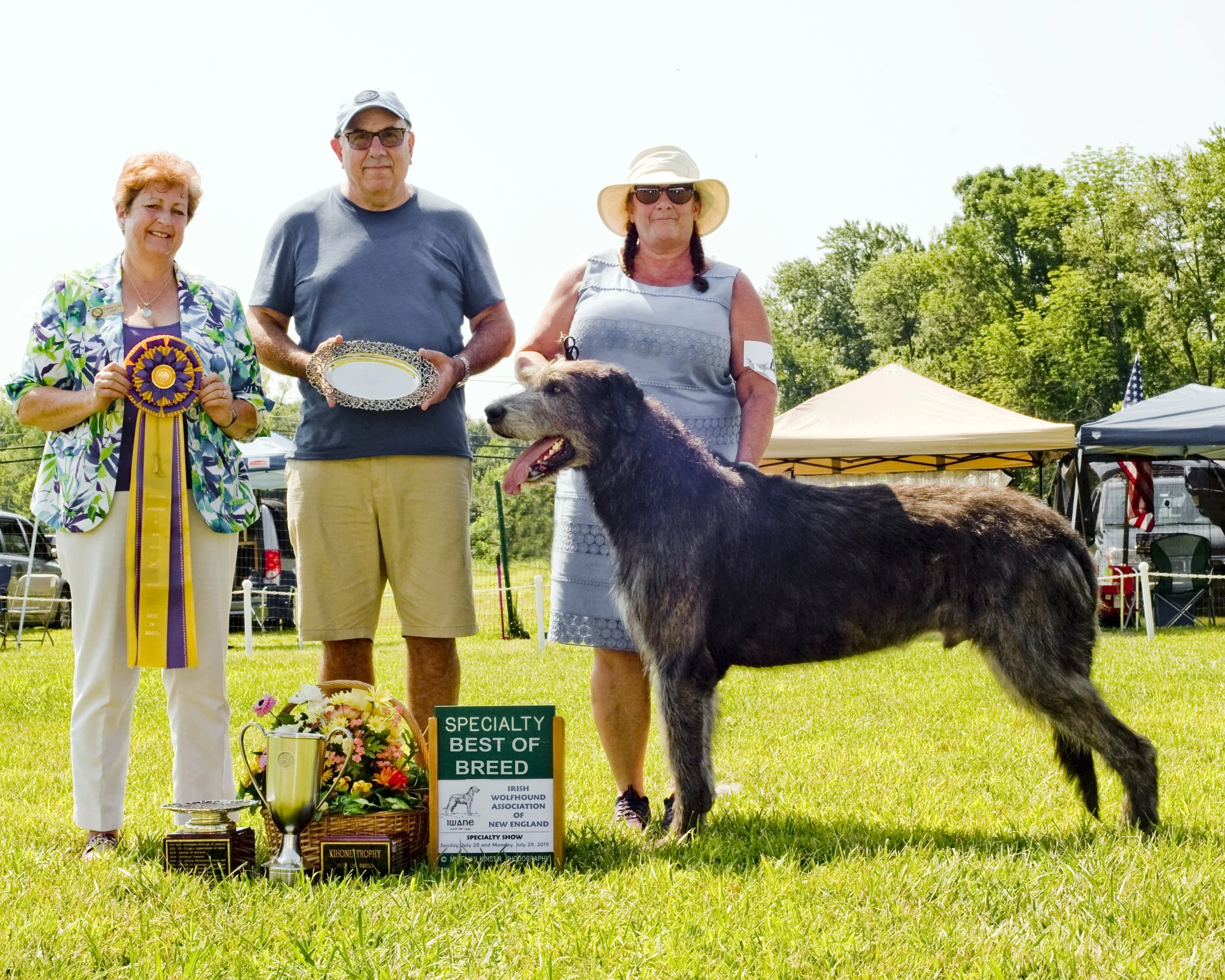
Valuable Tools for Puppy Owners
When obtaining an Irish Wolfhound puppy, I strongly urge you to do so cautiously and keep handy these invaluable tools during your search. These include the Irish Wolfhound Club of America (IWCA) "Puppy Buyers Guide" and "So You Want to Own an Irish Wolfhound" brochure. You should read through the accompanying codes of conduct. As longstanding members of the IWCA and, most importantly, as breed custodians, the IWCA Standard of Behavior for Breeders is very necessary, and I expect all breeders to adhere to it as well.
IWCA Puppy Buyers Guide
So You Want To Own an Irish Wolfhound
The Irish Wolfhound Guide