
DOG BLOG
Musings
Facts About Caloric Density and Carbohydrates vs Protein Levels in Giant Breed Puppy Food
The topic of protein levels in giant breed puppy food is one that I have meant to discuss. First off, it is a myth that high protein levels cause damage to the long bones of a growing, giant breed puppy. Most people who feed commercially prepared dry dog food are misguided by this urban tale.....
Recently, I received a call from a new Wolfhound puppy owner who was seeking advice. During the conversation, the gentleman expressed his concern about protein levels in dog food. He informed me that he purchased a premium bag of dog food with a low protein level of 22%, as he was told that high levels of protein are not recommended for giant breed puppies as it can cause damage to their growing bones.
The topic of protein levels in giant breed puppy food is one that I have meant to discuss. First off, it is a myth that high protein levels cause damage to the long bones of a growing, giant breed puppy. Most people who feed commercially prepared dry dog food are misguided by this urban tale.
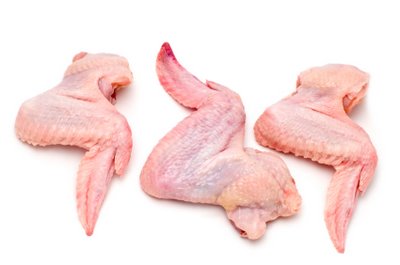
Instead, what should be one of the most pressing and harmful issues occupying people's minds about commercially prepared dog food designed for giant breed puppies is not protein BUT caloric density and the sources from which these calories are derived. As well as the high-density percentages of carbohydrates. In contrast, those who are entirely unperturbed about protein levels are those people who "Naturally Rear," as I do, where the protein sources are fresh, raw meat or poultry, fish, along with oats, yogurt, vegetables and so on.
Due to space limitations, I can only provide a review on this mainstream misconception as it could fill pages and pages. So, here goes.

Rapid growth stresses developing bones and joints. What can cause rapid growth is feeding a calorically dense and high carbohydrate diet which will make a pup grow too quickly; faster than their developing long bones and articulating joints can accommodate and will result in skeletal abnormalities.
Typically, as a pup evolves the bones and muscles should mature together in harmony, but bones that grow much too fast will be less dense and weaker than ones growing at a more appropriate rate. Weaker bones, in turn, creates issues for giant breeds who carry more weight in which such pup(s) will experience the causal factors of artificial nutrition.
What about protein? Protein is a source of energy. A point of fact is that growing puppies require more protein than an adult dog which contradicts the urban tale. Proteins are essential for building blocks of all tissues and organs, to include tendons, ligaments, cartilage, and muscle contraction. Yes, too much protein can be detrimental to healthy growth due to an imbalance of calcium and phosphorus which affects the long bones and joints. However, this is not always the culprit in commercially prepared puppy food. Why? Read on as down below I reveal some compelling relatively unknown information about the actual amounts of protein in such foods and their sources. What are the primary culprits in puppy as well adult dog food?
Most commercial dry dog foods contain at least 50% carbohydrates and sometimes more than 15% crude fiber. Let me quickly address crude fiber as this amount is at least three times the recommended amount according to the Mark Morris Institute who publishes the Small Animal Clinical Nutrition, 5th Edition on commercial pet foods. This book further reports that in excess, crude fiber reduces the energy and nutrients in the food whereas the dog has difficulty eating enough food to satisfy his nutritional needs. In other words, dogs consuming much of today's inferior, low digestibility commercial foods will devour large quantities of food, but the high amount of fiber within the diet can decrease mineral absorption. Thus, it does not matter how much the dog eats; he cannot absorb the necessary minerals because there is too much fiber.
Carbohydrates. Many commercial brand dog foods have high caloric density derived not just from fat but carbs. The principal function of carbohydrates is to provide structural integrity as they work as a binder holding the ground meal in shape. I already stated that most all dog foods are at least 50% carbohydrates, and it would be unusual for a dry pet food to be formulated with fewer than 40% carbohydrates because of the minimum requirement for extrusion or shaping through a die, as told by the Small Animal Clinical Nutrition, 5th Edition.
Incidentally, canines do not have the same enzymes as humans so they can only process carbohydrates very, very slowly. Importantly, the abundance of carbohydrates (sugars and starches) contained in commercial dog foods is a significant factor in canine dental disease and tartar build-up. Moreover, dental disease and heart disease can go hand in hand.
Here are some examples of carbohydrate concentrations commonly found in commercial dog food:
Rice Flour 90%
Rice 90%
Corn Flour 85%
Corn Starch 88%
Corn 81%
Grain Sorghum 80%
Wheat Flour 82%
Wheat 78%

Calories and fat. Both of these can present a bit of a dilemma for some companies. Typically, to dilute the number of calories in commercially prepared dog food, the manufacturer adds increased fiber, insoluble fiber such as cellulose and peanut hulls, to the processing. However, because crude fiber behaves as an anticaking agent, it simultaneously causes high friction during the extrusion or shaping process. So, the manufacturer has to add fat back into the ingredients so the mixture, commonly known as slurry, can be processed more efficiently. While adding fat back in sometimes can neutralize or minimize the fiber's primary purpose of reducing calories. According to Small Animal Clinical Nutrition, 5th Edition; "Fats contribute calories at 2.25 times the rate of carbohydrates or proteins, and the use of fat ingredients is the most efficient method of increasing the energy density of food to limit a pet’s consumption of other nutrients."
Back to the question of protein. There is an even lesser known truth about the actual amount of meat as listed on the dog food's label.
Again citing the Small Animal Nutrition 5th Edition, the United States has labeling regulations that stipulate ingredients must be listed in order of weight predominance. Of course, wet meat weighs more than dry meat, so, manufacturers use the wet weight of the meat or poultry that elevates or places the protein within the label's top three ingredients. They do so by incorporating fresh or frozen meat/poultry into the dry extruded dog food using a slurry composed of animal tissues, fat, and water, which is grounded and mixed in a separate tank. The water in the meat (60 to 70%), however, must first be dried off to make a dry product. Consequently, the actual amount of meat or poultry ingredients would be listed much farther down on the label if it were added as a dry meat meal.
Be aware that manufacturer claims that the "meat based" dog food has a high-meat content is not always accurate. Also, dog food ingredient labels list other sources that protein may also be derived from such as dried egg, rice gluten, corn gluten, and soybean meal.
The long and short of it is that densely packed carbohydrates in complete dog food along with high fats increase the caloric density, and this should be the worrisome factor that can cause health problems in growing giant breed puppies. All of this is not to say that an owner who feeds only meat and bone without other essential ingredients that provide nitrogen, minerals, calcium, phosphorus, and so on is doing the right thing. I utilize oats in my hound's diets along with all the other key components of "Natural Rearing" for a balance of nutrition. Nonetheless, I can assure you that my giant breed pups consume much higher amounts of protein than any bag of manufactured puppy food, but they do so in the fresh, raw variety. Never a slurry of animal tissues, fat, and water.






"Wolfies" -- Derogatory Slang!
"Don't waste your time."
"Don't bother."
These are a few of the entreaties I commonly hear from my friends and family who advise me not to answer or correspond with the nutjob inquiries I receive for a "Wolfie" -- slang that I loathe.....
"Don't bother."
"They are not going to listen."
"They do not want to hear it."
"They do not care."
"Don't waste your time."
"Good luck."
These are the entreaties I commonly hear from my friends and family who advise me not to answer or correspond with the nutjob inquiries I receive for a "Wolfie" -- slang that I loathe and expound on further down. Unfortunately, my friends and family's sentiments are "spot on" because nearly all of these people who contact me about "Wolfies" are 'instant experts.' They decided they know everything there is to know, despite having meager to no experience with the breed, because they looked up the information on the Internet. Oh yes, I've heard this once, I've heard it a thousand times.
Most all of these people impose upon mine and others time, and when provided with information that they did not want or expect to hear, they outright reject it because they claim to have performed research! Oh, and of course, this includes all the so-called Facebook "authorities."
Such as the couple who just sent an inquiry for "Wolfie" puppies and who currently own two female adult wolfhounds. Indeed, this couple is not just looking for a third but also a fourth Wolfhound puppy to join their "family household" asserting that since they have no children, the Wolfhounds are their kids and will be very well taken care of since they have pet health insurance.
Now, any reputable, veteran breeder of Irish Wolfhounds would inform these novices that obtaining a third and fourth Wolfhound is out of the question for a multitude of logical reasons. Foremost, these people lack extensive experience with such an athletic, giant breed that can weigh upwards of 140-180 pounds. Most worrisome is their kumbaya attitude and delusions of blissfulness that reveals that they are nutjobs --in the sense that they do not have normal perceptions of reality. The dead giveaway is their use of the demeaning slang "Wolfie" which has been the fad for all the social media types heavily invested in the Internet "social world" and only proves that they have an ill-advised belief that the breed is just a giant, toothless stuffed animal.
I explained that Wolfhounds in a pack scenario do not always get along with one another and need to be managed very carefully. I informed them that the likelihood of a dogfight would exponentially increase with the addition of one to two more wolfhounds -- but they disagreed informing me that they had done research! When I provided details of what could transpire during a dog fight their response was "your information was way over the top and....I'm not justifying our decision with you or anyone for that matter."
Yep, yet another "Wolfie" social media type living in an alternate reality blithely ignoring what does not please them. Until, of course, it is too late as my good friend who has directed Wolfhound rescue operations for several decades exclaimed she has heard this all a hundred times. She will be the one getting the desperate call informing her that they just can't manage it any longer and one or more of the ill-fated Wolfhounds will be surrendered. Is this scenario guaranteed - no -- but after my 33 years immersed in the breed having seen or heard about nearly every possible situation, it is much more likely that an incident will occur when involving inexperienced owners.
For the record, the term "Wolfie" is looked upon as disrespectful and demeaning by long-established, veteran breeder/fanciers. This colloquialism is not considered a term of endearment. It is used unknowingly by people who are fostering the misguided belief that the breed is only a harmless couch potato who makes friends with all animals. Indeed, you cannot get farther from the truth.
The Irish Wolfhound is a majestic hunting breed, one of the oldest canine hunters with origins lost in antiquity. He is a sighthound with a venerable history in which we should display deference for, and hold in the greatest esteem. The noblest hunter who on the whole possesses a high prey drive and who will give chase and dispatch just about anything that moves including Deer, goats, cats, chickens, squirrels, birds, groundhogs, and so forth. Fundamentally, the essence of an instinct is any performed behavior that is not based on prior learning. Hard-wired prey drive is an inborn complex behavior that most sighthound breeds possess. Their origins date one or more Millennium as they once specialized in independent hunting and dispatching of Game. Believe the experts; this inherent ability is still well and strong today.
So, please, do us old timers, and the Irish Wolfhound breed the courtesy and cease using the social media colloquialism that manages to cheapen and shame this aristocratic Gazehound. Irish Wolfhounds are not cutesy, harmless, oafish "Wolfies." Oh, and one other point: even when we old time breeders refer to wolfhounds in conversation, we respectfully refer to them as hounds and NOT dogs.
2017 Irish Wolfhound Quebec Regional Specialty & Underage Puppies
Saturday, June 10, 2017, was another lovely day for a Specialty in Quebec, Canada. This year, however, there was a sad sight to behold. More to the point, we were very upset as we saw a small waif of a puppy trying to walk on a lead with his owners.
Saturday, June 10, 2017, was another lovely day for the IWCC Regional Quebec Specialty in Canada. Herr Jurgen Rosner was adjudicating, and it was a pleasure seeing him again, especially since the last time I saw him was 21 years earlier when he judged the 1996 Irish Wolfhound Association of Delaware Valley Specialty! Remarkably, he has aged gracefully and has changed very little.
Ballyhara Kellyanne IWCC Quebec Regional Specilaty 2017
This Quebec Specialty is comfortable and pleasant though exhibitors experienced an issue with parking as a huge sports tournament was being held simultaneously on the military grounds. The Quebec club graciously provides a delicious homemade smorgasbord with soda, wine, and water which is so refreshing to see in this day and age. An overall, friendly atmosphere that keeps exhibitors and spectators coming back.
This year, however, there was a sad sight to behold. More to the point, we were very upset as we saw a small waif of a puppy trying to walk on a lead with his owners. Shocked, we inquired as to the age of the wolfhound pup, and were informed he was nine weeks of age! Upsetting, to say the least, and our disapproval was shared by several people sitting close-by who noticed him as well. The male pup was so small that my husband was convinced he was seven rather than nine weeks old.
Regrettably, the alarming trend of placing puppies at FAR TOO EARLY AN AGE is not new. I addressed this very concerning problem in my December 2015, "Caveat Emptor" Blog Post. It is unethical to sell or place a wolfhound puppy at the age of eight or nine weeks, especially because this is a giant sighthound who is underdeveloped — both mentally and physically -- at such an immature stage. It is paramount that Irish Wolfhound puppies are well socialized and spend quality and quantity of time with their Dam and siblings.
Mentally, the Irish Wolfhound breed is a slowly maturing hound. His overall weight and height at three months can be deceiving. You cannot compare him to other breeds at the same age. I have always informed students that this sighthound breed is unlike popular breeds such as Poodles, Golden Retrievers, Labradors or Shepherds. During growth stages, in a mental maturity comparison, for instance, a six-month-old wolfhound is comparable to a three-month-old Labrador. Even a yearling -- a phrase attributed to a wolfhound aged 12-24 months -- is still more immature than a similarly aged dog of another breed. The contrast has nothing to do with intelligence as an Irish Wolfhound is a clever breed which is always sensitive to his surroundings. Wolfhound puppies should be confident, poised, comfortable, and friendly. Traits that develop from various stimulations deriving from social interactions in the company of his littermates with the dam teaching them acceptable behavior during their twelve weeks of growth and companionship. There is no justifiable excuse for placing any puppy at less than 10-12 weeks of age, and this practice has to stop.
What has become of our wolfhound society if breeders feel justified and are emboldened to sell wolfhound puppies at 8 or 9 weeks of age? This puppy was not obtained from a commercial puppy farm in the American Midwest but from a person who was attending the Quebec specialty! For the record, my policy is that no puppy leaves before a minimum of 12 weeks and frankly, many times not until 16 weeks. Releasing underage wolfhound puppies is motivated by financial and opportunistic purposes. Commonly, this individual needs to move the pups out as quickly as possible because caring for them requires food, money, and work. Sometimes, they need to make room for a new litter, or frankly, they are too lazy and indifferent to support the young hounds adequately. Other times, many of these people are living hand to mouth and have no business raising expensive Irish Wolfhounds. What will be next -- placing them at seven weeks? Who is going to stop them then? My recommendation to these guilty people is to find another giant breed. Get out of Wolfhounds.
Reputable breed fanciers need to stop "tsk, tsking," while wringing their hands. We as a whole are obliged to speak up and express our concerns to these individuals. Many of these people are only masquerading as "breeders;" when they are only mating dogs. What do they know of genetic modes of inheritance? What do they know about anatomy and muscling physiology? What do they know of the breed founders and the Coefficient of Relationship of ancestry? What do they know of genetic diversity?
It is our obligation to explain their wrongdoings and the harm to both the puppy and the breed, especially if they are members of our breed associations. Our actions are not meddlesome -- we are NOT interfering in someone else's affair. On the contrary, it is our duty to moralize, as honorable, caring, responsible breed guardians. Placing underage puppies is NOT someone else's personal business -- it most certainly is not their prerogative to do so because it is harmful to the breed. These animals cannot speak for themselves, and as such, we are their custodians.
Bear in mind; amoral people prosper because their actions are unfettered. Your silence condones their behavior.
They know not of the commitment, the shared obligation we have as conservators for what was once a highly revered ancient sighthound. Their imprudent deeds are an offense, and we all need to unify against this growing malignancy. Ask yourself is this the standard of behavior that we foresee embodying the principles of our breed society?