
DOG BLOG
Musings
POW -- A New, Very Frightening Tick Disease
POW -- This is the acronym for the Powassan Virus that is transmitted by ticks which are mostly carried by deer. Do not be mistaken -- POW is very, very dangerous. Recently, I heard about this once believed rare virus on a news report and that the spread of the virus, by tick bites, is increasing. Worse, transmission is within the first 15 minutes of contact......

POW -- This is the acronym for the Powassan Virus that is transmitted by ticks which are mostly carried by deer. Do not be mistaken -- POW is very, very dangerous. Recently, I heard about this once believed rare virus on a news report and that the spread of the virus, by tick bites, is increasing. Worse, transmission is within the first 15 minutes of contact. On many occasions, headlines are alarming which, sometimes, is hyperbole, such as the first one by Worldnetdaily.com who writes:.
POW! The tick virus far deadlier than Lyme -- CDC warns of disease that kills 10%, permanently disables 50%
But here is the thing: though at first glance the headline appears sensationalized -- it really is not one you learn about this new threat. Forbes Magazine and NPR both have had recent articles on this disease, yet it seems that POW is not getting that much attention -- when, in fact, it should.
Beyond Lyme: New Tick-Borne Diseases On The Rise In U.S.
POW: Here Comes A Tick Disease That's Worse Than Lyme
I went to the Center for Disease Control which at first, seemed not to convey alarm to the Reader beginning with what I thought was a bland introduction stating that there were only 75 cases in the past ten years and that they mostly occurred in the Northeast and Great Lakes region. It is further defined, for clarity but does not have less of an impact on humans, as lineage 2 POW virus. But, then, the CDC in an understated manner reveals alarming information concluding that there are no vaccines or medications to treat or prevent POW virus infection.
Symptoms
- Many people who become infected with Powassan (POW) virus do not develop any symptoms.
- The incubation period (time from tick bite to onset of illness) ranges from about 1 week to 1 month.
- POW virus can infect the central nervous system and cause encephalitis (inflammation of the brain) and meningitis (inflammation of the membranes that surround the brain and spinal cord).
- Symptoms can include fever, headache, vomiting, weakness, confusion, loss of coordination, speech difficulties, and seizures.
- Approximately half of survivors have permanent neurological symptoms, such as recurrent headaches, muscle wasting and memory problems.
- Approximately 10% of POW virus encephalitis cases are fatal.
- Persons with severe POW illnesses often need to be hospitalized. Treatment may include respiratory support, intravenous fluids, and medications to reduce swelling in the brain.
Let's read that again: Half of the survivors have permanent neurological symptoms?! I certainly do not want to have permanent memory loss and muscle wasting from a tick bite that can INFECT a person within 15 minutes with symptoms manifesting themselves within one week to one month!!
I do not understand why we are not doing more to curb the deer population in this country. Our urban sprawl has decimated predator wildlife areas, and as recently as five years ago, according to Field & Stream magazine, there was a White-Tail boom. In 2016, the magazine complains that buck harvesting was down by nearly 40 percent in some Midwest states, though the news was not all bad as the female deer population has increased.
Nonetheless, in my personal experience, I see more deer than ever before. I live in New York where much of the deer population have either maintained or increased. According to the Connecticut Department of Environment, because deer have a high reproductive potential and few natural predators, deer populations have the ability to increase rapidly. In the absence of significant mortality, deer populations can double in size in two years. Let us not forget the danger they pose to driving. It is a rare occurrence when I drive the Interstate and have not come across a roadkill scene at least once with the visible signs of blood on the highway and often the carcass of the deer on the shoulder. What we do not know is what happened to the driver.
Deer are pests whose population needs to be controlled in a more productive and innovative manner than simply hunting season. I wonder what new exotic diseases are coming our way, and why aren't there more people worried about these new infections that demand emergency care to reduce the swelling in your brain and that 50% of the people contracting the disease will face permanent neurological impairments.
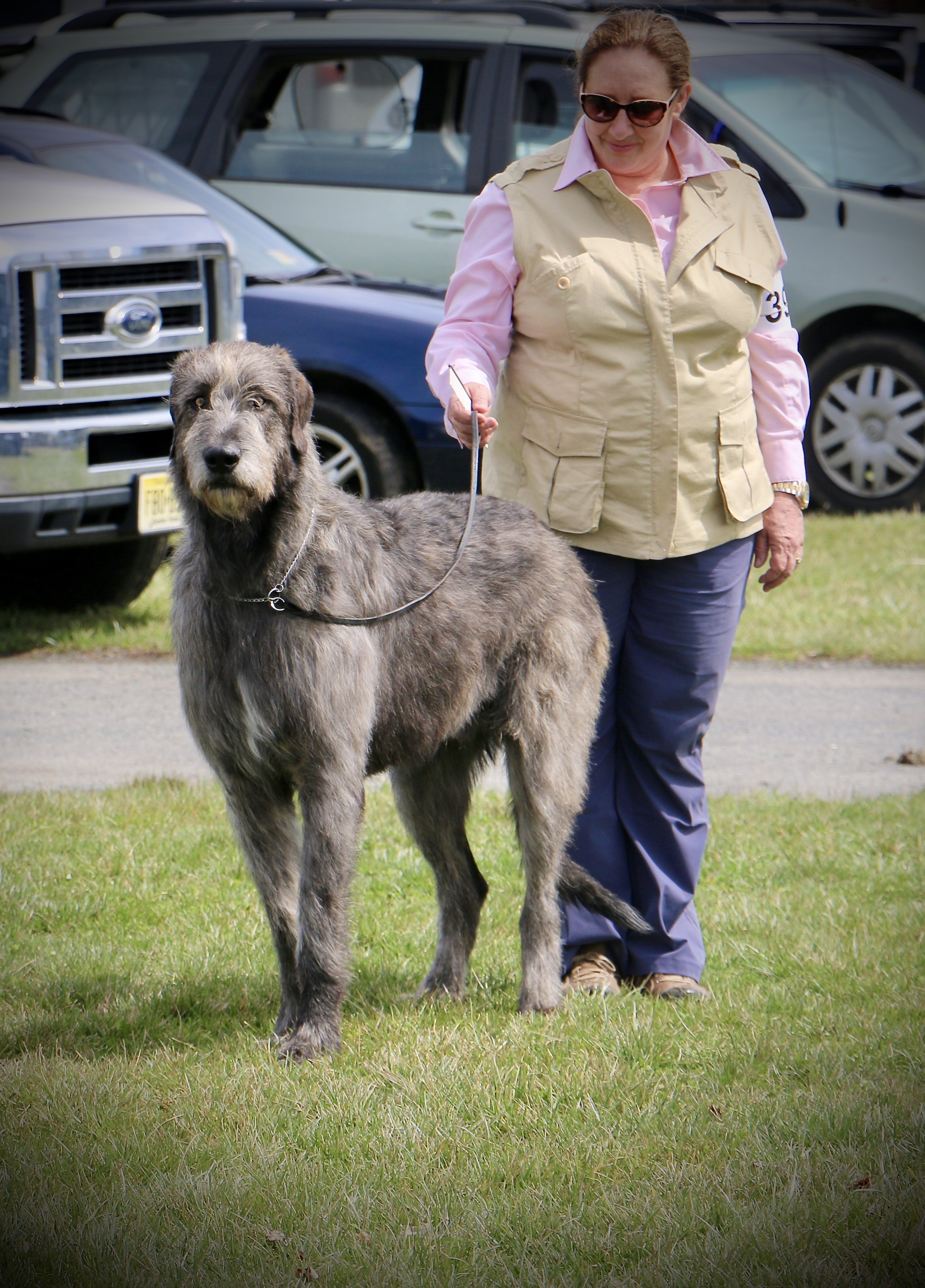
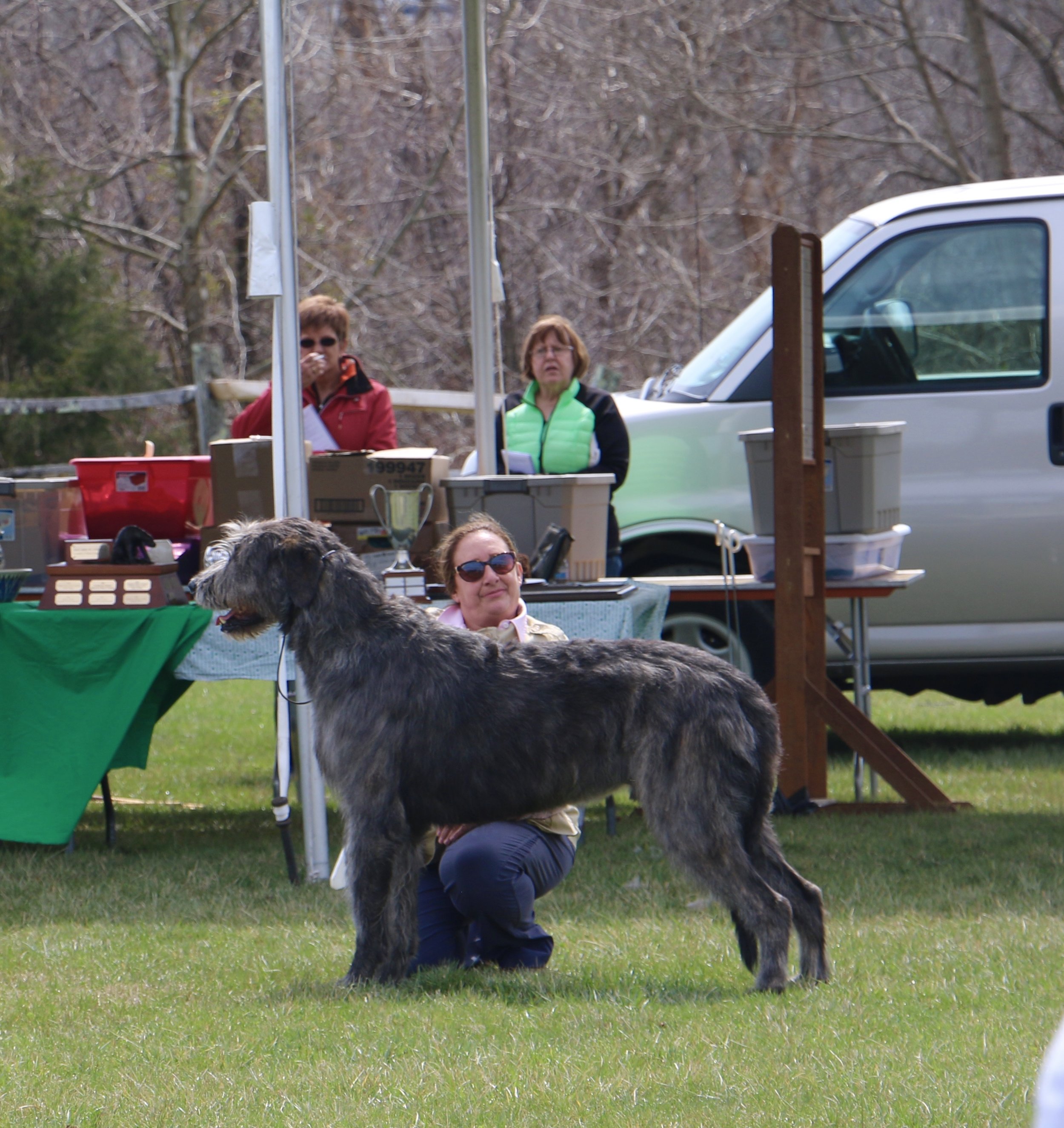
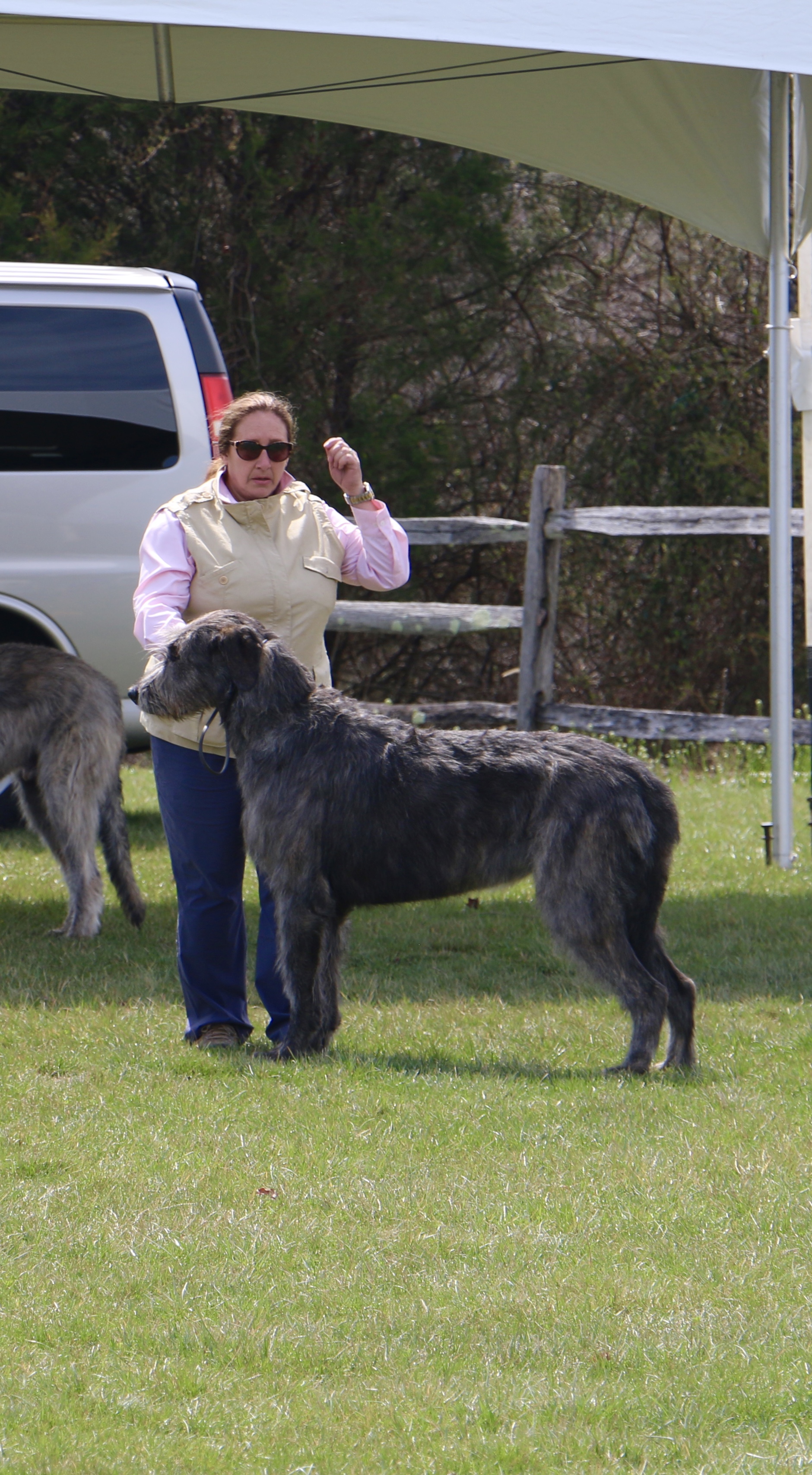
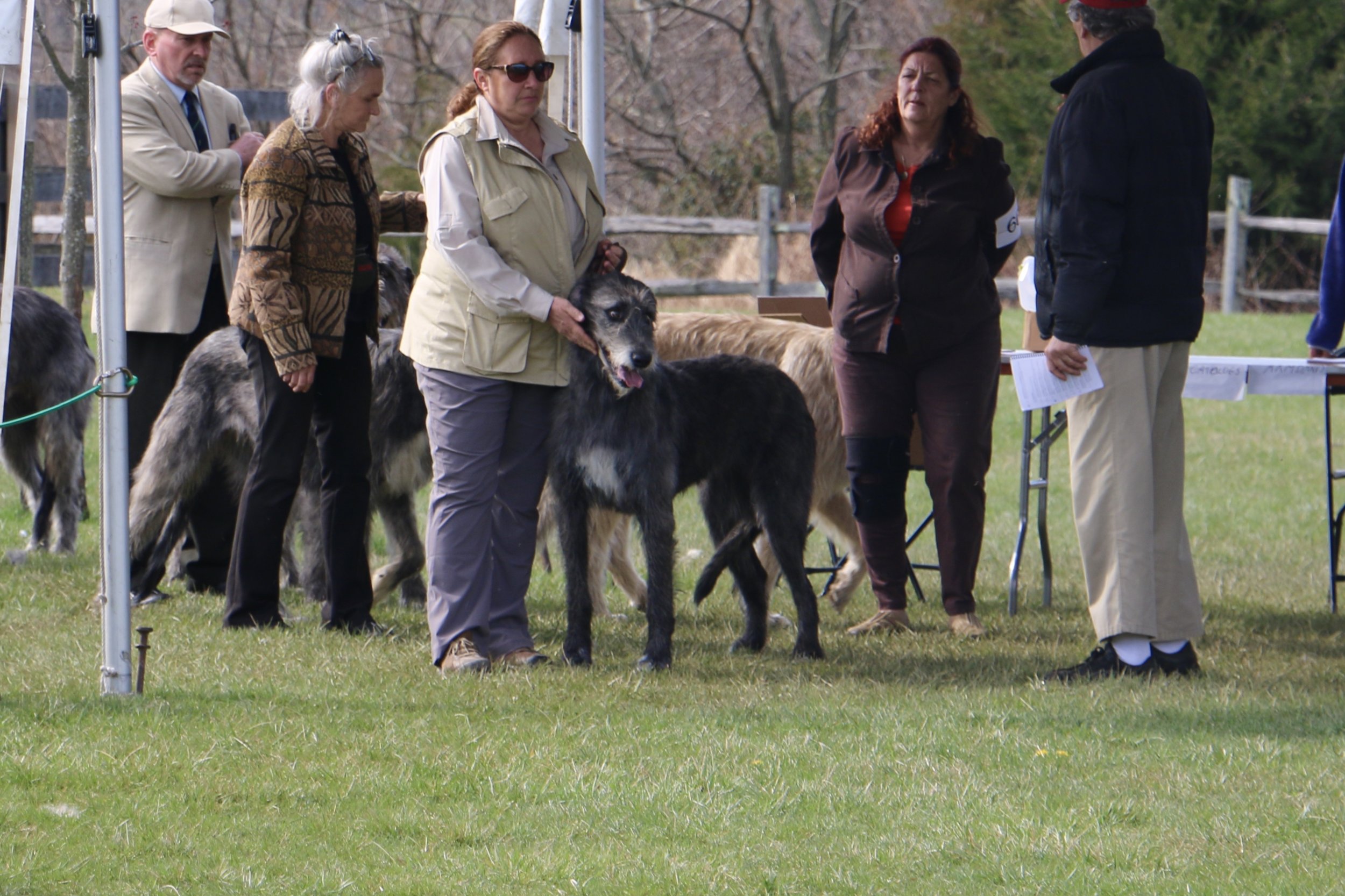
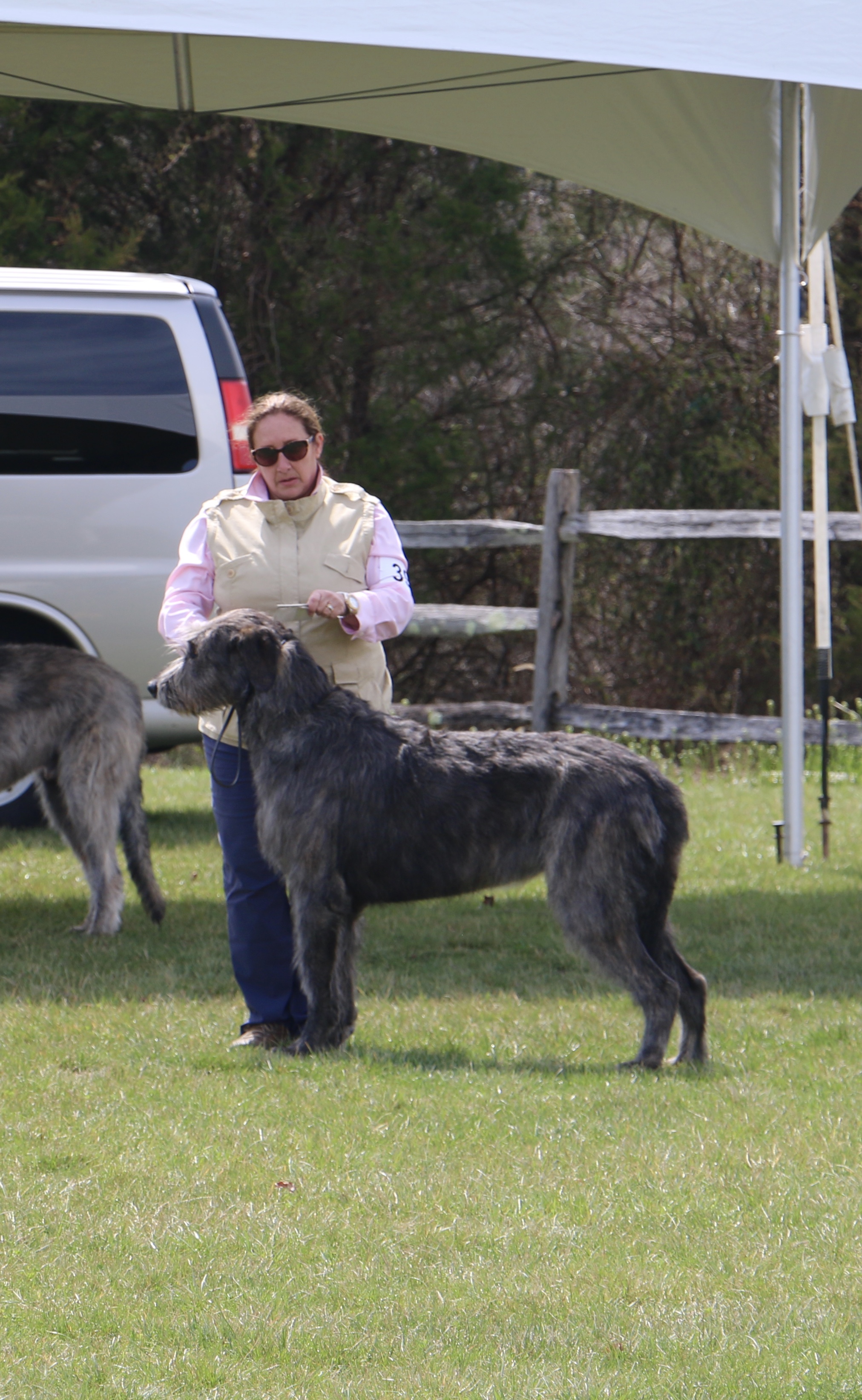
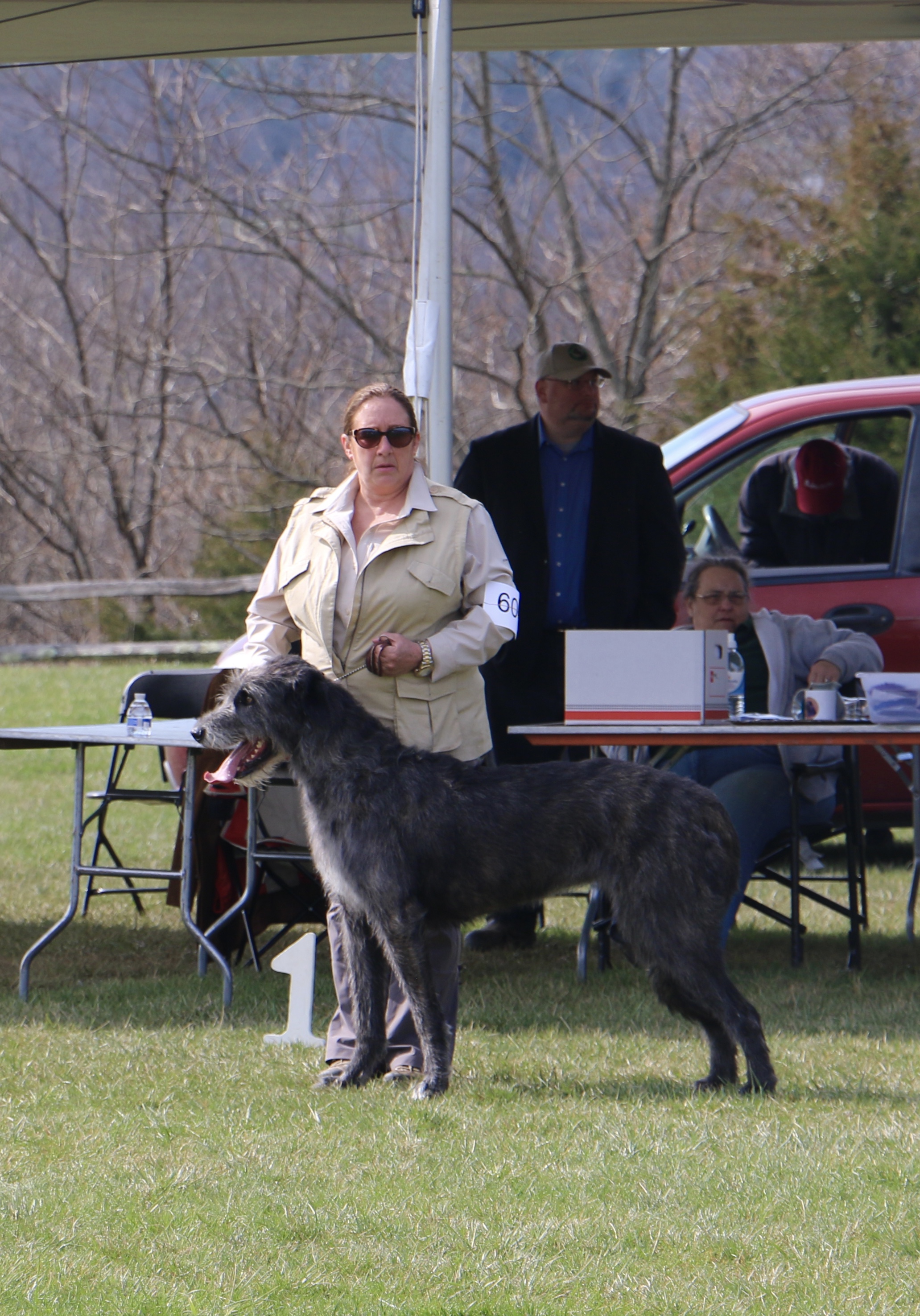
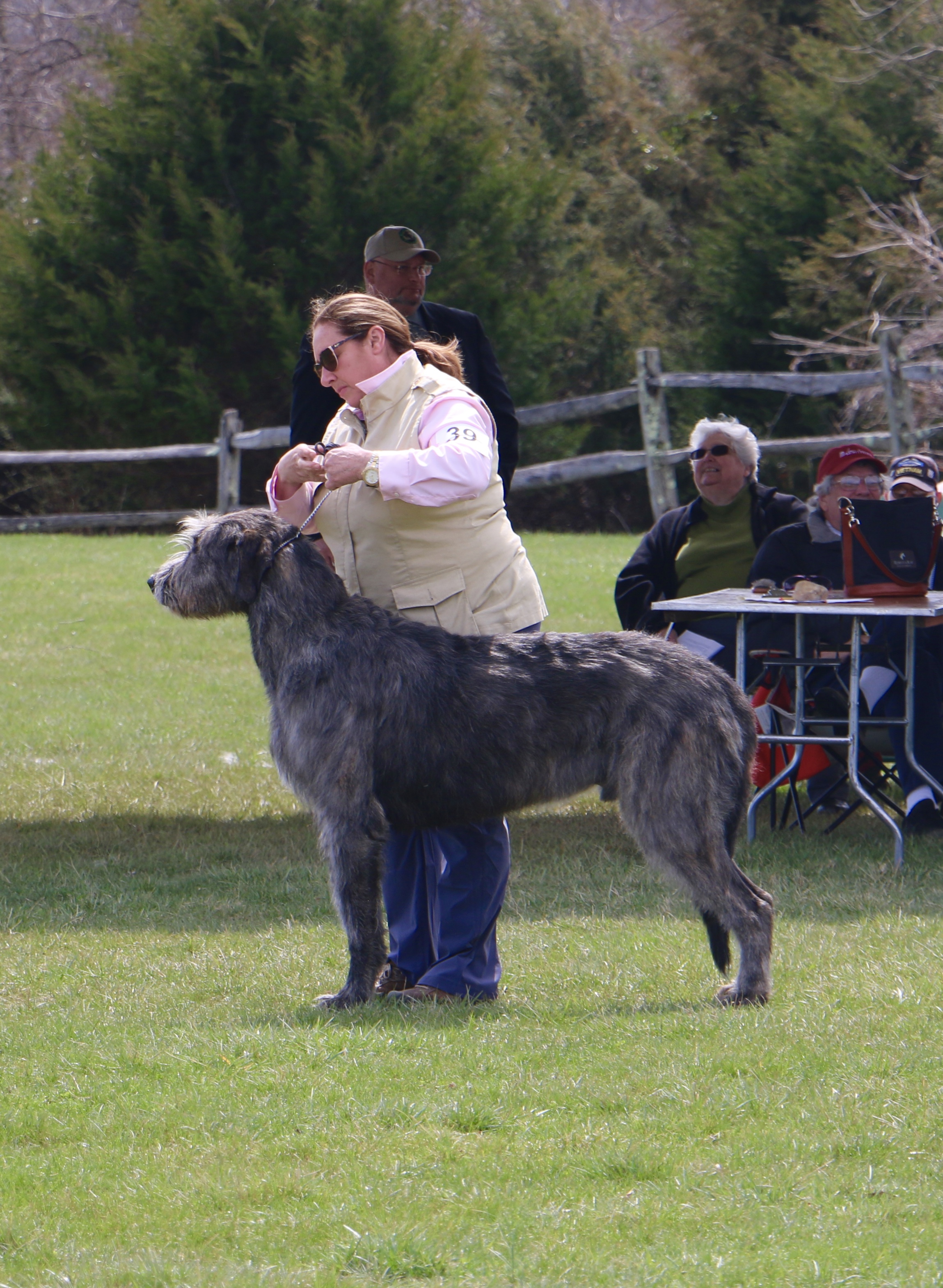
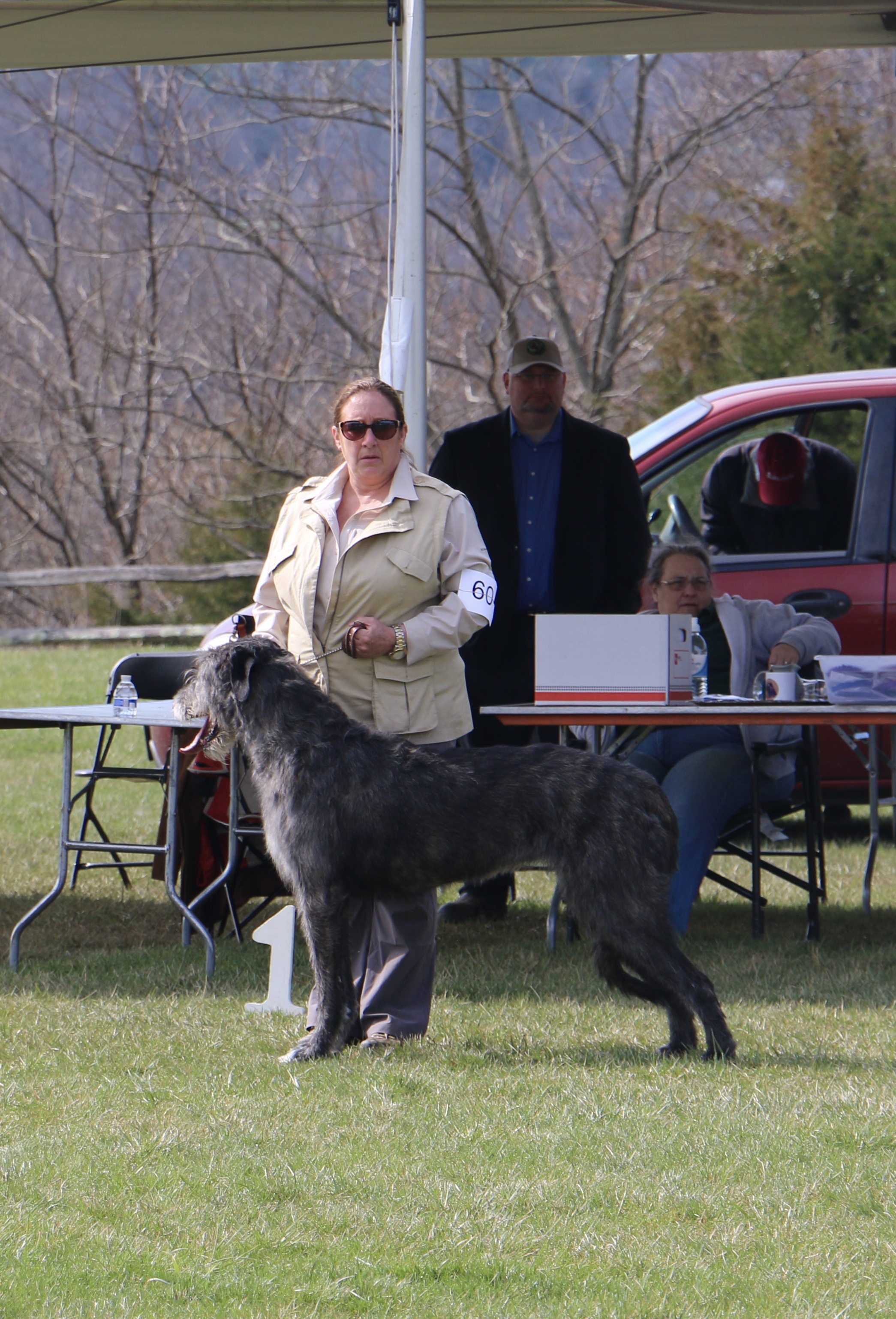
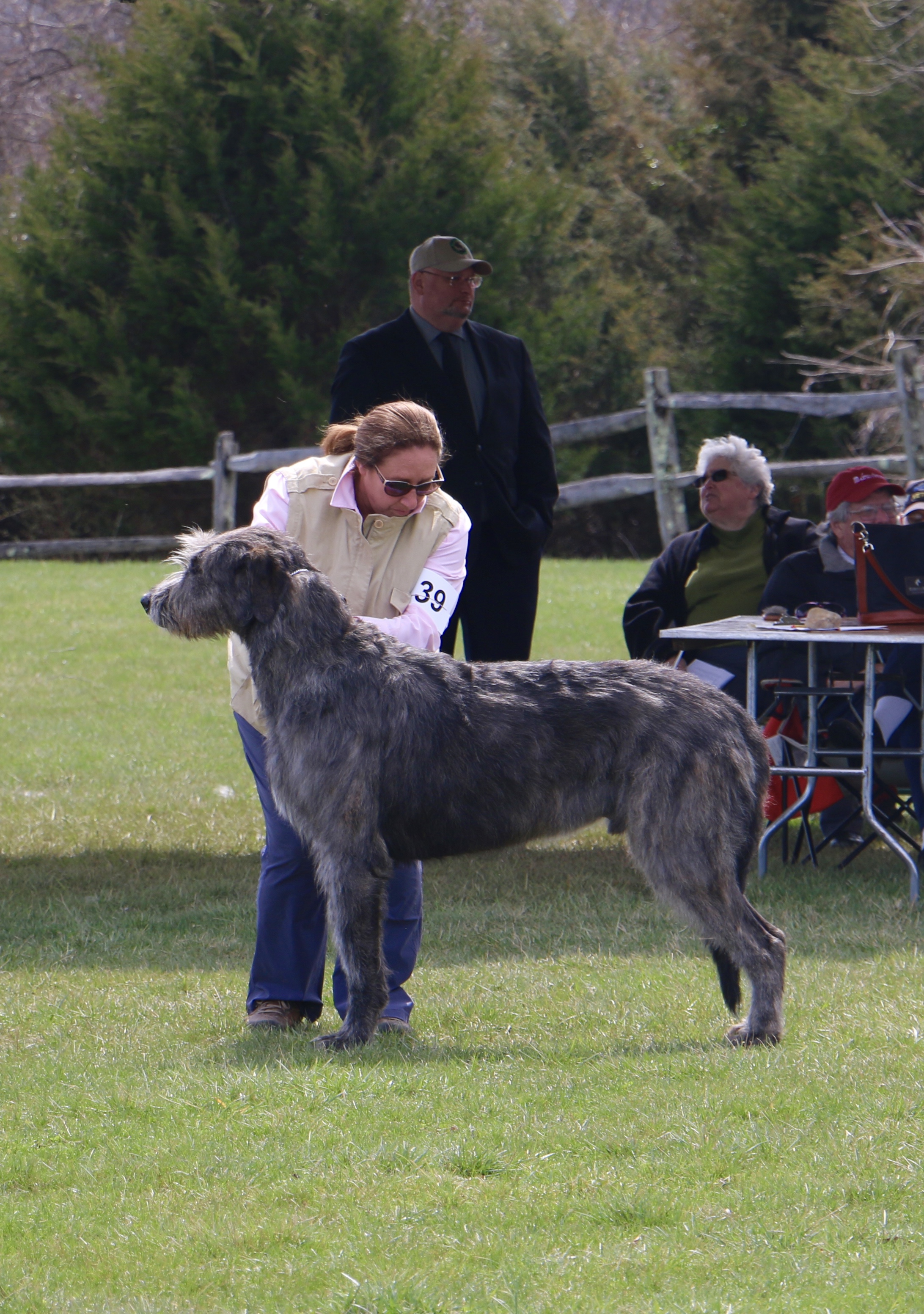
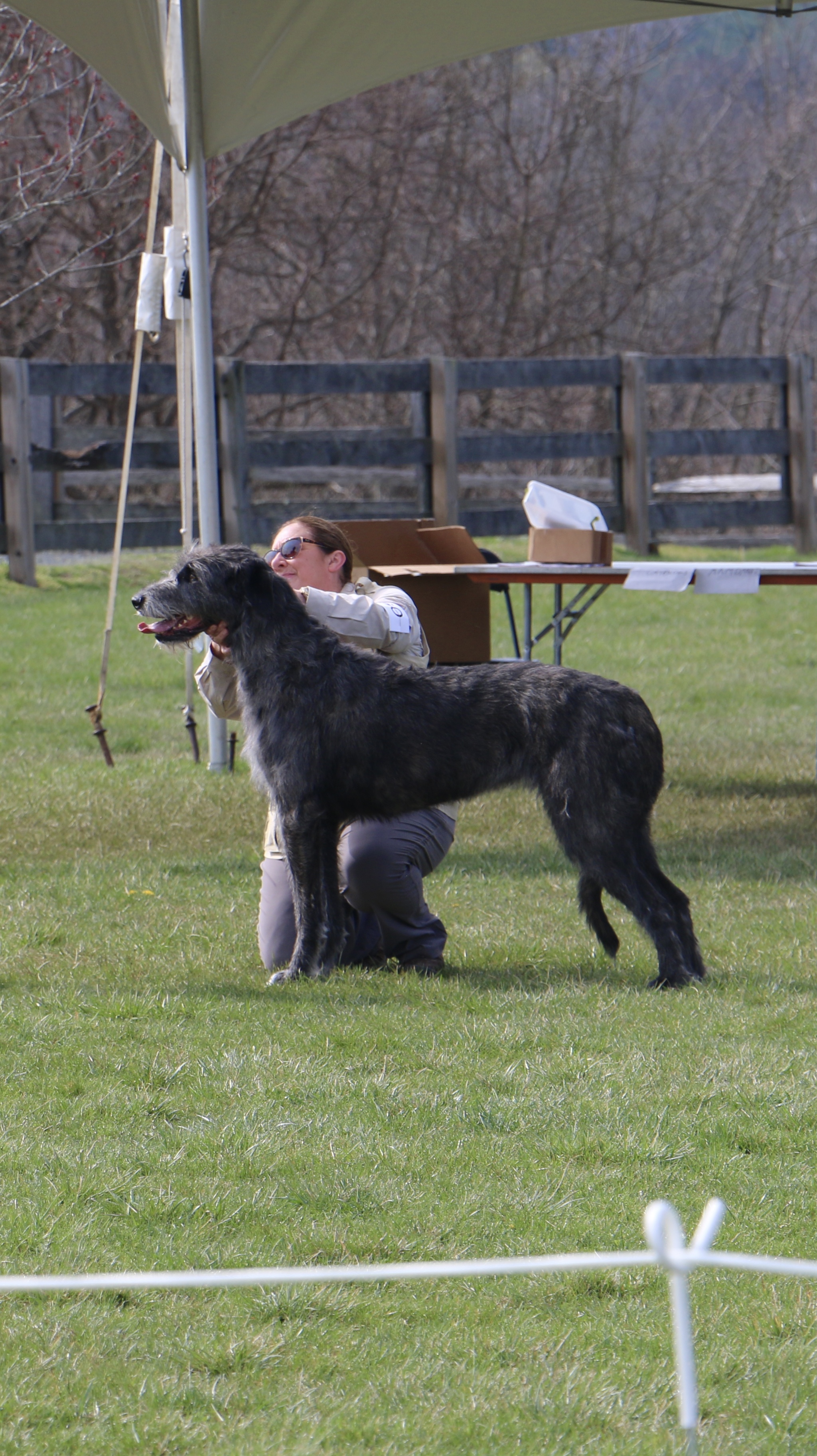
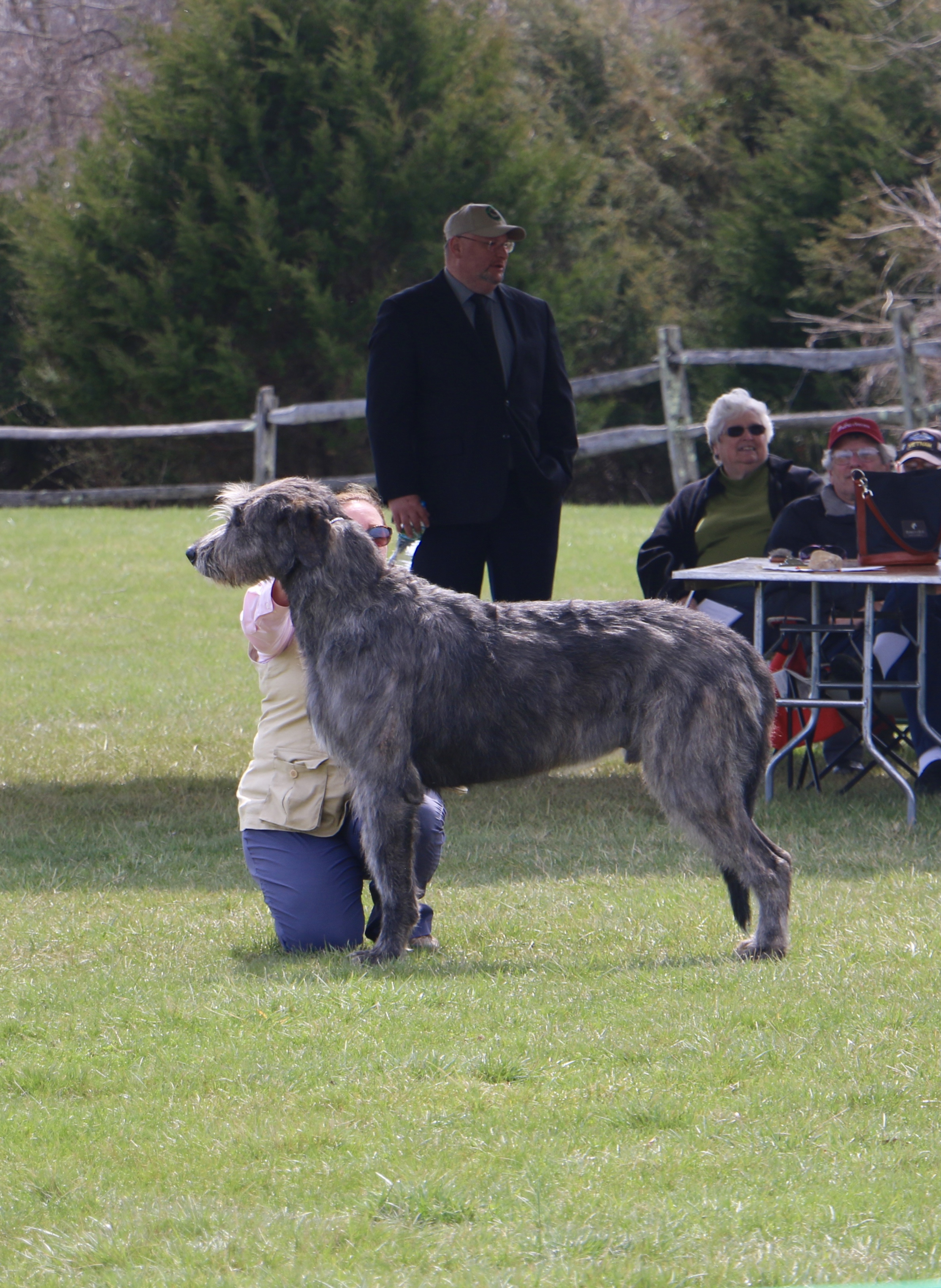
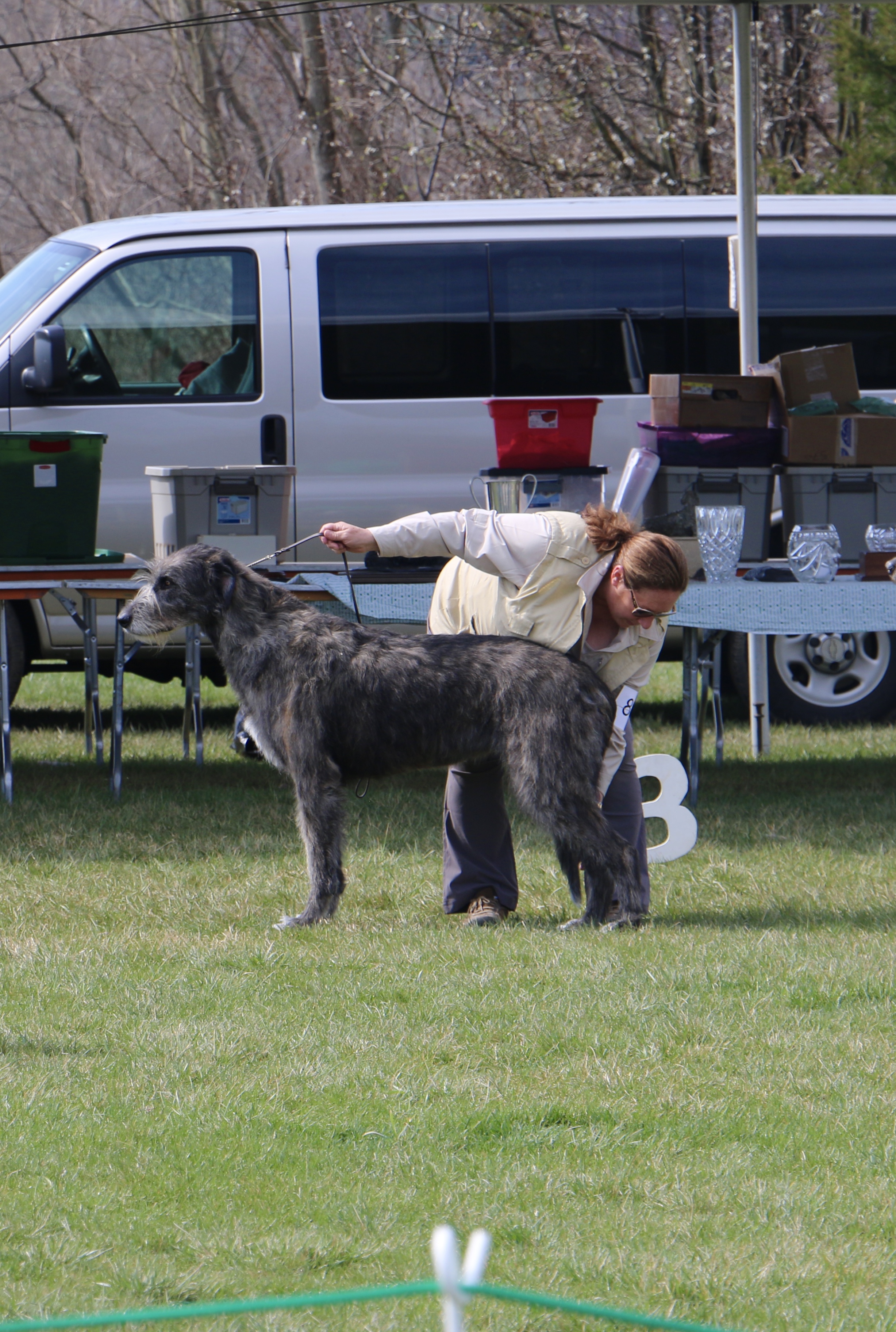
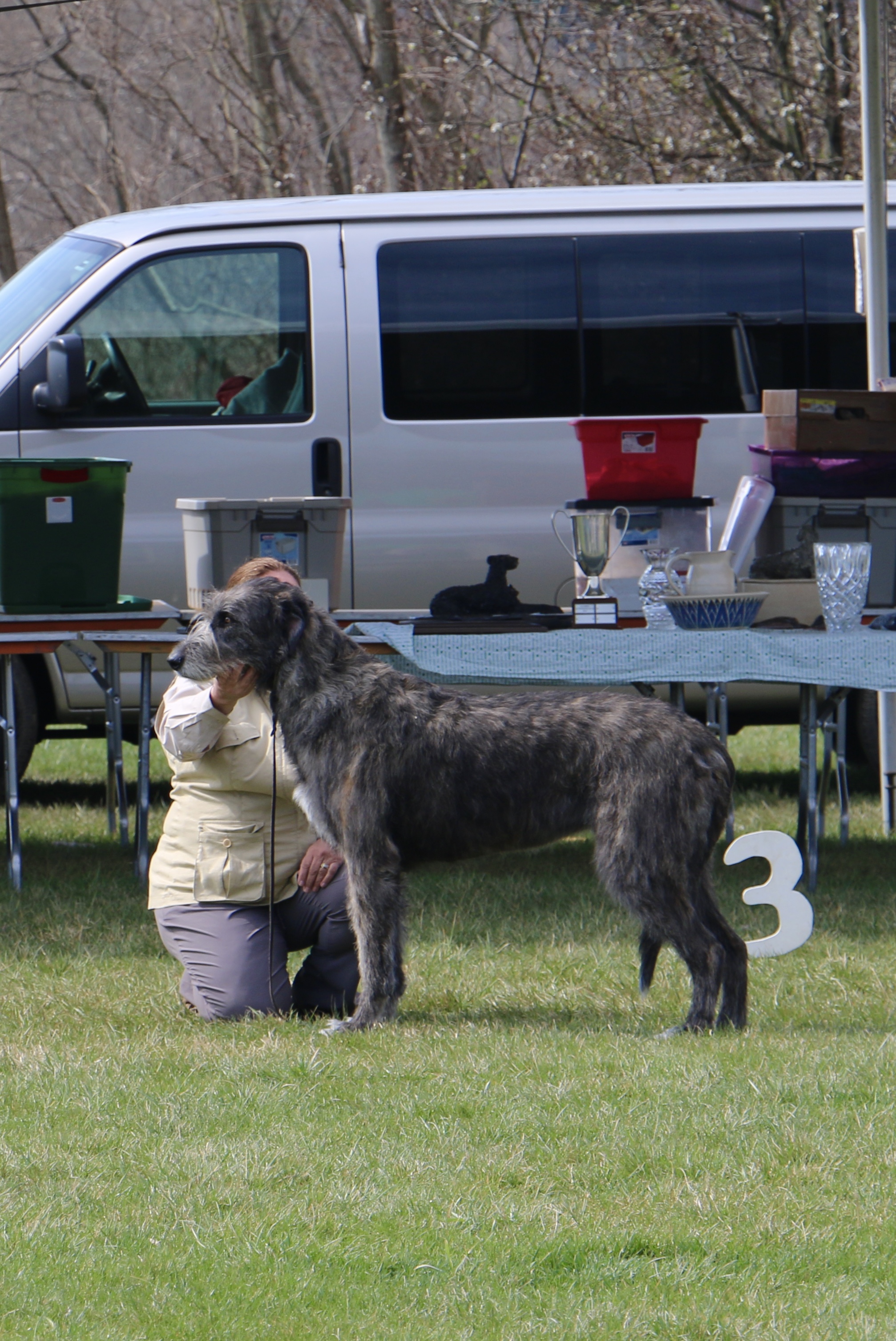
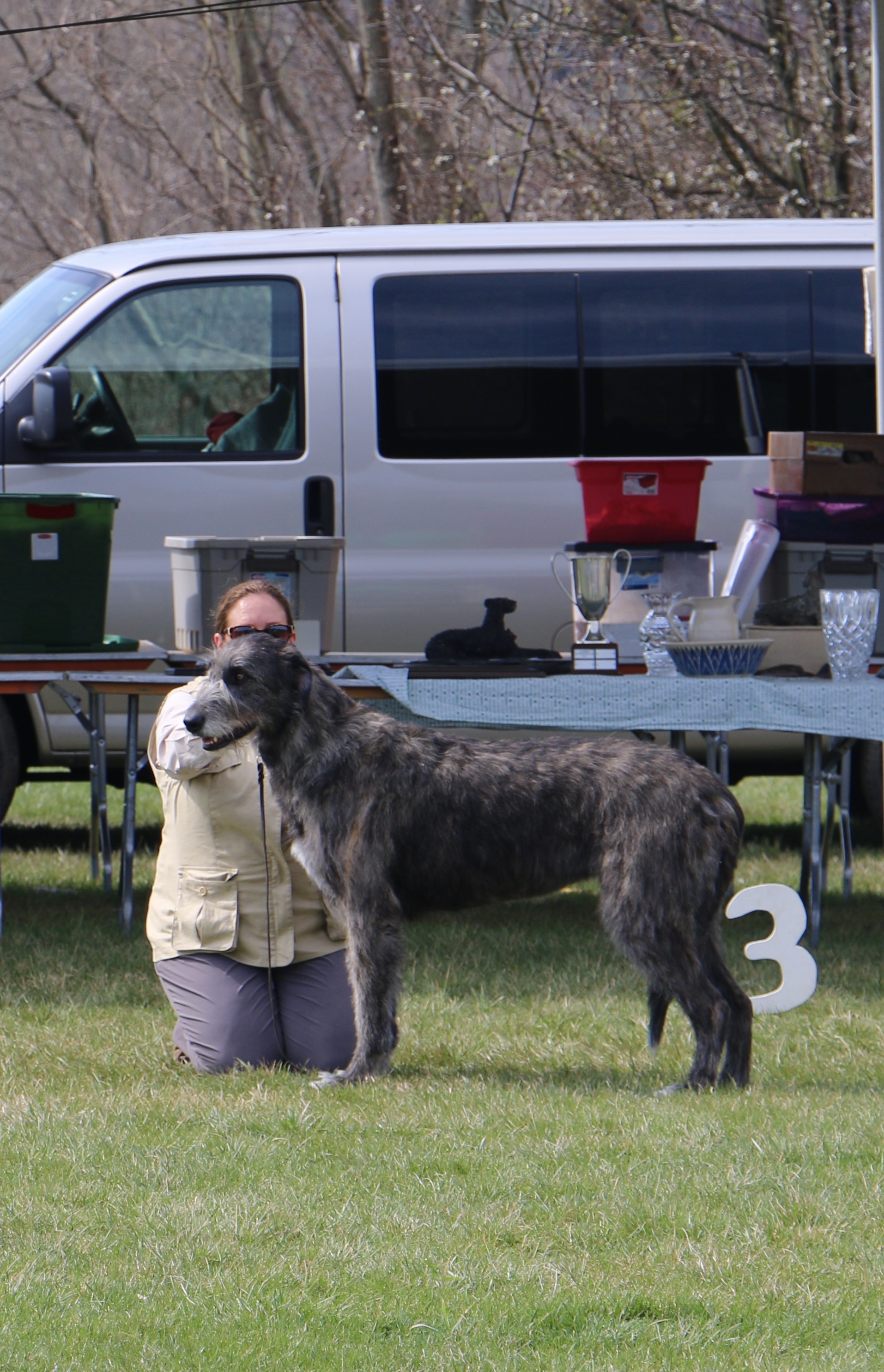
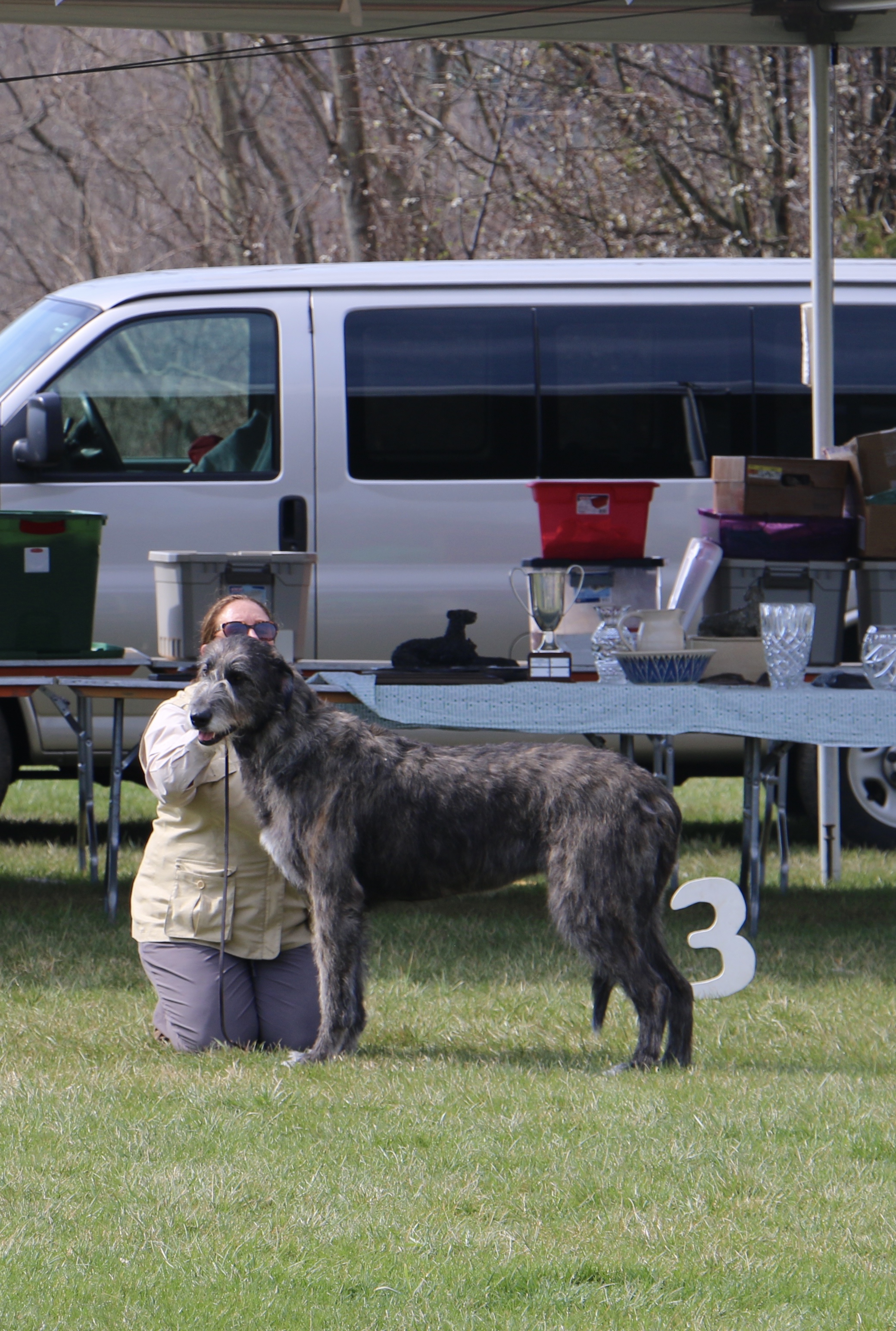
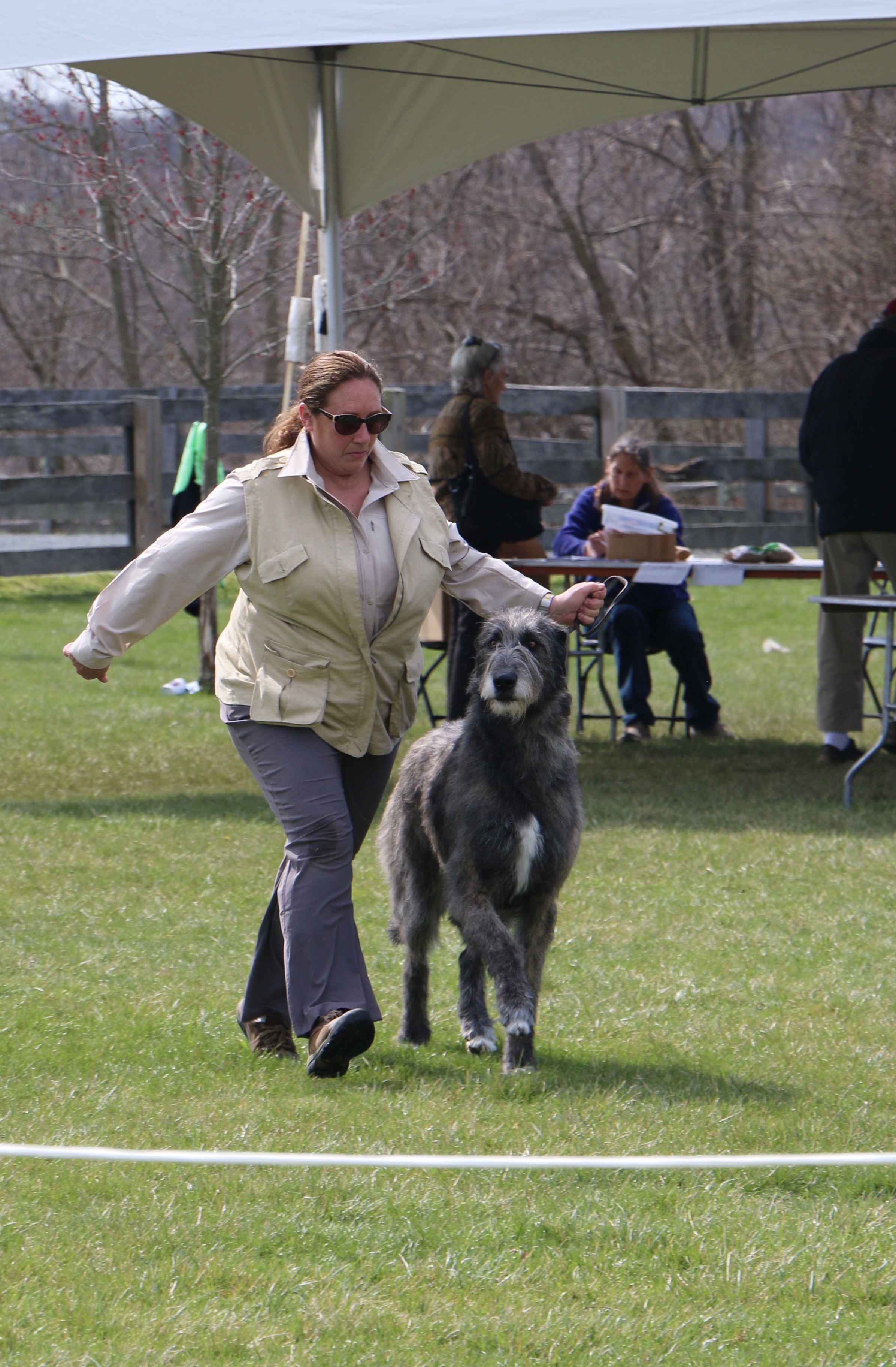
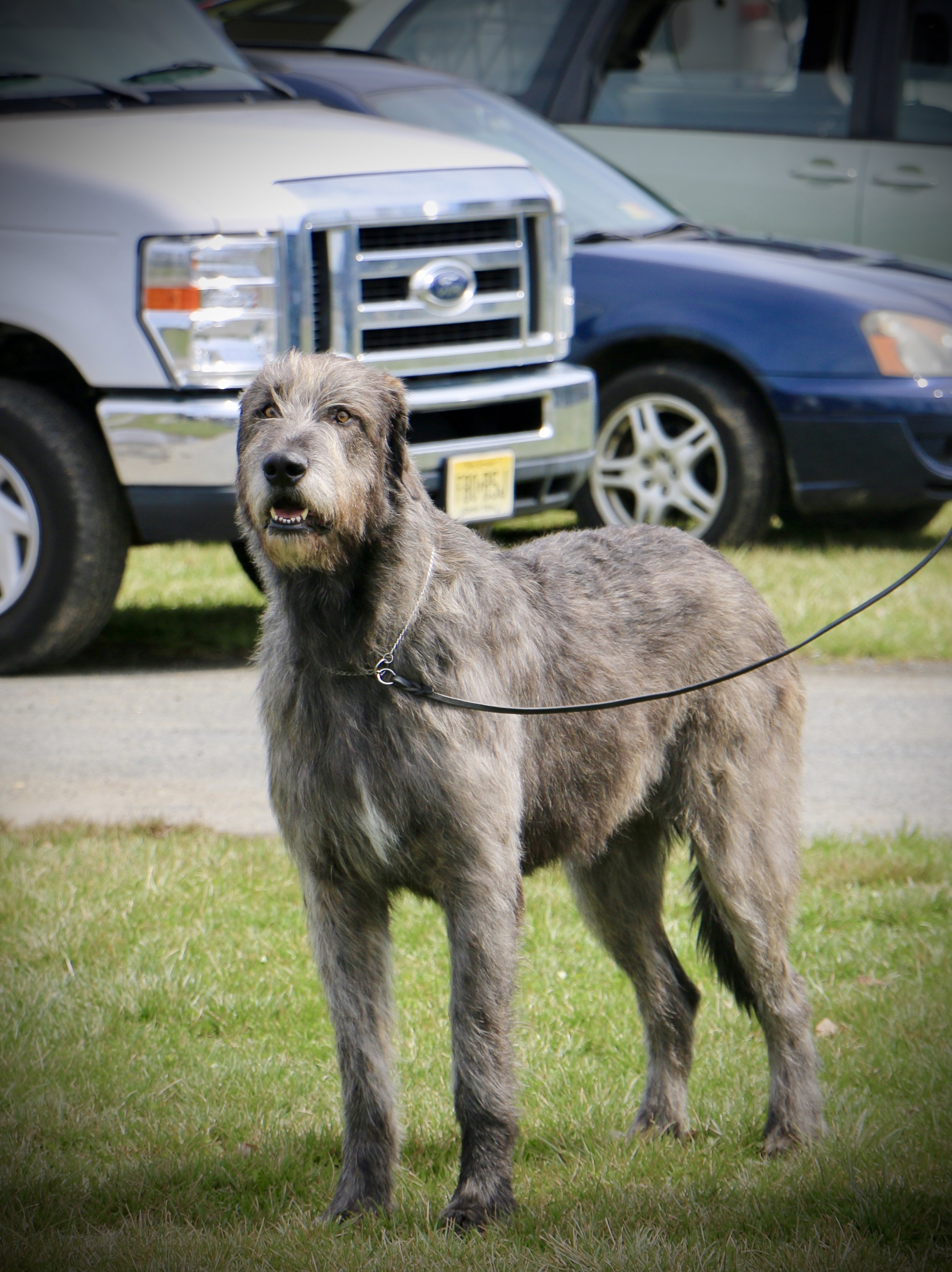
Ballyhara Candid photos from recent Potomac Specialty Show
Here are a few candid photos of my Irish Wolfhounds from a recent specialty show.
Dogs in Review Point/Counterpoint
A recent conversation in Dogs in Review Point/Counterpoint topic of the month section that I thought was engaging as the guest panelists answered in a thoughtful, meaningful manner. The subject matter is not new:
"In your experience, is the average exhibitor today more knowledgeable or less knowledgeable about breed standards, canine structure, and gait than he/she was 10 years ago?"
I know that this problem has been debated for at least 15 plus years alone in my circles, despite the ten years the point/counterpoint mentions......
The following attachment is a recent conversation in Dogs in Review Point/Counterpoint topic of the month section that I thought was engaging as the guest panelists answered in a thoughtful, meaningful manner. The subject matter is not new:
"In your experience, is the average exhibitor today more knowledgeable or less knowledgeable about breed standards, canine structure, and gait than he/she was 10 years ago?"
I know that this problem has been debated for at least 15 plus years alone in my circles, despite the ten years the point/counterpoint mentions. Seasoned fanciers everywhere around the country frequently discuss the matter with the same predictable results: head shaking because many considerably experienced breeders have given up saying there is not much we can do about it now.
However, there are those of us who still attempt to educate neophytes and the instant "Know-it-all's" with articles on anatomy and muscling physiology -- replete with diagrams and dialogue meant to overcome the obstacle of complicated medical terminology. Case in point, my work with Wendell Sammet over these number of years on several educative articles regarding anatomy (currently our newest is in progress concerning joints), has not been just for our health nor glory. We break down the language in canine anatomy that consists of many interconnecting parts and convert it into lay terms so that it is easier to understand for today's average breeder and fancier. His and my efforts are intended to teach today's average Reader/exhibitor/breeder in the least ornate manner in the hopes that they retain what we explain and illustrate via diagrams to propagate better dogs.
Still, many people tell us that our endeavors are a waste of time as the outcome has already been decided. That is to say, the sport today with its majority of uninformed exhibitors and fanciers and the primary focus now being on achieving ratings and points is irreconcilable with the sport of yesteryear, its design, and mission. Irreconcilable being that the two vastly different ideas are incompatible. What is more, I believe that many long experienced AKC Judges have crossed over to the other side further bolstering the new representation of the sport. They have participated in the "dumbing down" of the sport because they are complaisant, and they do not want to rock the boat. Unfortunately, I along with others are now simply considered quaintly nostalgic.

Terrific Meat Grinder for Preparing Fresh Dog Food
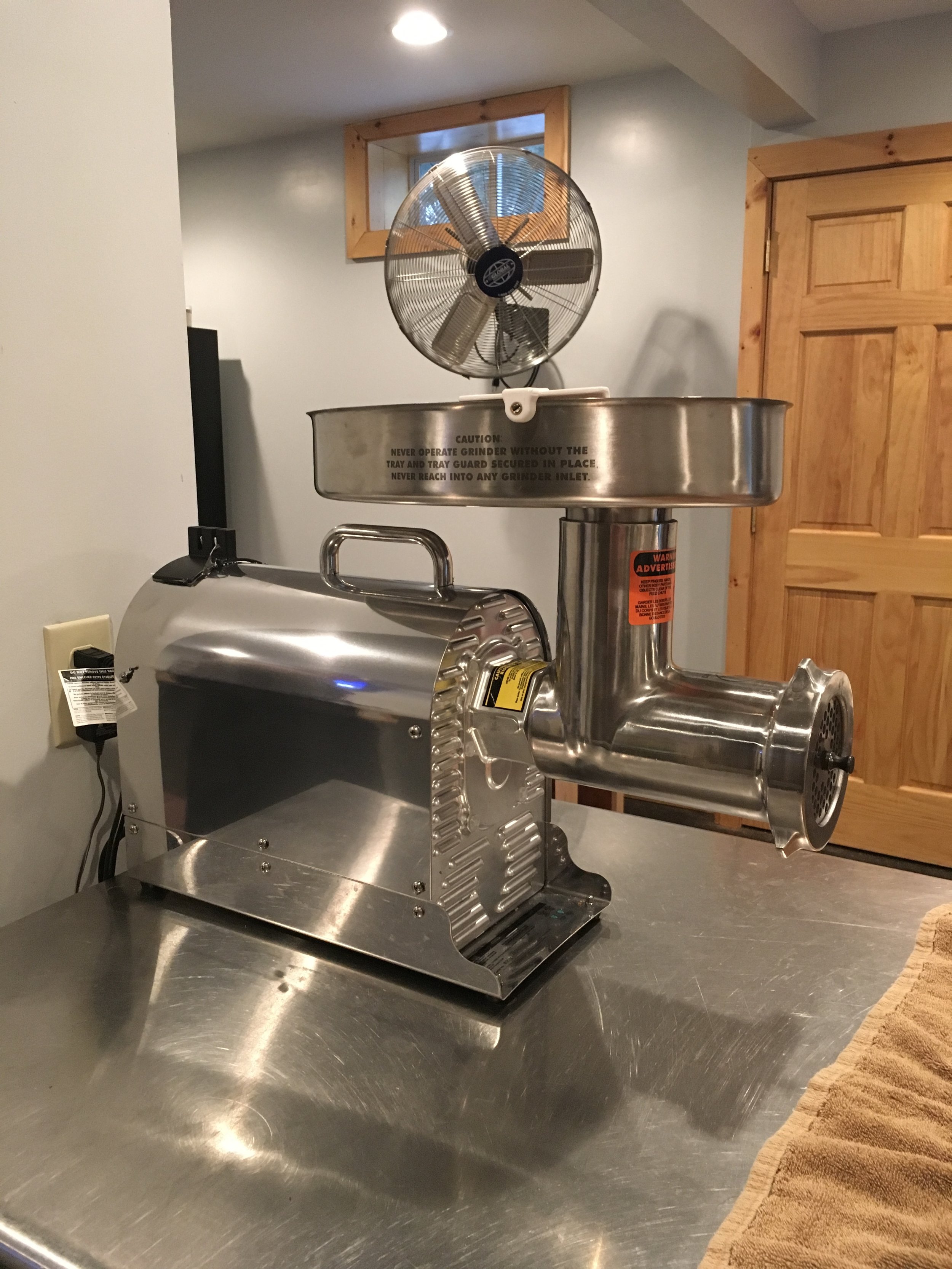
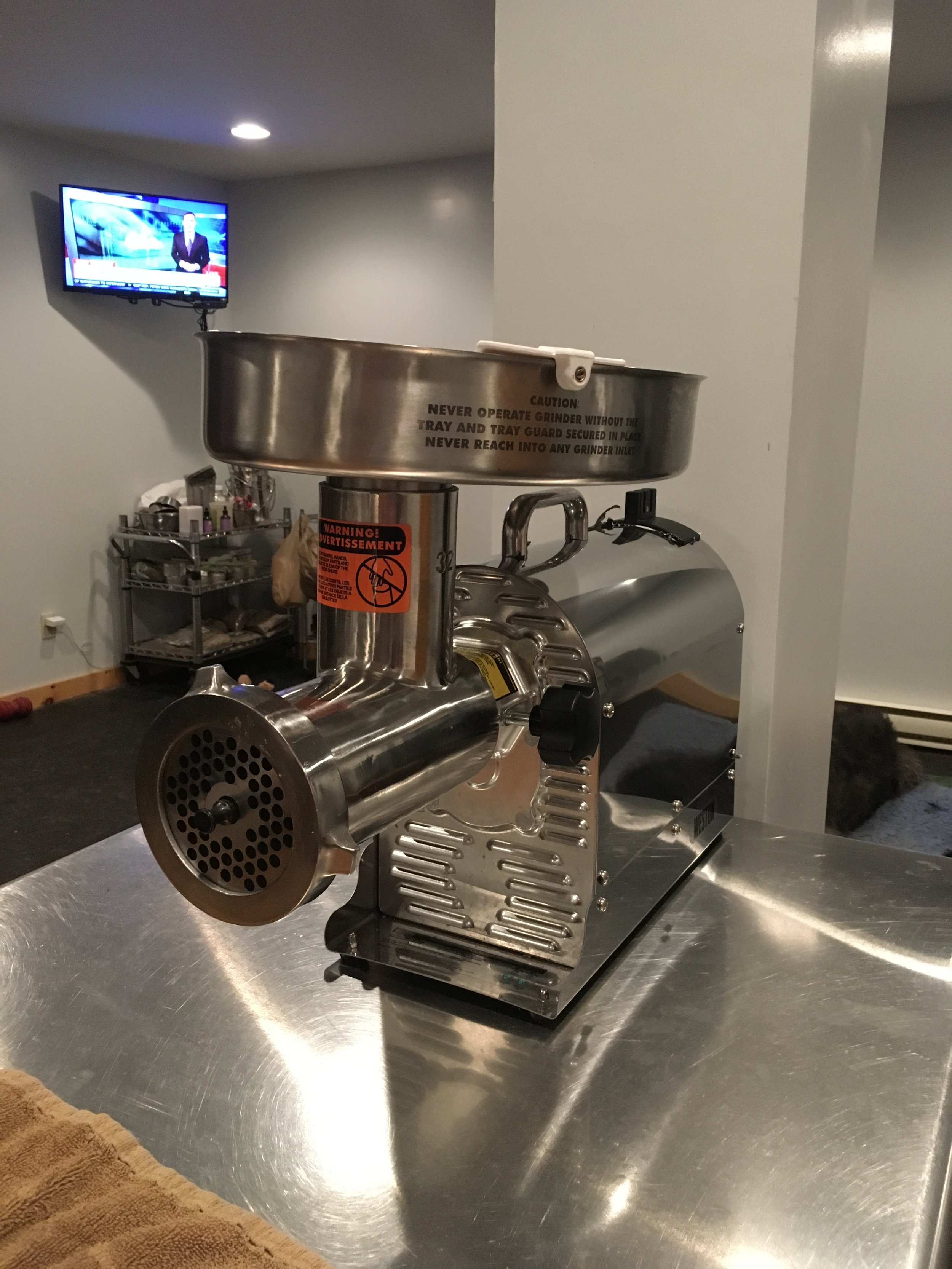
For those owners who prepare their meals for their dogs, I have provided a review on our new meat grinder. I purchased the Weston Pro Series™ #32 Electric Meat Grinder (2 HP) 1500 watt unit.
For those owners who prepare their meals for their dogs, I have provided a review on our new meat grinder. I purchased the Weston Pro Series™ #32 Electric Meat Grinder (2 HP) 1500 watt unit.
FeaturesIncludes:
- Permanently lubricated, 2 HP / 1500 watt air cooled motor (120 volt, 60 Hz) runs smooth for a lifetime of use
- Grinds 12-18 lbs per minute
- Offset head design (patent pending) promotes high speeds
- Precision engineered steel gears for quiet performance & rugged durability
- Five Year Limited Warranty
- Disassembles for easy cleanup
- Non-slip rubber feet for added stability
- Sturdy handle for carrying & transportation
- Reverse function on #22 & #32 models
- Tray guard on #22 & #32 models helps keep your hands safe
- #22 & #32 warrantied for grinding raw pet food - See warranty section for further details.
- Auger Grabbing Stomper for simple disassembly and cleanup
- Built-In Knife Sharpener for sharpening your favorite butcher knife
- Tray-Nested Accessory Tray for storing your plates, knife, stomper and sausage stuffing kit
- Tray Dust Cover
- Tray Safety Guard
- Stainless steel grinding knife
- Two stainless steel grinding plates: Coarse (7mm) and Medium (4.5mm)
- Sausage Stuffing Kit:
- Set of three funnels: 20mm, 30mm and 40mm
- 10mm Snack Stick funnel & high-speed auger
- Stuffing star/spacer
To date, I am a fan as this machine makes very quick work of raw beef meat grinding 12-18 pounds per minute! Amazingly fast but the best feature and one of the reasons why I invested in this machine is that it can grind small animal bones such as chicken or rabbit. In fact, the 5-year warranty states:
Weston Pro Series Electric Meat Grinders (#22 and #32) are capable of grinding smaller, softer animal bones such as rabbit, whole chickens* or chicken quarters, and other birds, due to both the power and all metal construction of the units. Avoid grinding large, dense animal bones as they are very difficult to process (i.e., bones one would find in large game, pigs, or cows).
When we travel we bring our Irish Wolfhound's meals with us. We were just preparing for an out-of-state dog show and before buying this unit, I had to purchase ground beef. Depending on the season, the price per pound could run from $2.39 to nearly $5.00 per pound. I actually checked the price of meat at our chain grocery store and at this time of the year, a family-pack of 80/20 ground beef was approximately $4.97 a pound. Thankfully, I am no longer held hostage having to buy ground beef. Instead, I purchased Chuck Roast that was on sale for $2.79 pound and ground my own hamburger meat. I ground 14 pounds of chuck roast in less than one minute. A simple switch to the finer grinding plate and back through the large, ground 14 pounds of meat went and out it came just like the product we buy in the butcher meat department. Frankly, it was marvelous having saved approximately $41.00 not having to buy pre-ground beef. Wow!
BTW, I also make my own chicken meatballs as we bring a variety of meatballs for traveling to feed the wolfhounds on the road. This is one of the reasons why I bought this 2 hp, 1500 watt meat grinder. I purchase either chicken drumsticks or chicken wings and the machine grinds the boned-in chicken in seconds. There is no need nor do I recommend passing the chicken meat through the finer grinder plate a second time as chicken meat is wet and sticky, just like ground turkey. I add oregano, wheat germ, fresh eggs and chopped garlic, roll them up and freeze and away we go.
Tips & Considerations on this particular Weston Supply Pro-Series unit.
First, it is a hefty unit and I do not consider it portable. We have it in one location and do not move it. Next, make certain that you purchase Food Grade Silicone spray to lubricate the working parts. I only use Weston brand spray as it is:
VOC compliant
Protective anti-rust film
Heat-stable
Odorless / tasteless
Sanitary
Non-Toxic
Ozone friendly
As for considerations, assembling the unit for each use must be done carefully. You cannot overtighten the knife nor the nut that holds the auger, knife and grinder plate in place. If you make a mistake and insert the knife backwards (which is not that uncommon and I believe happens more often than not) then the result is the machine's motor can and will seize up as there is no room for error within the design. Also, if you overtighten the nut placing too much stress on the knife and grinder plate then the motor will seize up as well and you will be left with an expensive, heavy, paper-weight.
Holter ECG Ambulatory Monitor
My last Blog article, Irish Wolfhound Heart Health, stressed the importance of the portable, ambulatory ECG device called a Holter Monitor. A portable 24-hour ECG that is an essential tool for diagnosing, screening, and eventually managing canine myocardial dysfunction, tachyarrhythmias, and congestive heart failure. Here is what they look like and how they are worn.....
My last Blog article, Irish Wolfhound Heart Health, stressed the importance of the portable, ambulatory ECG device called a Holter Monitor. A portable 24-hour ECG that is an essential tool for diagnosing, screening, and eventually managing canine myocardial dysfunction, tachyarrhythmias, and congestive heart failure.
How it works is that it provides heart rate and rhythm information over a 24-hour period and some, up to 48 or more hours, depending on the model that your Veterinary Board Certified Cardiologist utilizes. The ECG records the frequency of any arrhythmias, if any, and the cardiologist assesses the data for rapid heart rate (ventricular tachycardia) and the complexity of any arrhythmias, if there are single or multiple contractions or runs of couplets, triplets, as well as their duration. Sustained, malignant couplets or triplets can be life-threatening, however, in most cases, wolfhound owners are unaware that these are occurring unless the wolfhound collapses and loses consciousness (syncope).
In the attached photo gallery is a photo of a Holter monitor. This model is approximately 2.5 inches by 2.5 inches and is attached to 6 leads via electrodes. Models vary and depend entirely on which type your cardiologist uses. This equipment is quite expensive and depending on the size of their practice; many cardiologists will only have a limited number to apply to patients. The software for the monitors is an additional and costly expense and is required so that the cardiologist can assess the data. For example, our Board Certified Specialty Practice is housed in their own a 37,000 square foot multi-story building, and they only have five Holter monitors available at one time. We purchased our own Holter Monitor model that our Cardiologists use in their practice as we have several wolfhounds and the cost warranted our purchasing our own. Besides, I have lengthy experience in applying the Holter monitor with its electrodes and wrapping the equipment to the chest, though it is not advisable for others unless they too have extensive experience with the hardware and knowledge of the specific positioning of the electrodes on the each side of the dog.

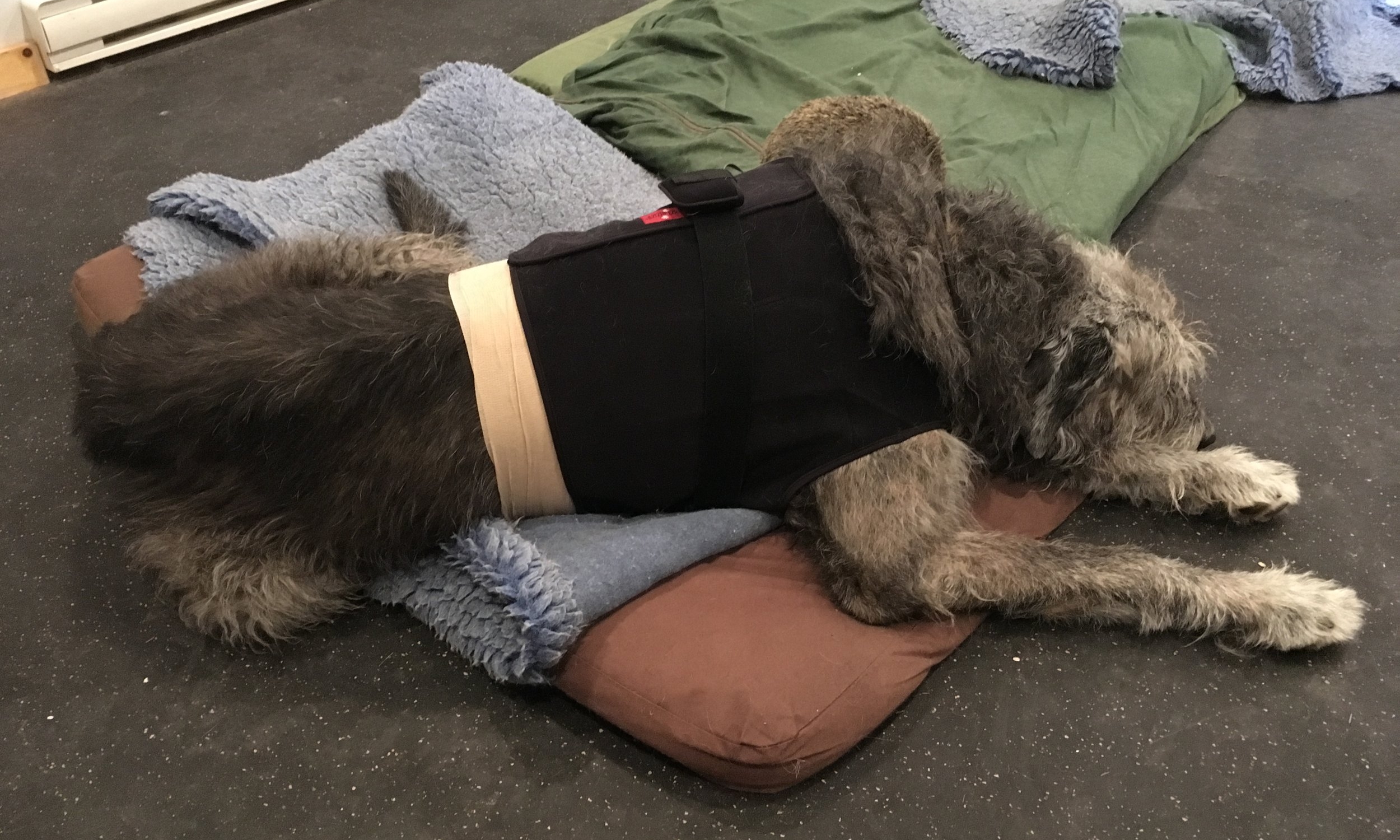


The hound is entirely comfortable wearing the device and goes about his routine. A diary is kept by the owner who records the time of any and all activity, such as feeding times, exercise and administering medications, if any. Once the 24 hours is up the dog owner returns to the facility to have the monitor removed or if living a distance away, their local veterinarian removes it for them and the owner then ships the monitor and equipment back to the Veterinary Specialist for review.
What I wanted to share with Readers and other wolfhound owners is the availability of cardiac vests for Holter monitoring. My cardiologist's practice has these as well, but once we purchased our very own Holter monitor equipment, we decided that we should go all in and buy the vest as well. These jackets cover the lead wires and electrodes to the monitor protecting them from the elements, and it also saves a good amount of VetWrap. The average wolfhound owner can purchase these vests if your Cardiologist does not have them for their patients or perhaps they do not have the correct giant size for your Irish Wolfhound.
I purchased ours from DogLeggs which provides coverage & support solutions for veterinary practices. The Holter monitor case seen on the back of Danny is custom sized to fit my Holter monitor model. You too can have one custom-fitted, even though your Cardiologist administers the Monitor on your wolfhound. All you need is to tell the DogLeggs company the dimensions of the Holter monitor, and they will produce one for you as well. The company is located in Virginia -- ask for Erin and tell her I sent you! I love ours.
Irish Wolfhound Heart Health
In the Irish Wolfhound breed, regular annual heart evaluations or workups consisting of electrocardiography (ECG or EKG), echocardiograms, and an ambulatory heart monitor (ECG), e.g., Holter Monitor are essential and indispensable...Why use a Holter monitor if an ECG and Echocardiogram detect no ventricular arrhythmias (abnormal heart rhythms)?....
In the Irish Wolfhound breed, regular annual heart evaluations or workups consisting of electrocardiography (ECG or EKG), echocardiograms, and an ambulatory heart monitor (ECG), e.g., Holter Monitor are essential and indispensable. In layman's terms, an ECG provides heart rate and rhythm information. An Echocardiogram is an ultrasound of the heart muscle measuring the heart's chambers size, the thickness of the heart walls, its valves, and blood flow. The Holter Monitor is a mobile ECG device that is strapped to the wolfhound's chest with electrodes for a minimum of 24 hours.
I advise all wolfhound owners to begin undergoing routine yearly heart workups, with all three of the procedures above, at approximately two years of age, and then annually from there on out for the remainder of the Wolfhounds' life. I urge doing so despite that an owner or breeder believes their wolfhound is in good health because Veterinary Board Certified Cardiologists are the only qualified individuals to determine the heart health of your Irish Wolfhound. Sadly and frustratingly, I have received one too many puppy inquiry calls from deeply saddened owners who lost their beloved wolfhound, and when I inquire as to the cause of death, more often than not I am told heart disease. After I delve deeper into the time span between when the wolfhound was diagnosed and when they died, it usually was within one year or as soon as six months between diagnosis and prognosis.
What a terrible, unfortunate pity as many of these early deaths could have been avoided. Today, there exists many pharmaceuticals that have proven to be life-savers, extending the hound's quality lifespan after being diagnosed with a cardiac disease. Often it is no longer a terminal prognosis but a manageable chronic illness. One of my dearest friends' Irish Wolfhound male lived to 12 years of age with managed cardiac disease, and I too had a wolfhound male residing in a companion home who lived to 11.5 years before he died and whose heart disease was controlled with medications.
However, each time I questioned these grieving wolfhound owners, I was informed that he or she never had annual heart evaluations performed on their wolfhounds. It was ONLY after the hound was symptomatic presenting multiple characteristics of progressive heart disease or even congestive heart failure did they seek medical care. What is more, ALL of these dog owners reported that their breeders had not shared any measurable amount of health advice, but most certainly no recommendations for heart monitoring. Eventually, as is usually the case with the general dog owning population, these dog owners believed that their wolfhound's annual check up with their local veterinarian was an adequate health provision with many meekly and bleakly offering the excuse that their vet listened to their dog's heart with a stethoscope.
This is NOT adequate heart healthcare for a breed predisposed to congestive heart disease.
Most Wolfhound owners, as well as many breeders, are not aware that many affected dogs can have a normal health examination. Even more, on occasion, an astute local doctor may pick up on a premature beat and listen for others. During this snapshot in time, however, there may not be others detected and no further follow through is prescribed. They would be wrong, especially involving the Irish Wolfhound breed and requires further evaluation by a Veterinary Board Certified Cardiologist, DACVIM. Importantly, in my considered opinion and experience, your general practice veterinarian should NOT prescribe any heart medications.
Single ventricular premature complexes (VPC's) warrants and requires further investigation by a specialist where a proper diagnosis is achieved not only by a EKG and Echocardiogram, but more importantly, by an ambulatory heart ECG Holter Monitor. A Holter monitor verifies the frequency of VPC's occurrence and duration, and if any dangerous couplets, triplets, and ventricular tachycardia occur. These are serious arrhythmic complexities which can result in sudden cardiac arrest. Sadly, twelve years past I had a veteran wolfhound collapse and who died in front of me, in my home, from sudden cardiac arrest. He had been diagnosed and was receiving treatment for VPC's, and it was heartbreaking as I could not save him. In the early stages, the average pet owner would not be able to recognize symptoms unless the wolfhound collapsed and lost consciousness (syncope), and, left undiagnosed, often these arrhythmias develop and grow more severe, though it is not always definitive that the disease will progress. Nonetheless, it bears reiterating; affected Wolfhounds can be asymptomatic.
Typically, if any abnormalities are detected by an in-office ECG and Echocardiogram, the Board Certified Cardiologist will urge that a Holter Monitor is attached to the wolfhound and worn for a minimum of 24-hours. It is a vital tool for analyzing arrhythmias, identifying and counting premature ventricular complexes, and characterizing heart rates (tachycardia). Then and only then can a proper diagnosis be given on the state of your wolfhound's heart health. Additionally, any prescribed drug protocols are determined by the Veterinary Board Certified Cardiologist, DACVIM, and NOT by your general practice veterinarian. Repeat follow-up Holter monitoring, typically within several weeks after the commencement of medications, is entirely necessary until such time that a 24-hour recording establishes that the Irish Wolfhound is responding well to the drug therapy. Even then, a wolfhound's owner must continue with recurrent follow-up visits with the specialist, as frequent as every 3-6 months or as directed by the cardiologist once the drug therapy has been determined successful in suppressing the arrhythmias.
Unfortunately for us, we had a veteran wolfhound diagnosed with malignant arrhythmias (couplets and triplets) via a Holter monitor evaluation, and she was receiving antiarrhythmic medications. We were planning for her annual echocardiogram recheck and repeated Holter evaluation when suddenly she failed, and we discovered that she was in congestive heart and subsequent renal failure. Just prior, she was asymptomatic, there was no syncope, yet she developed congestive heart failure. I can only stress that you must adhere to a strict follow-up Holter monitoring schedule while managing Irish Wolfhound heart disease as serious heart developments can occur over a short period. I must bear the burden thinking that if I had gotten her in earlier, we could have discovered the progression and treated it with additional medications.
Prudently and importantly, many Cardiologists recommend conducting an annual 24-hour ECG Holter monitor on a regular, yearly basis throughout a healthy wolfhound's life -- even if there are no electrical issues initially detected. I believe this is a very sensible and wise course of action, and one I wholeheartedly concur with as twelve months can mean the difference between life and premature death.
Why use a Holter monitor if an ECG and Echocardiogram detect no ventricular arrhythmias (abnormal heart rhythms)? Well, for one, the in-office ECG and subsequent echocardiogram are for brief periods and are not representative of what may be occurring over the course of 24 hours. Therefore, the Holter monitor will provide comprehensive real-time data over a twenty-four-hour-clock. Parenthetically, there are one or more cardiologists who believe that VPC's can be inconsistent, varying in numbers or frequency from day-to-day and if cardiac disorder is suspected then another Holter monitor assessment is recommended. However, most importantly for the healthy, unaffected Wolfhound; annual Holter recordings create a baseline for future heart monitoring in which the data obtained from this spotlight in time will be valuable in creating an archival recording. The ability to have this vital information for the doctor to review and compare to future recordings will be instrumental to your wolfhound's longevity and quality of life. In a breed that has prevalent congestive heart failure, Holter monitoring is a necessity, though expensive, and that is the price we have to pay for loving Irish Wolfhounds.
Poop Scooper Rating on Lee's Stool Tool Clean up System
Now and then I like to provide helpful and honest feedback on products that dog fanciers frequently purchase. One of the common items that multi-dog owners buy are poop scoopers. Boy, do we have experience with these. You might think that they are all alike. However, you would be wrong in that assumption. Yes, there are various styles, but I am not discussing rake or claw style -- I am talking about the spade and pan style which is a must-have for giant breeds. As for the rake style, I always wonder why people buy these because they are not helpful when your dog has diarrhea. Anyway, moving on....
I had previously posted quick feedback on another brand of poop scooper spade and pan style which you can read here. This time around we purchased three of Lee's Stool Tool Cleanup System, Large Tray w/Scraper/Spade from Amazon. What the heck, I tried all the other brands and had not been satisfied because they break too soon. Yes, even the metal ones. We go through a set of three Poop scoopers throughout our property in 6 months to a year. Usually, the rivets pop off the back of the pan which is how it is attached to the hollow metal handle. Then you are left with a pan having no handle. We live in the mountains and experience sub-zero winters with lots of ice which poses a problem when you are cleaning dog waste from the yards and paddocks. Most times you are chopping away with the side of the spade to loosen frozen dog waste despite our diligent and constant four times a day cleanup schedule.
Lee's stool cleanup tray and spade are made of plastic. The description of the material is "Rigid PVC (High Impact Styrene), " but I was under the mistaken impression that it would be a much sturdier product. On the whole, they are mostly worthless to use if you have hard snow or icy conditions. This product would, however, be ideal for warm climates having no snow, and the plus side is that the PVC is slippery so dog waste does not stick as it does on metal pans leaving residue behind! The downside to the slipperiness is that you best keep the pan level at all times or the waste will slide right off, and you will have to start all over again. All in all, no, we would not buy this brand again as it was a waste of money for me if I cannot use it year-round. Additionally, the plastic is too flimsy.
Dog Foot Pad Injuries
What a pain in the arse an injury to a dog's foot pad can be! It is a difficult location to heal quickly and can take what seems to be forever. Usually, a textbook healing process in this area, in my considered experience, is rare. If your dog has a foot injury, then this advice and helpful tips may aid the tedious and very worrisome process of healing a split or cut pad, an infection or abscess or even hot spots between the toes......
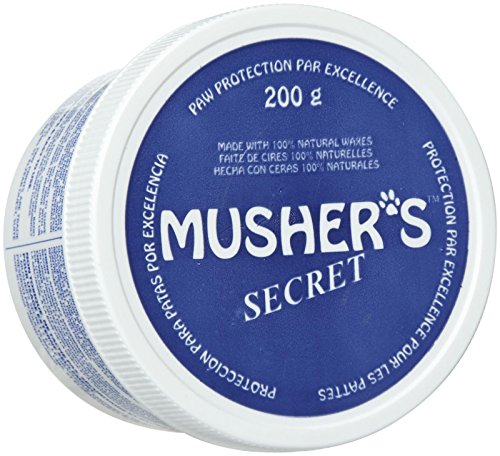
What a pain in the arse an injury to a dog's foot pad can be! It is a difficult location to heal quickly and can take what seems to be forever. Usually, a textbook healing process in this area, in my considered experience, is rare. If your dog has a foot injury, then my advice and helpful tips may aid the tedious and very worrisome process of healing a split or cut pad, an infection or abscess or even hot spots between the toes.
To begin, my experience with a footpad injury occurred this past winter where one of my male Irish Wolfhounds experienced an off-center split on his digital pad causing lameness. In my region, we have significant snowfall accompanied by sub-zero temperatures and split pads are not that uncommon, so, I used a conservative approach. I attempted to heal the pad, with Mushers Secret, an ointment made from food grade waxes which is a very popular preventative used by dog sledders in extreme climates. Usually, this balm can heal minor fissures, and most people have met with tremendous success using it. Suggestion, before you do use it know that it is best applied just before you walk out the door with the dog, otherwise, if applied too thick or if the wax remains on the pads when the dog returns inside you will have a mess to clean up off your floors. I would not use this product if my wolfhounds did not have separate living room accommodations within our home as the wax positively left footprints all over their commercial tile flooring. We do not have carpeting in our home, but I would imagine the wax would remain in carpet fibers and could ruin expensive rugs.
In my case, the Musher did not work, and the fissure continued albeit, abnormally healing creating a painful interdigital callus. At this point, I threw my hands up in the air and decided to have the callus removed as the best way to describe the feeling was like my wolfhound was walking around with a stone in a shoe. Sutures is not an ideal strategy for an 180-pound giant breed in the middle of winter, but, it had to be done as the young male wolfhound was very uncomfortable and obviously still lame. The veterinarian removed the callus and sutured the split pad with non-dissolvable sutures. Now, the next problem was how to keep it dry for 14 days.
I solved this problem by purchasing an unique protective foot and leg dog boot from Medipaw.
Medipaw protective dog boot is a convenient way to keep bandages, casts, amputations & sutures dry and clean. The waterproof/breathable protective dog boot is a useful tool in following through on veterinary treatments. Drier bandages mean less chance of infection, fewer stinky bandages and reduced need for re-wraps. The boots are oversized to accommodate a bandage and splint.

Our wolfhound wore this every time he went outside and was removed after he came back in and it worked very well. The wrapping was changed daily, and before re-wrapping, I allowed the area to air dry for at least a half hour. We did this for one week with suture removal 14 days later. However, the area was not healing well enough as the area remained red and moist but was also spreading to other areas of skin between his digitals and metacarpal pad. This is because the dog's sweat glands located on their pads kept a constant humidity level that was exacerbated by the wrappings. I used Nitrofurazone Powder (aka Puffer) which is an antibiotic to dry the area at the same time as expediting the healing process. This powder is a must-have, and I try to keep it on hand at all times as it is excellent for ears and minor wounds.

Even after applying the nitrofurazone powder and keeping the foot dry, it still seemed too moist to me, and at this point, I said enough and put my trust in Mother Nature. Off came the wraps and off came the Mediboot and out went that foot into the knee-deep fresh snow. Don't you know, after two days the skin irritation, and redness began to heal up quickly. So, through trial and error, experience has shown me that if there is a problematic wet area on the underside of a dog's foot due to a wound that has not healed properly, then my suggestion, depending on the season, would be to allow cold deep snow to work on the wound. While living near the ocean and beaches, I would allow the salt water to help heal by regularly allowing the dog to walk in the surf.
More on Westminster Kennel Club and Related New Changes to Crufts Protocols
Crufts Dog Show has announced that before entering the Group Ring, all Best of Breed (BOB) entries will be examined by a show official and a veterinarian.
In other words, they want to make certain that any dog who enters the ring during the televised competition is not spooked, shy or nervous -- just several concerning behaviors that may be witnessed by a million or more people such as what occurred at the 2017 Westminster Kennel Club (WKC) Dog Show.
For those watching the WKC Group Judging, we saw a few BOB dog entries that were nervous and startled, memorably the Pointer during her examination and gait pattern. So, if Crufts rules were in place at Westminster, then at least a few BOB entries might have been prevented from entering the Group ring for competition. However, wait a minute, let's look at what I believe is just one extenuating circumstance why one or more of these dogs were reactive.......
Crufts Dog Show has announced that before entering the Group Ring, all Best of Breed (BOB) entries will be examined by a show official and a veterinarian.
The Crufts Kennel Club Press media website page announced on February 10, 2017 that:
A basic final check of each Best of Breed will be undertaken in the collecting ring at Crufts by officials from the show management and vet teams.
The Crufts Committee is mindful that it has a duty of care to all dogs entered at the show and particularly those competing in the arena at Crufts, which is a very different experience to competing in the group at other general championship shows and can be overwhelming for both dog and handler.
Therefore to protect the welfare of the dog, all Best of Breeds will be requested to undergo a basic low-key observation to ensure each dog is ready to compete in the group. The observation will focus on obvious visible conditions which could compromise the dog’s performance in the group competition (KC Regulation F(1)15b refers).
Gerald King, Crufts Chairman, said: “For those who are preparing for competition in the collecting ring it is a very exciting and special time, so we want to be sure that both dog and handler are as ready as they can be to compete and that the dog is sound and not in distress in any way.
“The check will be basic and will simply involve the show official and vet team observing the dog move, to ensure that the dog and handler are both ready to enjoy themselves in the ring.”
In other words, they want to make certain that any dog who enters the ring during the televised competition is not spooked, shy or nervous -- just several concerning behaviors that may be witnessed by a million or more people such as what occurred at the 2017 Westminster Kennel Club (WKC) Dog Show.
For those watching the WKC Group Judging, we saw a few BOB dog entries that were nervous and startled, memorably the Pointer during her examination and gait pattern. So, if Crufts rules were in place at Westminster, then at least a few BOB entries might have been prevented from entering the Group ring for competition. However, wait a minute, let's look at what I believe is just one extenuating circumstance why one or more of these dogs were reactive.
The damn cameras were everywhere. They were in the tunnel most likely on a track system; they were on the floor as the dogs were led out of the tunnel into the open group ring, and they were disguised over by the judging examination area, and so on. Didn't everyone notice the Bulldog as he kept an intense, hard stare at the camera which was moving the length of the tunnel with him until he opened into the arena? All the while the crowd and the camera operator thought it was amusing?! Let me assure you that I did not find it entertaining and those people who know me can attest to the certainty that I would have made sure the cameraman and the WKC show officials knew how I felt -- on camera or off.
My Irish Wolfhounds are true sighthounds with hereditary prey drive. They are neither couch potatoes, dullards or slugs that appear perpetually stoned. They are sensitive, curious hunters who would have reacted to a disguised or hooded, large shape zooming along the tunnel's length seemingly pursuing them as they were led out. True sighthounds are quick to detect or respond to the slightest movement or changes which make them ideal hunters. Interestingly, though, we saw various breeds act in response to the tunnel intrusion, so there may have been more interference than the viewer could see.
Why do these dogs have to be subjected to that -- just for the publicity? Why can't the televising begin with cameras zooming in on each entry after they come out of the tunnel -- not while in the tunnel. THESE ARE ANIMALS damn it -- they are living, breathing creatures, they are not statues. No matter the amount of anthropomorphizing, they remain animals who can frighten, startle, get stressed and they will react.
I felt bad for the Pointer bitch during Group Judging as she grew increasingly overtaxed and alarmed, so I went back and reviewed portions of her breed competition. She seemed to be sound from what I was able to ascertain via video during the breed competition. One could speculate that she became spooked by the hooded camera that was adjacent to the Judges examination area as she was not the only dog reacting to something in that direction. I saw one or more other dogs, such as the Border Terrier, give long, hard looks at this area as the Handlers were trying to get their attention back to the business of showing.
I think WKC needs to thoroughly review the positioning of the television cameras and insist that they ought not to be so close so that they are disturbing the dogs competing. More competitors need to speak up and make their concerns heard, especially those exhibitors whose dogs were somewhat or clearly affected by the presence of the cameras. I say this though with 'tongue in cheek' because the majority of exhibitors today are women and the irony is that Westminster is an 'old-boys' club. They do not allow women members so if the majority of female exhibitors are not going to complain about this offense then they most likely will not complain about their dogs being made to feel visibly uncomfortable. That is until, perhaps one day, a similar vet check will be implemented at Westminster dog show, and then their dog is deemed "considered not in a fit state to be shown" during the televised Group competition.
After watching WKC, it appears that the dogs' physical ease is sacrificed for televising rights, but, it does not seem to have worked out for WKC this time. If memory serves me well, I do not recall in previous years this many dogs reacting to the TV cameras. Perhaps the standard operating procedures have changed with the new televising broadcast company Fox Sports (FS1) and their TV coverage methods? I do think that the agitated behavioral demonstrations we witnessed only provides ammunition to the animal rights extremists (ARE) who argue that conformation dog shows are intimidating, sometimes tormenting experiences for these unfortunate dogs but also that today's breeds are so inbred that they no longer are of sound mind and body.
Returning to the new, additional inspections at Crufts Dog Show -- we are to assume that any low-key observances (their words -- not mine) would eliminate instances such as what we observed at WKC show this week. However, lest we forget, first and foremost, all breeds have diverse temperament and sensitivity levels, and I feel that such an inspection could be biased against the unique genre of sighthounds who can and will respond to their environment, with hair-trigger reactions as their hereditary traits dictate. Sighthounds have many unusual characteristics; for example, the proper way to approach is with your hand under their chin and not over their skull while covering their eyes as nearly all will flinch, duck their head down or pull away. Sighthounds do not like to run towards a solid wall, and for this reason, knowledgeable show superintendents will not assign sighthound breeds to an indoor ring bounded by one or more walls. Many, such as Afghan Hounds, do not like to be approached from behind rather we approach from the shoulder. I could go on and on. The fact is that most galloping sighthounds react to stimuli and while in close quarters with numerous other dogs are stressed -- at least internally -- while others may also be visibly agitated. However, once they reach an open area, many typically calm down. But, the very possibility that an inspection at the highest point of activity and tension just before Group judging commences could eliminate them from group competition is both real and discriminatory.
I can only speculate that Cruft implemented this new review based on animal rights extremists fallout as to what I discussed previously. It seems I am not far off the mark as Dog World UK reported on February 10, 2017, the following:
"It is assumed this move is to avoid the clamour caused last year by the demeanour of the German Shepherd best of breed who appeared spooked and nervous in the ring...The KC said it wanted to ensure the dogs were ‘comfortable and showing no signs of distress’, and that the check will focus on ‘obvious visible conditions which could compromise the dog’s performance in the group competition.’ If the KC perceives there to be a problem the dog will be reviewed by one of the show’s vets who will ask for it to be moved again. All of this will be done as discreetly as possible, a spokesman said. If the vet considers the dog is compromised in some way – movement or temperament – he will discuss his concerns with the handler who it is hoped will accept that their dog is not ‘going well’ or is too agitated to perform well in the group and will readily withdraw their dog. If the dog is not withdrawn voluntarily the KC will insist it is."
All of this is why Westminster Kennel Club show officials should get with their new television broadcast partner and work out a camera procedure with necessary and proper boundaries to ensure that the dogs do not appear distressed (even though often it is not the dog's fault.) No more tunnel camera alongside the dogs and the camera station set up by the examination area needs reassessment.
What's in a Name -- The 2017 Westminster Kennel Club Dog Show
Not sure if anyone else noticed while watching Westminster Kennel Club (WKC) Group Judging that as the judging progressed on the two evenings, the winners of each group were identified by their call names and not their registered names. For example, the television screen would show:
Group Winners: Hound Group, Norwegian Elkhound "Duffy"
Not sure if anyone else noticed while watching Westminster Kennel Club (WKC) Group Judging that as the judging progressed on the two evenings, the winners of each group were identified by their call names and not their registered names. For example, the television screen would show:
Group Winners, Hound Group, Norwegian Elkhound "Duffy"
and at the conclusion of each Group competition, they added the name of the newest Group winner in the same manner by identifying its breed and his or her's call name. They did, however, identify each group entry during the televised individual examinations by their full AKC registered name, as well as on the WKC Results website page.
This departure from the standard protocol is curious, and I reasonably assume that they were attempting to personalize the dogs and humanize the competition to the viewing audience. Make it seem more relatable to John and Jane Doe watching at home with their Labrador on the couch. Not a bad idea as the club's public relations firm was probably working overtime gathering as many details as they could on each entry. The Dog Media Profile page saw to this, and each dog's digital profile was to be used for press opportunities such as the information revealed on what they called a "Blue Card" during the broadcasts. A smart tactic that again made the dog more relatable with little tidbits like Muffy's favorite snack is Ritz Crackers.
A longtime friend who has been involved with AKC dog shows for decades pointed out that since WKC is a member of the American Kennel Club, the official and proper dissemination of winners must include the dog's registered names, not just pet names. I see her point as it appears that WKC is "dumbing down" the sport and competition. Sorta like, Mrs. Jane Doe stating, "Oh look, honey, Little Freckles the Chihuahua won the Toy Group, so maybe we can enter our Pookie next year." In doing so, it may be an oversimplification of such an achievement as the average home viewer does not realize the magnitude of many of these dogs journeys; the time, money and tremendous effort that went into "Little Freckles" WKC Group win. It very well may be seen as diminishing the role of the Breeder whose kennel title is customarily entered in a registered name but also their enormous toil, perhaps over a lifetime, to achieve this success with their bloodlines. To see their registered kennel name displayed on the television screen after having won the WKC Group must be a thrill.
I am not versed in AKC show club policies as my friend is the expert, but I recognize and appreciate the tightrope that AKC member clubs and public relation firms are walking today to rejuvenate, rather, in my opinion, to resuscitate this sport. Wikipedia best describes public relations as being a strategic communication process that builds mutually beneficial relationships between organizations and their publics.
Times have changed, and we must adapt as we find ourselves in this precarious position today because both the sport and its governing body, AKC, had been reluctant to embrace change for far too many years now. Cultural changes along with social media are "lie of the land, " and an aggressive public relations campaign enables the public to connect to our sporting competition emotionally, leaving them with the belief that they too could partake. This may be the only way forward. I wrote nearly seven years ago in "Exclusive, Not Inclusive" trying to personify a spectator's experience with our sport,
"We all see these people who are simply observing—they attend because they thought it might be fun to watch in the same way many of us might attend a horse race, horse show jumping, dressage, or even driving events. Many of us do not own a horse that we could enter in these events, but we attend anyway because we have a shared interest or love of the animal and because we thought it would be enjoyable...We must remove the elitism and become an inclusionary sport otherwise; we will run out of newbie’s to carry on in our footsteps."
2017 Westminster Kennel Club
I can only laugh at the shortcomings, once again, involving the Westminster Kennel Club dog show. I cannot comment on all the other breed competition videos, but an elementary age child must have been tasked with the responsibility for videoing this year's Westminster Kennel Club's Irish Wolfhound judging. Incredibly frustrating as this is a highly respected dog show and one would not expect to encounter such poor quality video cataloging but also consider the importance of the lost archival aspect. In short, shamefully, there is no salvageable video of this breed competition, on that day, in that special time and place but only a tongue-in-cheek parody.......
I can only laugh at the shortcomings, once again, involving the Westminster Kennel Club dog show. I cannot comment on all the other breed competition videos, but an elementary age child must have been tasked with the responsibility for videoing this year's Westminster Kennel Club's Irish Wolfhound judging. Incredibly frustrating as this is a highly respected dog show and one would not expect to encounter such poor quality video cataloging but also consider the importance of the lost archival aspect. In short, shamefully, there is no salvageable video of this breed competition, on that day, in that special time and place but only a tongue-in-cheek parody.
The video begins with poor clarity as it is dark, over-saturated, with bad resolution. It most certainly was not my personal equipment as I tried to view the video on three devices. A Macbook Pro, an iPhone 6 Plus, and finally on the newest iPad Pro with Retina display -- all of which showed the same dismal results. It was not just the poor quality of lighting or contrast or resolution or whatever you want to call it -- there simply is no video of the hounds being judged!
The video goes to hell in a hand basket around the first minute and a half after we see the first dog entry judged though it was too dark to distinguish much of the dog. Next, the videographer must have decided to leave as the camera is squarely centered on the judge in the middle of the ring, and not on the class bitch entry who was set-up and had been gaited. The videographer seems not to know he is supposed to film the dogs as they stand for examination and while they move around the ring. On an amusing note, I assume the judge will be flattered once he learns that he, not the hounds, was the star attraction. I am left to assume that no one emphasized to the videographer that this was a "dog show" and not a "people show."
This is what we were shown during the judging!!
Then, 2:35 minutes in, the camera screen goes blank! Hmm, the videographer must have gone to the restroom and seconds later the screen begins cycling through Judging schedules and Ring Assignments. Finally, at the 3:15 minute mark we are back in the ring, all the while judging had continued and with a jerky zoom we are back in action. Oh wait, it is the judge handing over a ribbon. Well, all right we say, maybe we can catch some of the champion breed competition. Enter the Best of Breed (BOB) entries where they set up just to the left of the camera, yet, the resolution is so poor that we only see dark figures against a sea of fluorescent green. Of course, we recognize the first contour is that of a man with a wolfhound as we can identify their dark shapes and a wolfhound head and body but no details!
This the quality of the video on the rare occasion we even saw a hound
Oh dear, at 4:53, unbelievably, the screen resolution goes even darker, and now, all the BOB entries are only black blobs. Zoom zoom, once again, the camera is focused back on the Judge. Meanwhile, the entries are gaited but the viewer can only see dark shapes of the hounds trotting around the ring and one cannot even identify their color or sex!
Hey, the videographer must be saying to himself -- those three hounds look attractive. So, we are zoomed in on the one corner of the ring, furthest away from the judging where the last three entries are awaiting their turn (it is still too dark for the viewer to see anything, though), and there we remain. Meanwhile, several BOB individual entries are examined and gaited, but that is not what the videographer wants us to see. By golly, we are going to stare at this corner at the dark blobs and the adjacent ring of Australian Shepherds, whether we want to or not. Almost two minutes later -- hold on, I can make out a penis on one of the hounds -- our overachiever decides to zoom out to the line-up. Not until 10:48 into the breed judging are we privy to see an individual wolfhound gaiting, but keep in mind the resolution has not changed whatsoever, so all we can see is a head floating above a black blob.
Damn, I spoke too soon. I should have known better than to press my luck. The cameraman decides it is not necessary to see the next wolfhound BOB entry and promptly focuses back on their popular subject - the Judge! Next up, the last BOB entry -- Ahh, we are back in business as the cameraman allows us to watch the last BOB entry, of course, only in midnight lighting. Now, we are 13:30 minutes into this masterpiece and the viewer still cannot decipher anything -- perhaps if we wore night vision goggles -- when we are shown a fleeting second of a darkened wolfhound gaiting. When, wham, the cameraman feels we saw too much and back to the center of the ring and to the judge we go. Meanwhile, the BOB entries are gaited, out of sight, on the edge of the ring. Finally, at 16:57 the adjudication is over, whew, and we are privy to the awarding of ribbons and honors to hounds we never could see.
I think Westminster Kennel Club needs to get their money back.
Awarding of ribbons in a competition we never saw
Canine Neospora
Neospora Caninum is a different topic that most dog owners and breeders are completely unfamiliar with being that it is not a widely known diagnosis in our companions. What is it? It is a parasite detected by a serologic blood test for dogs that eat raw beef diets and who are experiencing various symptoms. Clinical signs in puppies six months of age or younger typically are a hindrear weakness, patellar restrictions, paralysis, muscle atrophy. In adult dogs, they range from ventricular tachycardia, seizures, hepatitis, dermatitis, to neurological symptoms such as ataxia and weakening hindquarters....
Neospora Caninum is a different topic that most dog owners and breeders are completely unfamiliar with being that it is not a widely known diagnosis in our companions. What is it? It is a parasite detected by a serologic blood test for dogs that eat raw beef diets and who are experiencing various symptoms. Clinical signs in puppies six months of age or younger typically are a hindrear weakness, patellar restrictions, paralysis, muscle atrophy. In adult dogs, they range from ventricular tachycardia, seizures, hepatitis, dermatitis, to neurological symptoms such as ataxia and weakening hindquarters.
This protozoan parasite can be serious, and if left undetected, can cause injury to the heart as well as permanent paralysis. Additionally, Myocardial Infarction (MI) resulting in ventricular arrhythmia occurs in some infected dogs as well as Dyspnea or shortness of breath, vomiting, and diarrhea in those with the polysystemic disease (of or relating to more than one system.) Other issues, e.g., Retinitis or inflammation of the retina, and optic neuritis also can arise in some dogs. Also, common are ulcers, pneumonia, peritonitis, and hepatitis.
For those interested, The NCBI or National Center for Biotechnology Information has a case study involving a 7-week old Irish Wolfhound puppy who was diagnosed with Neospora Caninum infection. Read it here: "Treatment of canine pediatric Neospora caninum myositis following immunohistochemical identification of tachyzoites in muscle biopsies."
Fundamentally, the protozoan parasite is found in domestic animals called intermediate hosts such as cattle, sheep, goats, dogs but also wild animals such as deer, rabbits, coyotes, wolves and foxes. In bovines, it causes abortions. Transmission occurs from the intermediate host such as from cattle when the dog eats infected tissue. In turn, dogs are considered definitive hosts by shedding the parasitic cysts in their feces but also by transplacental infection by an infected bitch to her puppies. The cysts have what is described as impervious shells allowing for the cysts survival after the feces is gone and can be ingested again by another dog or a grazing animal, hence, toxoplasmosis.
Parenthetically, the Companion Animal Parasite Council (CAPC) reports that:
"Free-roaming dogs, dogs residing in the presence of cattle, and breeds such as Basset Hounds, Boxers, German Shorthaired Pointers, Golden Retrievers, Greyhounds, and Labrador Retrievers are more commonly seropositive."
Insofar as treatment, many Board Certified Neurologists recommend treating Neospora with either one or a combination of these protocols: 1- Clindamycin (4-week minimum) or 2- Trimethoprim sulfadiazine and pyrimethamine or 3- Clindamycin and Trimethoprim sulfadiazine.
Ballyhara Irish Wolfhounds have been naturally-reared for over 20 years, and approximately seven years past, I had a wolfhound diagnosed with Ventricular Premature Contractions. My Board Certified Cardiologist immediately performed two tests. The first was a Cardiac Troponins test for Myocardial Infarction (MI) and the second, a Neosporosis Caninum serologic test looking for the presence of the protozoan parasite. Interestingly, the serologic test results came back at a 1:100; titers with levels greater than 100 indicating probable exposure. After researching the recommended drug protocols, we proceeded with a Clindamycin treatment for an extended period (at least four weeks.) After which we retested, and his titer level came back below 100. This wolfhound never demonstrated any indications of paralysis or weakening.
I was and remain unwilling to use either #2 or #3 combinations of the above-described protocols as there are many concerning adverse effects of the sulfa drug. Still, depending on the titer result, if a very high titer or a dog presenting symptoms were involved then a typical recommendation would be to use the #3 protocol, especially if the dog had a rising titer. Notably, costs for the serologic examination will depend on what area of the country one lives. Texas A&M is the gold standard testing facility for Neospora and my costs, including shipping were $165.00, per test.
Approximately three years past, I had another Wolfhound diagnosed with Ventricular Premature Contractions and whom we also tested for Canine Neospora serum antibodies. Her titer results were higher at 1:400, and as a result, we followed the standard Clindamycin protocol. After four weeks, we retested again and saw a decrease in the titer level.
As recent as one year past, we tested a Veteran Wolfhound for Neospora after I brought him to a Neurologist for consultation on a cervical spine injury with subsequent ataxia radiating down the spine. His serum antibody titer was 1:400. Disturbed, we randomly tested two other veteran Wolfhounds at home, and they both were negative. This time, we did not treat the supposedly affected hound with Clindamycin, and after four weeks, we retested him, and his test results came back at 1:200, lower than the first.
The conclusion of my Specialist was manifold:
1. the first sample indicated previous exposure OR false positive and NOT a true active infection.
2. Danny did not need Clindamycin or TMP-SMZ
3. His neurologic signs are NOT from Neospora, but it may have been in the food that he ate at some point in the past.
I should note here that the NCBI article I prefaced earlier states that
"Definitive diagnosis of neosporosis requires identification of organisms in a muscle or CNS biopsy, using immunohistochemical (IHC) staining."
Essentially, a biopsy of a muscle from the patient is the best procedure to diagnose but also requires a special stain kit. Keep in mind that a muscle biopsy requires anesthesia, and the stain kit is an additional expense usually around $400 in addition to the normal biopsy fee. All told, the costs can add up.
In conclusion, I previously and successfully used the clindamycin protocol to treat Neospora. Still, it remains a mystery how one wolfhound in our pack was seropositive, and others were seronegative. On occasion, there are false positives or dormant infections that a titer may detect, as well as individuals may have different immune responses to the same organism. Although I am not a scientist, I have pondered what may be a possible explanation being that dogs who are naturally-reared and who consume raw beef will naturally have higher titers for the parasite due to exposure but not an infection. I base my hypothesis on the argument that W. Jean Dodds, DVM, and Diana Laverdure present in their book, "Canine Nutrigenomics, The New Science Of Feeding Your Dog For Optimum Health." They state that laboratories have developed their normal ranges based on dogs fed cereal grain foods, but the normal ranges for many of these tests simply do not apply for healthy dogs fed raw diets, and the interpretation of laboratory results for these dogs should take these differences into account. The authors explain that dogs fed raw diets exhibit naturally higher levels, e.g., BUN levels. So, perhaps the serologic test for Neospora is similar?
It is a vexing issue, and although there are cases available, I have found contradictory data on how best to prevent it. Let us set aside the typical reactionary response "Don't feed raw meat" and my sarcastic retort "My goodness, how did dogs ever develop and prosper over thousands of years without the aid of 20th-century dog food and its manufacturing operations based on corporate bottom line?" There seems to be an unfounded solution repeated by many that freezing the meat for 24-hours, before defrosting and feeding, will kill the parasitic cysts. On the contrary, I ascertained that beef meat must be frozen for at least two to three weeks to kill most parasites and incidentally, this also is recommended in the book mentioned above where Dodds states to freeze meats for at least three weeks to kill most parasites. One other solution that I am investigating is Food Grade Diatomaceous Earth which has long been touted as a natural dewormer. Though different, I will keep you updated on what I find.
There you have it -- if and when I have more information I will report it. Hopefully, for that person surfing the Internet in search of information on this topic, you will have found this somewhat helpful...
Pet Food Recalls
Commercial pet food quality has taken yet another hit with the news alert this morning that a popular canned dog food sold in 15 states contained a euthanasia drug. The pet food manufacturer of Evanger’s Hunk of Beef Canned Dog Food has recalled five lots because they contain the euthanasia drug pentobarbital.........
Commercial pet food quality has taken yet another hit with the news alert this morning that a popular canned dog food sold in 15 states contained a euthanasia drug. The pet food manufacturer of Evanger’s Hunk of Beef Canned Dog Food has recalled five lots because they contain the euthanasia drug Pentobarbital.
The website www.Petful.com reports that “Pentobarbital can affect animals that ingest it, and possibly cause side effects such as drowsiness, dizziness, excitement, loss of balance or nausea, or in extreme cases, possibly death.”
Petful.com website not only reports food recalls but also provides a comprehensive manufacturer list for investigation. What's more, it offers a research tool to perform a check on the recall history of commercial dog food brands to ascertain how many times, if any, your brand of dog food has been subject to recall.
Some may claim that recalls are, in certain cases, exaggerated due to an overabundance of caution, but they would be wrong in practically all circumstances. Recalls are in place when a pet food is contaminated for one of many dangerous ingredients such as Listeria, Salmonella, Pentobarbital, plastic, mold, and so on, but also for inadequate and essential vitamin supplementation such as Thiamine for cats. If a dog owner touches a pet food contaminated with Listeria and does not wash up immediately, they can become affected. Any internet search will tell you that fever, muscle aches, nausea or diarrhea can result but if it spreads to the nervous system, symptoms such as a headache, stiff neck, confusion, loss of balance, or convulsions can occur -- not benign in my book.
However, let's get back to the most recent recall -- Pentobarbital tainted dog food! Nearly all of you may express surprise as to why Pentobarbital, a euthanasia drug that is used to euthanize pets and humans alike has been found in commercial dog food. But not me as sadly, I am desensitized to the heinous ingredients contained in many of today's modern dog food brands. Take a long minute to contemplate how this toxic element entered into this company's dog food meat source. Many readers already are aware having read my website that a primary focus of mine is on nutrition having begun approximately two decades past where I researched dog food ingredients and was horrified. One website that I had turned to was www.WholeDogJournal.com which provided vital information on nutrition, origins of pet food ingredients such as manufacturers using chalk to mimic and in place of the more expensive and necessary calcium element, but also sage advice on supplementation and so forth.
Today there seem to be numerous other websites providing information on commercial dog foods, such as this investigative blog, TruthAboutPetFood.com. After quickly perusing their site I found the following to be absorbing, "The VERY Private and VERY Different Ingredients of Pet Food" that details the difference between homonyms -- words we use on a daily basis that have different meanings and that which dog food companies take great liberties with while developing a processed pet meal. Take a brief moment to read it -- for those who are uninitiated with the industry the topic should be engrossing.
"Did you know that almost every single ingredient in your pet’s food has an alternate meaning very different than the same ingredient in human food? And did you know those alternate meanings are privately owned…not public information?"
This article is relatively benign to the many others I have read over the years revealing the truth about ingredients and their origins in commercial pet food. Start doing your research and for the sake of your beloved companion, start feeding them as you would yourself. It is not difficult nor as time consuming as you believe. The dog food manufacturers just want to make you think it is.
Instant Gratification
Many of you can sympathize with the frustration of having to deal with the likes of today's prospective puppy inquiries and owners. You know the type -- the people who contact you via email and without proper introduction ask for the price of a puppy, if and how many puppies are available and so forth.....It is as if you are a manufacturer and or distributor and they are contacting you to find out if a product is in stock and how soon can it ship out......
Many of you can sympathize with the frustration of having to deal with the likes of today's prospective puppy owners. You know the type -- the people who contact you via email and without proper introduction ask for the price of a puppy, if and how many puppies are available and so forth. Typical examples:
"Do you have any puppies for sale?"
"I am inquiring about your liters {sic}. Are you expecting any liters {sic} in the future? I'd like to place a deposit on one if so please contact me back if so."
"How much are your puppies?"
It is as if you are a manufacturer and or distributor and they are contacting you to find out if a product is in stock and how soon it can ship out. Moreover, they do not see anything wrong with this! Some are dumbfounded when you explain that you do not broker dogs by email and that you insist on speaking with them in a more personal manner of communication, on the phone and then surely in person. Quelle surprise, many times you never hear from them again!
This behavior is owing to the "instant gratification" wave that has consumed our society. Most puppy buyers cannot be bothered with conversations, education, and preparations. They want a puppy as quickly as possible, and there is no time for dawdling and idle chatter, the latter being how they regard meaningful discussions on the breed's personality, specific needs, etcetera. It is very uncommon nowadays to receive an inquiry from someone who agrees to meet and interact with the dogs, which depending on the breed, is a very necessary and practical one-on-one visit.
This behavior results in an irony so thick you can cut it with a knife precisely because this public is the very body decrying the state of purebred dogs. They are carrying torches, similar to the old Hollywood movies with the Villagers moving in mobs out to destroy the evil monster -- in this case purebred dog breeders -- to eliminate breeders entirely. Simultaneously, many of these are the same people who indiscriminately purchase puppies from undiscriminating breeders and then, tragically, having performed no due diligence, dispose of the dog for a host of inexcusable and unconscionable reasons because we are now a "throw-away" society. Everything is disposable, and it utterly boils my blood.
When I receive an "out of the cold" query -- not through my Ballyhara website -- I request that the person(s) first tour my breed website before we speak. I do this because I have learned from long experience that most people have little real-time knowledge of my breed, they only think they do. So, I ask them to peruse all my website particulars such as breed character; acreage and exercise requirements in secured property with above-ground fencing and all the pertinent details for such; general health concerns, expenses and so on. Because I lead a full life, I simply do not have free hours in the day to field long phone calls explaining the breed, and so these steps save me precious time. However, as I stated earlier, often I do not hear back from some of these people. Usually, this is because my website is performing its duty -- providing educational, sensible, and practical advice about the breed. Many of these people either move on to another breed or an undiscerning breeder.
However, now and then I do get some doozy returns, and here is an example of the sheer audacity of some puppy buyers and what we have to deal with today:
"Hello Lisa, thank you for writing. I am sad to see that you have such a closed opinion of the underground containment system for Wolfhounds. I successfully used that containment system for my Finn with no problems whatsoever. I do, however, know of a woman who lost her wolfhound because he was hit by a car because her stupid husband left the dog gate open. I am not a stupid or careless person. I am someone who deeply loved her wolfhound and the wireless fence allowed him to be with me while I worked in the yard or tended the horses. I did not leave him behind in a fenced yard. Perhaps that is why puppy mills have customers. They are not as arrogant."
Ah, now we conscientious breeders are being roundly criticized for requiring fenced, secure areas for our dogs to run and play in and we are blamed for driving puppy buyers to commercial puppy mills because our policies are too strict! What will they blame us for next?
Ancient Egyptian Dogs
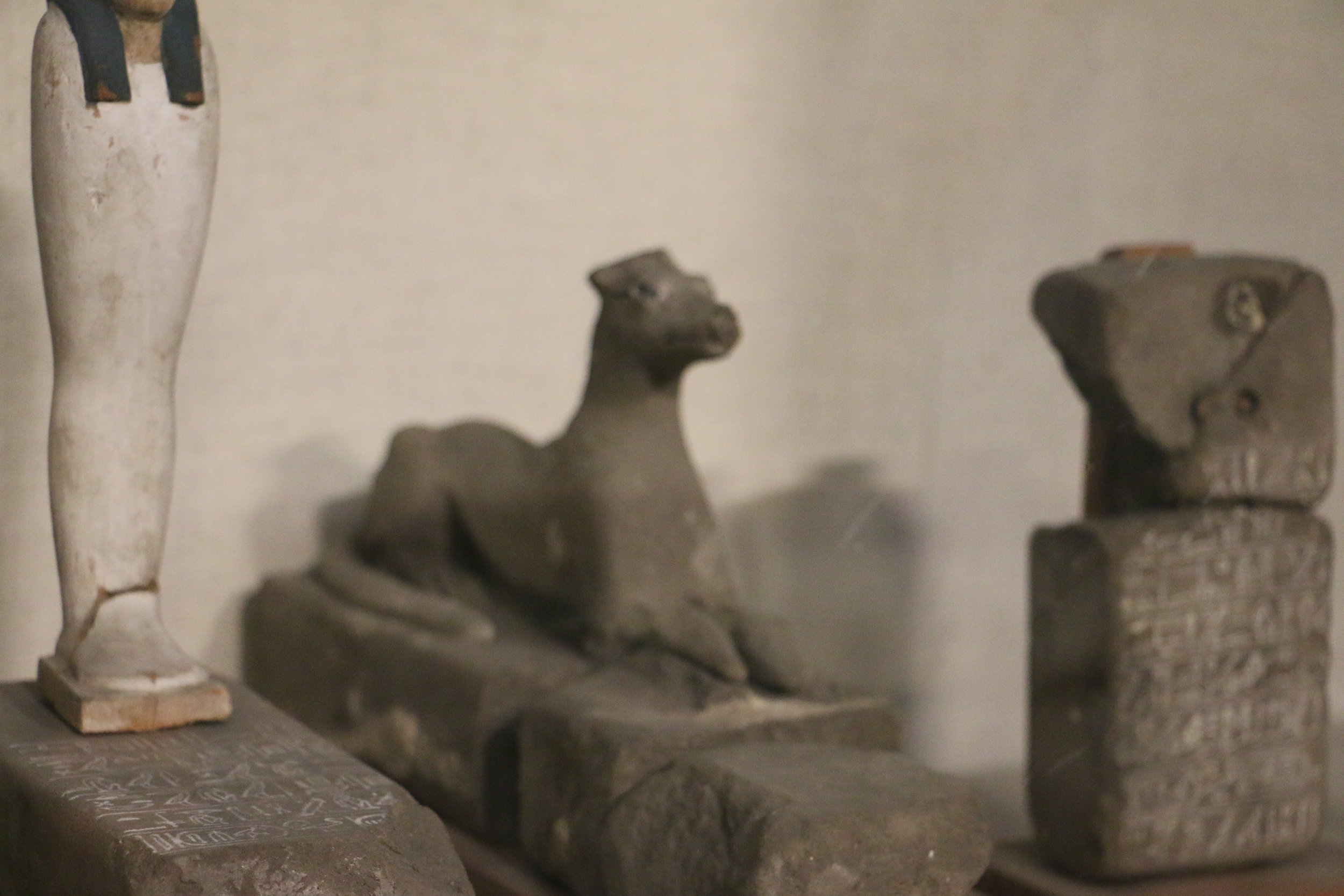
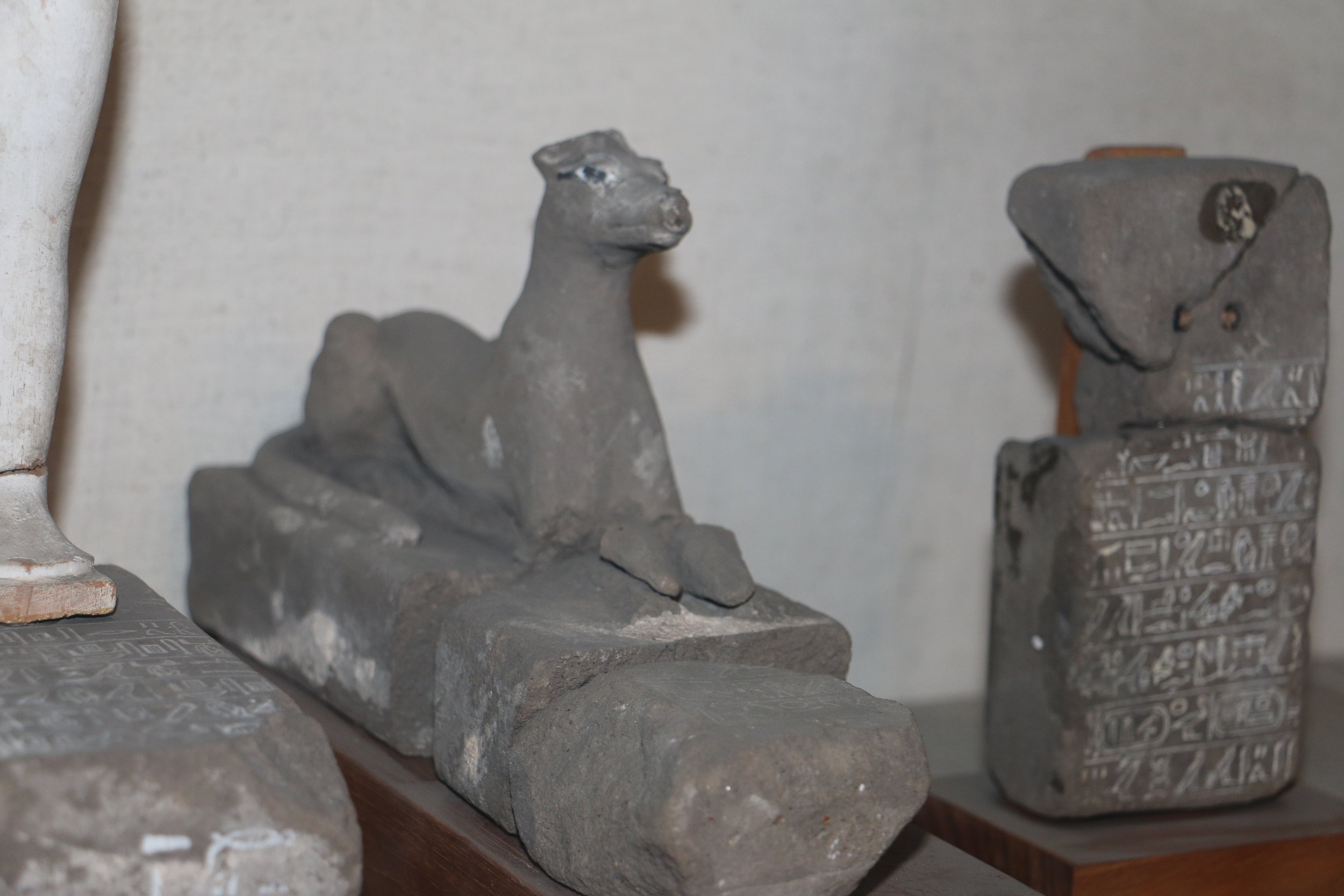
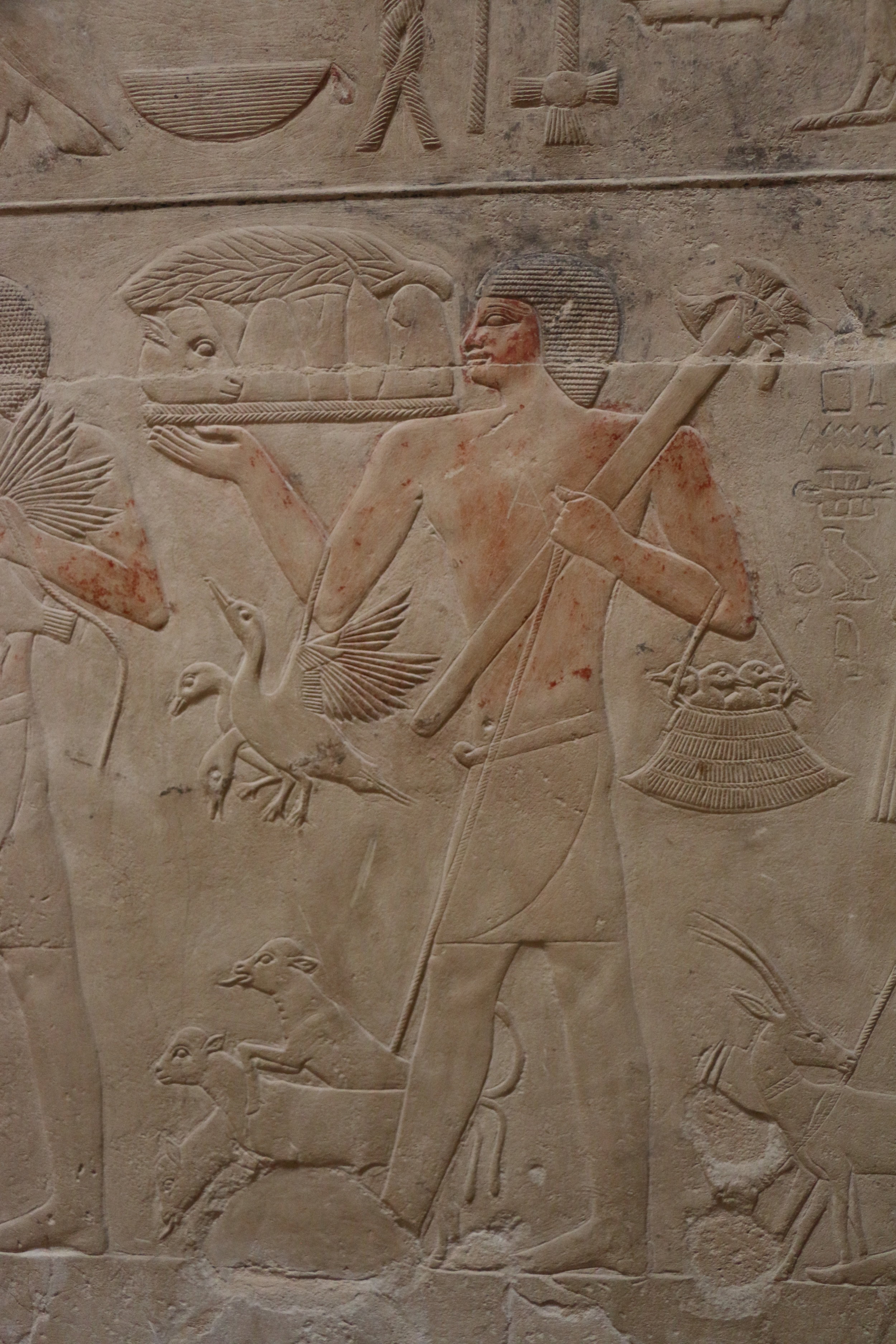
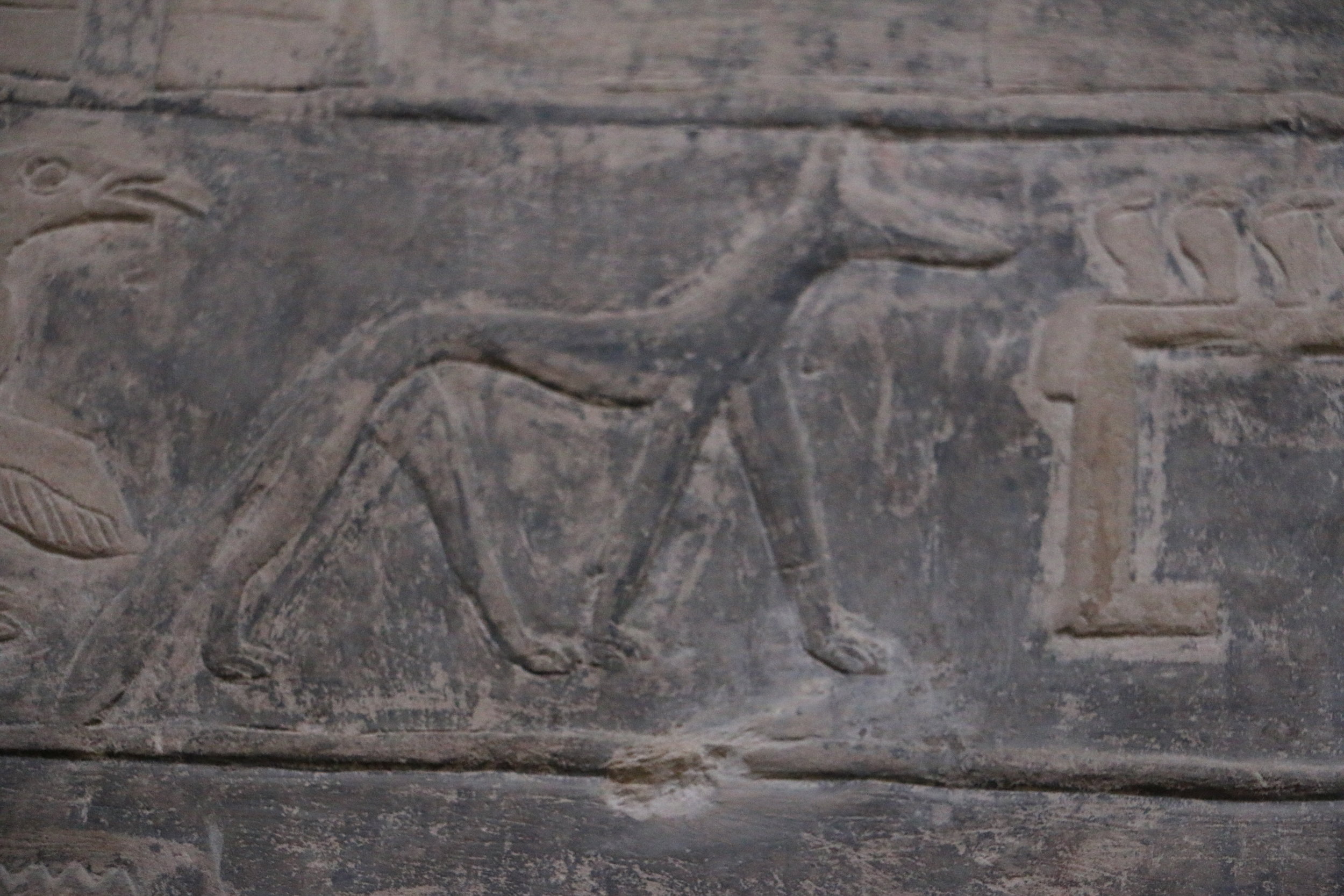
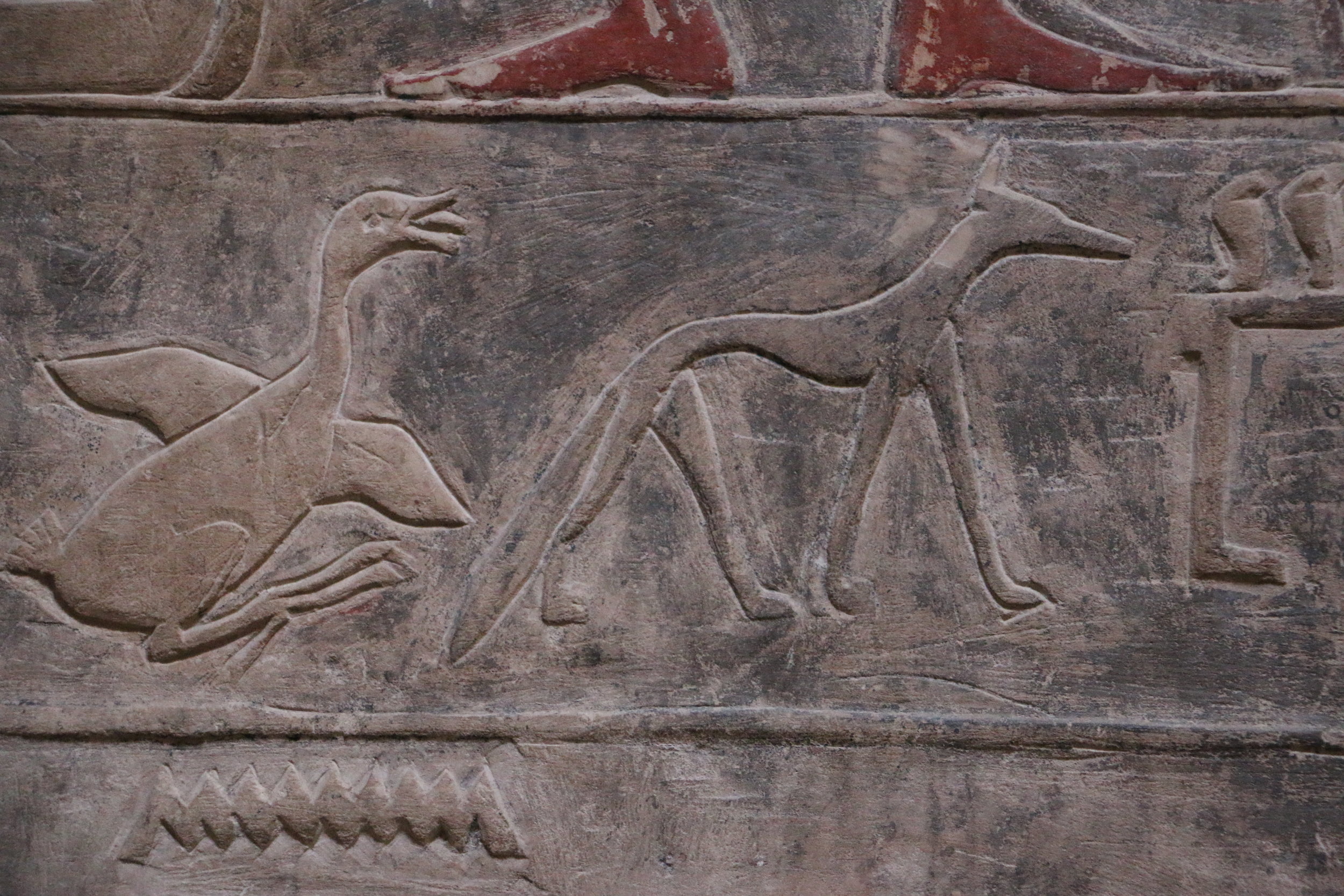
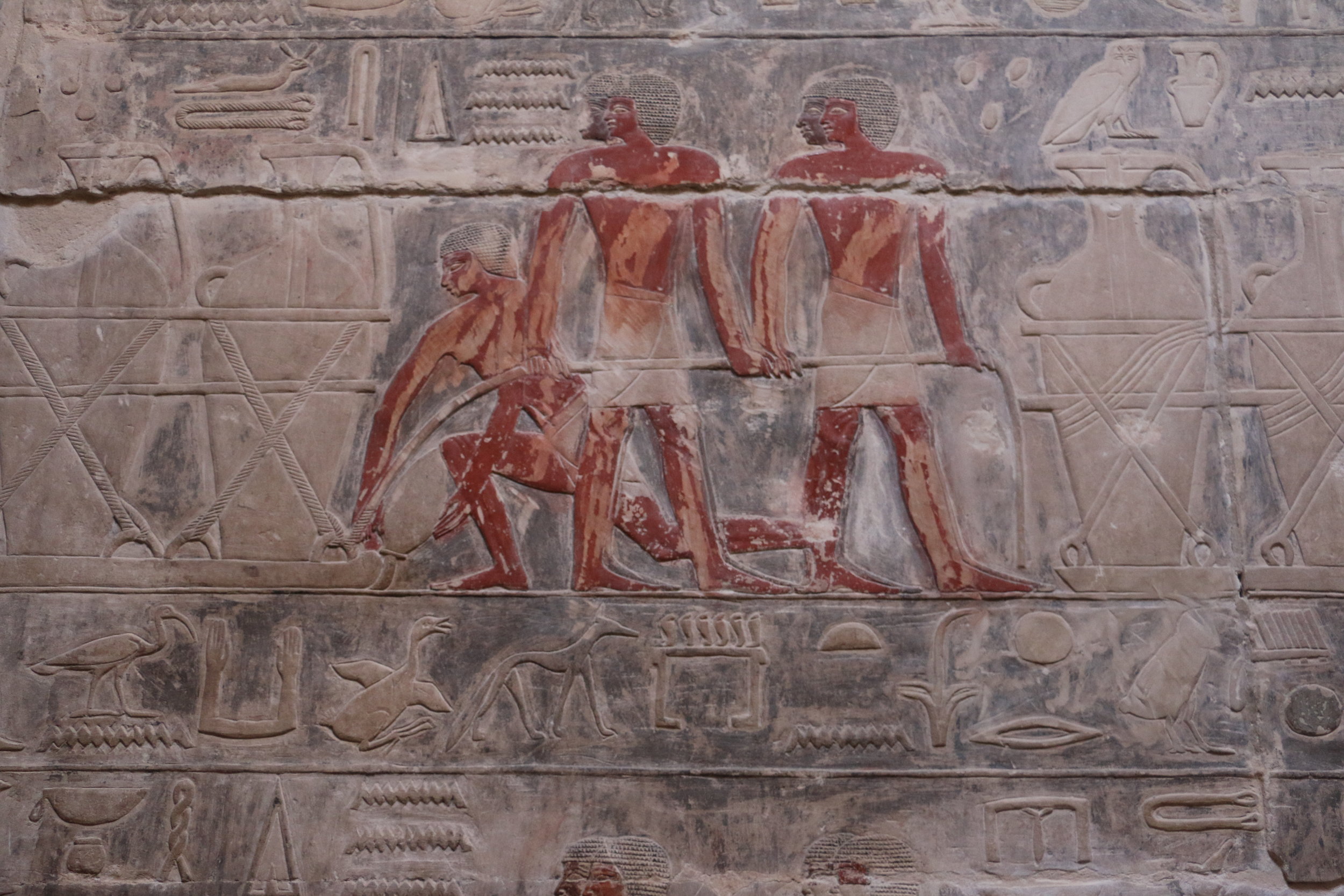
As I have been an archeology buff for most of my life, my husband and I took a once-in-a-lifetime journey to Egypt. This incredible journey was astonishing, stupendous, glorious, transporting us back to the time of the ancients....However, on a related and exciting topic, many academic, longtime students of purebred dogs who have not had the opportunity to travel back in time to antiquity will marvel at the following photos. This statuette, possibly Greyhound, that I saw in the Egyptian Museum of Antiquities, and the carving and color renderings of the ancient Saluki and Pharaoh Hounds in the Funerary Complex of Djoser at Saqqara are extraordinary......
Hello to all, sorry for my disappearance there for awhile but my husband and I were traveling. I am not one glued to their Smart Phone, so while we were abroad, I was living the experience fully and not seeing it through the lens of my iPhone or broadcasting to social media. Then after we returned home, we had to set off on yet another trip shortly after and then the holidays and on and on....
As I have been an archeology buff for most of my life, my husband and I took a once-in-a-lifetime journey to Egypt. This incredible trip was astonishing, stupendous, glorious, transporting us back to the time of the ancients. Touring for eight straight days, along with a fabulous four-day Nile River Cruise, we visited nearly all of Upper and Lower Egypt's miraculous monuments and artifacts that left us speechless. Jaw-dropping sights as we toured the country with our private Egyptologists as we found ourselves exhausting the use of the same familiar adjectives, over and over again in an effort to describe the experience.
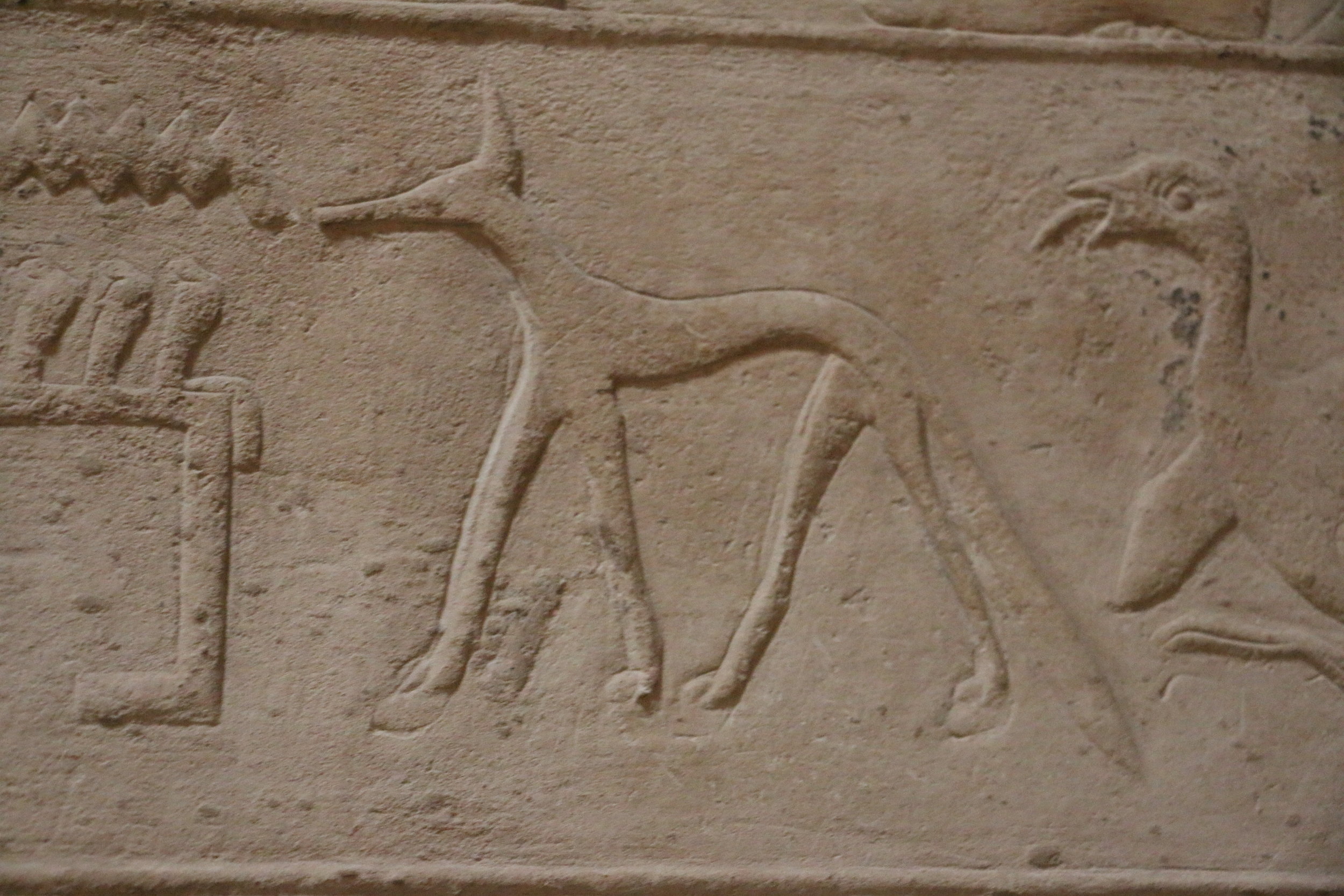
However, on a related and exciting topic, many academic, longtime students of purebred dogs who have not had the opportunity to travel back in time to antiquity will marvel at the following photos. The statuette I saw in the Egyptian Museum of Antiquities, and the carvings and color renderings of the ancient Saluki and Pharaoh Hounds in the Funerary Complex of Djoser at Saqqara are extraordinary. Especially since the drawings or paintings date back to the Second Dynasty, long before the Giza Pyramids. The renderings (paintings) are spectacular depicting daily life in the Delta, trade relations with the other African countries, and the Saluki and Pharaoh Hounds were prominently depicted with great reverence. It is marvelous to observe how little their type and shape have changed over these thousands of years. That is, of course, as long as modern breeders are not arrogant enough to believe that they can improve upon such noble breeds -- because they simply cannot. Look at these examples as they are magical. As our Egyptologist explained, the Pharaoh Hound was portrayed with a larger forechest, brisket than the Saluki though, understandably, for many people it is very difficult to discern between the two breeds shown on these walls.
Saluki at the Funerary Complex at Saqqara, Egypt
Pharaoh Hound on the walls of the funerary complex of Djoser depicting every day life

Propagating a Breed and the Responsibilities Incurred
This article was originally printed in the Irish Wolfhound Club of America's Harp & Hound magazine Autumn 2016 Issue.....
This article was originally printed in the Irish Wolfhound Club of America's Harp & Hound magazine Autumn 2016 Issue.
Canine Mammary Adenocarcinoma
This is a carry over from my previous Blog Post on "Lumps, Bumps, Masses, Tumors, and Cysts." I wrote on the removal of a mammary or breast tumor from one of our female veteran Irish Wolfhounds (8.5-year-old), and the biopsy test is back. Indeed, the results are that the tumor was mammary adenocarcinoma. Naturally, many people at this point may panic or, at the least, are profoundly concerned.......
This is a carry over from my previous Blog Post on "Lumps, Bumps, Masses, Tumors, and Cysts." I wrote on the removal of a mammary or breast tumor from one of our female veteran Irish Wolfhounds (8.5-year-old), and the biopsy test is back. Indeed, the results are that the tumor was mammary adenocarcinoma. Naturally, many people at this point may panic or, at the least, are profoundly concerned. I have spoken with my general surgeon, and the recommended course of action is to watch the site where we excised the tumor and its surrounding tissue and also her other mammary glands as well by gently massaging the areas frequently to feel for small pebble-like masses. Further, my surgeon explained that sometimes a resected adenocarcinoma could turn serious and affect internal organs, but that, in his experience, seems to be pretty rare. Usually, if it returns, it will be in the mammary tissue.
Ballyhara Declan
According to the American College of Veterinary Surgeons (ACVS),
"More than a quarter of unspayed female dogs will develop a mammary tumor during their lifetime. The risk is much lower for spayed female dogs, male dogs, and cats of either gender. In female dogs, 50% of mammary tumors are benign, and 50% are malignant. However, few of the malignant mammary tumors are fatal.
Additionally, ACVS states that if the mammary tumor is malignant (such as my Wolfhound's breast tumor), the surgical site and regional lymph nodes should be checked for local tumor recurrence and metastasis, as my surgeon already explained, but also abdominal ultrasound and chest radiographs are recommended every 3–6 months to assess for evidence of metastatic disease.
The ACVS goes on to explain:
In dogs there are a number of factors that influence the prognosis following surgery. These prognostic factors include tumor size, clinical stage (how far the cancer has spread in the body), tumor type and grade, and various other pathologic changes seen in the tumor tissue. Benign tumors are cured by surgery, although the development of new mammary tumors (both benign and malignant) is possible. There is a poorer prognosis with malignant mammary tumors, and it also depends on what type of cancer. In dogs, the size of malignant mammary tumors is an important consideration when determining prognosis, both for local tumor recurrence and survival time. The smaller the mass is at the time of surgery (3–5cm or smaller) the less likely it will recur, or metastasize (spread) elsewhere. Dogs can live several years after complete removal of some malignant mammary tumors. So once a mass is found, having surgery to remove it earlier is better.
Keep that last piece advice foremost in mind as although we discovered her mammary tumor several weeks prior -- it grew to a size of a sea scallop in a relatively short time frame before it was excised. It is important to reiterate that mammary tumors are not necessarily always malignant, and some could be due to a highly glandular location. Even in the case of our female's tumor -- although adenocarcinoma was determined by a biopsy -- the rate of growth does not inevitably mean that hers has already metastasized. The rate of growth might also be due to the glandular region. Only time will tell.
One last thought, interestingly, data has revealed, according to ACVS but also other investigative research that in dogs, obesity at a young age is a risk factor.
Lumps, Bumps, Masses, Tumors and Cysts.
Lumps, bumps, masses, tumors and cysts. On an Irish Wolfhound, any one of these can spark alarm in most people's minds leading to the feared cancer diagnosis. Understandably, many companion owners are not well-versed as to how to appropriately respond and then deal with these issues. Frankly, depending on the location of the "mass," alarm bells may or may not be warranted. However, many Wolfhound owners overreact and fall in step, and I mean every step, of their Veterinarians counsel, some of which I would caution against as it is sometimes improper and overly aggressive......
Lumps, bumps, masses, tumors and cysts. On an Irish Wolfhound, any one of these can spark alarm in most people's minds leading to the feared cancer diagnosis. Understandably, many companion owners are not well-versed as to how to appropriately respond and then deal with these issues. Frankly, depending on the location of the "mass," alarm bells may or may not be warranted. However, many Wolfhound owners overreact and fall in step, and I mean every step, of their Veterinarians counsel, some of which I would caution against as it is sometimes improper and overly aggressive.
Consider, for example, an incident involving one of my Wolfhounds many years ago where my yearling bitch developed a harmless Calcinosis Circumscripta on the outside of her hind foot very close to her outer toe. If you are unfamiliar with these, a Calcinosis Circumscripta is a ball of calcium deposit typically located in the bony area of the body often seen on rear feet and or joint hip areas and is frequent in certain giant breeds. Most all the time benign, they can also be found as small bumps under the tongue of which I have observed them in this area as well.
Having just made a momentous change for my hound's general surgical veterinarian care, I made an appointment to have it removed with my new veterinarian as the calcinosis was bleeding due to its proximity to the ground. Upon exam, this "new to us" veterinarian warned that to resect the mass may also require the removal of her outside digit! Suffice to say that this diagnosis was a practical example of an aggressive, disproportionate determination that consistently occurs today in the field of veterinary medicine. Most giant breed companion or pet owners who are without the support of a competent, breed authority such as myself, would be afraid to question their veterinarian's recommendations, and in this case, a severe and aggressive course of action. Frankly, I would hazard a guess that one or more veterinarians would have proceeded to remove both the mass and outside toe but, thankfully, I was involved in this case, and nothing of the kind took place.
I need to preface this conversation by introducing my several veterinarians and their roles in the care of our hounds. First up, I have an indispensable primary house-call veterinarian responsible for annual check-ups, vaccinations, prescriptions, emergency diagnosis visits, blood draws, and progesterone collections. Next, I have a separate general surgery practice responsible for spay surgery, Cesarean sections, basic digital radiographs, mass removal and biopsies plus any emergency surgery, night or day. Next up, I use a specialty practice made up of board certified veterinarians in nearly every field of practice. I utilize these specialists for heart monitoring, and complicated diagnoses via state of the art radiology equipment capable of accommodating large animals, such as horses, in addition to ultra modern M.R.I and ultrasound technology, and, if necessary, subsequent complex surgery.
At the time of my discovery of the mass above, I had just switched to this new, general surgical practice after having discontinued my association with my former veterinarian of 20 years due to his standard of care being adversely affected following the sale of his practice to a large conglomerate. Our new general surgeon, though one hour's drive each way, was highly recommended by my longtime primary veterinarian who went even further by saying that our new general surgeon was one of the best soft tissue surgeons she had seen in a long time.
Now, that we are all on the same page; I will finish my story on the mass. My new general surgeon listened quietly to my diagnosis of the mass on my Wolfhound yearlings foot as I explained that I had seen many calcinoses several times before over my many years. I went further by describing the substance he would most likely find inside the golf ball-sized mass, similar to that of cottage cheese and that, in my opinion, there remained enough viable skin that could be pulled up and stitched together for proper healing. He accepted and trusted my judgment and proceeded to remove it agreeing under no circumstances to take-off her toe, and he found what I had described precisely. This, by the way, was the first time he had seen a Calcinosis Circumscripta and explains his immediate reaction that it was a tumor. He was very pleasantly surprised and his readiness to listen to me as a skilled and experienced breeder was a sign of an open-minded, progressive physician. Today, we have an excellent relationship, and I rely on his expertise frequently as he is an outstanding general soft tissue surgeon who does not have a God complex.
Over these years we have had many bodies of matter removed from our Wolfhounds. Many of these cysts would scare the pants off of average dog owners and not well-informed veterinarians. Take for example our female veteran Dallas who is prone to benign sebaceous cysts that get quite large and occur on her back and seat bones. Several were bigger than golf balls, yet, we did not remove them until she was scheduled for another surgery such as being spayed. The reason for our postponement was that first, I was reasonably confident that they were harmless and importantly, often you could do more harm overreacting than underreacting. I do not take lightly the process of anesthetizing a sighthound, especially an Irish Wolfhound and prefer to do it only if necessary. You can read my previous Dog Blog Musings post on several cases of dogs having undergone intolerable, agonizing deaths from incompetent intubation of the esophagus instead of the trachea.
We have another veteran bitch, Declan, who currently has a small nodule under her skin on her back adjacent to the spine. We are not concerned about this growth because this particular litter was predisposed for such benign nodules. Both her littermates, Dallas and Darley, both have had large cysts on their backs. Of the many we have had removed from our females, only one was ever infected as it was located on Dallas's seat bone, aka Ischial Tuberosity. The constant interaction with the ground created a secondary infection. However, none of the other cysts found on our Wolfhounds have ever been malignant nor infected.
To illustrate other but concerning tumors, we have had several small, mammary growths removed from our bitches. Regarding these, as soon as they were detected we aggressively responded by removing them. Due to their location in a highly glandular area, often these may experience aggressive growth patterns and can begin small like a pebble and then grow quickly. This rate of sizeable growth is often due to either aggressive mammary cancer or because of its glandular location releasing hormones into the bloodstream. In all cases, the bitches teat were removed as well. Biopsies are always in order for these tumors which takes approximately one week. Often the results are "mixed cells," described as benign mammary neoplasms recommending further observation for reoccurrence. However, there is always the possibility of malignant diagnoses which is hindered only by chemotherapy and or holistic treatments.
Of course, there are swelling and or tumors found on limbs, and these are NOT to be ignored either as they often may be a sign of osteosarcoma. Alternatively, another example might be a soft tissue mass that you may feel, for instance in the neck area of your hound, while massaging with your fingers. Though not just under the skin, these can be deep fatty tissue tumors otherwise called a lipoma -- a benign invasive tumor usually in around muscle or even lymph glands. Fatty tumors, these can be reviewed or diagnosed by a Board Certified Radiologist via ultrasound. Conversely, these could also be soft tissue sarcomas in which the specialist may be able to aspirate the mass drawing out a sample of its composition for pathology. Honestly, though, it has been my experience that aspirations are usually ineffectual since they have mixed laboratory determinations of uncertain origins and usually indicate an abundance of blood.
Nonetheless, in these circumstances, a board certified specialist should be consulted as to options if the diagnosis was a tumor and not a lipoma. This may include either dissecting the mass or leaving it undisturbed due to an awkward location that may require rib spreading and lengthy recovery times. See my health page and the story about our beautiful Dior who passed from thyroid carcinoma. In retrospect, I should not have opted for surgery, and I should have left the tumor alone allowing her to live with some quality of life for how many months she would have had. Instead, she underwent surgery at 7.5 years of age, and three masses were removed. However, in the process, there was slight damage to her trachea and esophagus cords as they had to be moved to the side for access to a large tumor. She lived only for two additional months before I humanely euthanized the valiant girl. It was deeply saddening to witness such a majestic Irish Wolfhound fight every day to overcome such dreadful pain yet still keep such tenderness and devotion in her eyes.
Alternatively, it may also be that surgery is not an option for an older dog. I can vouch for this course of action on our veteran stud dog, Danny. Danny experienced an injury to his neck roughhousing with a littermate and compressed his 6th & 7th vertebrae. My Dog Blog Musings post and the subsequent updates found on this Blog explain what the specialist recommended to relieve Danny's pain. Alternatively, I opted for chiropractic care along with laser therapy and hydrotherapy instead of surgery which would have exacted an enormous toll on my eight-year-old wolfhound and approximately six months of recovery times. He is walking 14 miles per week and visits a certified chiropractor and a canine physical therapy specialist.
Lumps, bumps, masses, tumors, and cysts are frequent on most dogs but particularly Irish Wolfhounds. If you have questions or concerns about a lump, bump or mass then, by all means, have it examined by your veterinarian. The treatment for any of these will vary, but as I explained, in some cases with lumps or bumps, depending on their location, no action is needed.
Exercise for the Veteran Irish Wolfhound
It is necessary to keep in mind that exercise for our veteran hounds is vital. Notably, those hounds who have suffered an injury, such as our Danny, but also, those experiencing an overall loss of muscle mass with a weakening of the hindquarters that gradually worsens over time. In many cases, the latter is often diagnosed via digital radiographs or M.R.I. as spondylosis, aka arthritis of the spine, which can be minimized with drugs such as anti-inflammatories, such as steroids. However, the disease is not reversible. Also, I use systemic enzymes such as WobEnzyme that are beneficial for addressing inflammation. Even more, holistic supplements can be utilized such as Shark Cartilage or Green Lipped Mussels purchased at Wholistic Pet Organics which increases synovial fluid levels and hopefully rebuild cartilage and elasticity.
As far as exercise, I am not necessarily referring to free bounding and galloping in the fields. Although his form can be both liberating, toning, and otherwise healthy; it can be harmful because many older hounds will overdo it and can injure themselves or further aggravate a pre-existing injury. I recommend leashed exercise for older hounds who will benefit from this method of conditioning of reserved but nonstop action.
If a hound has not been exercised previously then one should begin slowly with daily 20-minute sessions in a regular beat -- as my canine physical rehabilitationist refers to it as a "don't stop and smell the flowers" pace. This type of exercise is a regular body conditioner that can strengthen muscling, for example, the gluteal muscles responsible for extending and abduction of the hip and limb. As the veteran sighthound gets accustomed to the daily walks over two weeks or so, you can build up their distance by 1/2 mile or 10-minute sessions in the proceeding weeks, gradually building up to 2 to 3 miles daily. You will see and feel a difference on the hound, and hopefully, this training, and possibly the use of an anti-inflammatory steroid such as Methylprednisone, along with laser therapy, and the natural supplements I discussed above, can prolong their lives with us.
Danny's Cervical Neck Recovery Update
For some people, these health updates are necessary as they may have a beloved companion who has also experienced cervical neck injuries and rather than considering the unthinkable because surgery was not an option, they have another alternative being a physical rehabilitation protocol.
For some people, these health updates are necessary as they may have a beloved companion who has also experienced cervical neck injuries and rather than considering the unthinkable because surgery was not an option, they have another alternative being a physical rehabilitation protocol.
If you recall, back in June, Danny suffered a compression of the 6th & 7th cervical vertebrae in his neck. Subsequently, the pain radiated not just into his forequarters causing lameness which is most likely permanent but also ataxia in his hindquarters. The latter ataxia is not benign and is the most concerning and pressing symptom. If the ataxia were left unheeded, he simply would have lost the use or locomotive faculties of his hindquarters.
Fortunately, my Board Certified Neurologist has an open mind, and because surgery was not an option, we immediately proceeded with Chiropractic care on Danny. Also, we utilized cold laser therapy and underwater treadmill exercise. You can review all of these therapies in my previous posts.
Ballyhara Danny
Danny is still doing well. He completed six weeks of hydrotherapy accompanied by cold laser therapy and approximately 8 Chiropractic adjustments. This past Monday he had another readjustment since he had not had one in over three weeks and it was very much needed. However, because we are rigorously adhering to our exercise program, his ataxia has diminished somewhat and is now kept in check. At 8.5 years of age, Danny walks a minimum of 12 and up to 14 miles per week, and although the ataxia cannot be eradicated, we can keep Danny comfortable and happy. As a result of his exercise, his hindquarter muscles are in excellent condition which is crucial to his being able to lift himself up off the ground.
As a result of our physical rehabilitation, laser, hydro, and chiropractic experiences, I can confirm that these indeed are valid alternatives to costly M.R.I., and surgery for older dogs. Obviously, cases studies and results will vary but in the event that you may find yourself in a similar position one day; let it be known that there is another option rather than euthanasia for your wonderful friend.