
DOG BLOG
Musings
"Wolfies" -- Derogatory Slang!
"Don't waste your time."
"Don't bother."
These are a few of the entreaties I commonly hear from my friends and family who advise me not to answer or correspond with the nutjob inquiries I receive for a "Wolfie" -- slang that I loathe.....
"Don't bother."
"They are not going to listen."
"They do not want to hear it."
"They do not care."
"Don't waste your time."
"Good luck."
These are the entreaties I commonly hear from my friends and family who advise me not to answer or correspond with the nutjob inquiries I receive for a "Wolfie" -- slang that I loathe and expound on further down. Unfortunately, my friends and family's sentiments are "spot on" because nearly all of these people who contact me about "Wolfies" are 'instant experts.' They decided they know everything there is to know, despite having meager to no experience with the breed, because they looked up the information on the Internet. Oh yes, I've heard this once, I've heard it a thousand times.
Most all of these people impose upon mine and others time, and when provided with information that they did not want or expect to hear, they outright reject it because they claim to have performed research! Oh, and of course, this includes all the so-called Facebook "authorities."
Such as the couple who just sent an inquiry for "Wolfie" puppies and who currently own two female adult wolfhounds. Indeed, this couple is not just looking for a third but also a fourth Wolfhound puppy to join their "family household" asserting that since they have no children, the Wolfhounds are their kids and will be very well taken care of since they have pet health insurance.
Now, any reputable, veteran breeder of Irish Wolfhounds would inform these novices that obtaining a third and fourth Wolfhound is out of the question for a multitude of logical reasons. Foremost, these people lack extensive experience with such an athletic, giant breed that can weigh upwards of 140-180 pounds. Most worrisome is their kumbaya attitude and delusions of blissfulness that reveals that they are nutjobs --in the sense that they do not have normal perceptions of reality. The dead giveaway is their use of the demeaning slang "Wolfie" which has been the fad for all the social media types heavily invested in the Internet "social world" and only proves that they have an ill-advised belief that the breed is just a giant, toothless stuffed animal.
I explained that Wolfhounds in a pack scenario do not always get along with one another and need to be managed very carefully. I informed them that the likelihood of a dogfight would exponentially increase with the addition of one to two more wolfhounds -- but they disagreed informing me that they had done research! When I provided details of what could transpire during a dog fight their response was "your information was way over the top and....I'm not justifying our decision with you or anyone for that matter."
Yep, yet another "Wolfie" social media type living in an alternate reality blithely ignoring what does not please them. Until, of course, it is too late as my good friend who has directed Wolfhound rescue operations for several decades exclaimed she has heard this all a hundred times. She will be the one getting the desperate call informing her that they just can't manage it any longer and one or more of the ill-fated Wolfhounds will be surrendered. Is this scenario guaranteed - no -- but after my 33 years immersed in the breed having seen or heard about nearly every possible situation, it is much more likely that an incident will occur when involving inexperienced owners.
For the record, the term "Wolfie" is looked upon as disrespectful and demeaning by long-established, veteran breeder/fanciers. This colloquialism is not considered a term of endearment. It is used unknowingly by people who are fostering the misguided belief that the breed is only a harmless couch potato who makes friends with all animals. Indeed, you cannot get farther from the truth.
The Irish Wolfhound is a majestic hunting breed, one of the oldest canine hunters with origins lost in antiquity. He is a sighthound with a venerable history in which we should display deference for, and hold in the greatest esteem. The noblest hunter who on the whole possesses a high prey drive and who will give chase and dispatch just about anything that moves including Deer, goats, cats, chickens, squirrels, birds, groundhogs, and so forth. Fundamentally, the essence of an instinct is any performed behavior that is not based on prior learning. Hard-wired prey drive is an inborn complex behavior that most sighthound breeds possess. Their origins date one or more Millennium as they once specialized in independent hunting and dispatching of Game. Believe the experts; this inherent ability is still well and strong today.
So, please, do us old timers, and the Irish Wolfhound breed the courtesy and cease using the social media colloquialism that manages to cheapen and shame this aristocratic Gazehound. Irish Wolfhounds are not cutesy, harmless, oafish "Wolfies." Oh, and one other point: even when we old time breeders refer to wolfhounds in conversation, we respectfully refer to them as hounds and NOT dogs.
Neospora UPDATE
I previously had written a post on Canine Neospora in February of 2017 and thought it would be beneficial to bring up to date those Readers who are also, unfortunately, experienced with parasitical beef infections in their dogs......
I previously had written a post on Canine Neospora in February of 2017 and thought it would be beneficial to bring up to date those Readers who are also, unfortunately, experienced with parasitical beef infections in their dogs. One of our veteran Irish Wolfhounds, age 9.5 years, who previously was diagnosed with Neospora in 2014, has again tested seropositive with a result of 1:800. This result shows that she has tested positive for the infection rather than a possible exposure to Neospora. We have begun a drug protocol of Clindamycin and will continue this antibiotic for at least eight weeks. However, due to her age, I am of the mindset to dose her for the remainder of her life.
It is important to share that my own valuable experience with this disease in two dogs over the years has revealed incongruities with most of the information disseminated on the Internet by veterinarian experts. It is very frustrating, to say the least, and often seems as if I am feeling my way through the dark.
To illustrate, one veterinarian website states that laboratory tests of Complete Blood Counts (CBC), Chemistries will likely indicate high levels of elevated plasma creatine kinase activity (CT), aspartate aminotransferase (AST), alanine aminotransferase (ALT), protein, and alkaline phosphatase (ALP) but also decreased eosinophils, neutrophils, macrophages, lymphocytes, and monocytes.
However, my hound's CBC, Chemistries, and Differentials results were within the normal range and were quite excellent for her age of 9.5 years save for her Neopsora IFA titer.
Other medical sites describe symptoms like lethargy, weight-loss or paralysis. Even more describe common symptoms as rigid contracture of the muscles, dermatitis, pneumonia, diffuse peritonitis with increasing amount of fluid in the abdomen. Additional sites describe symptoms such as circling, head tilt, rapid eye movement, head tremors, abnormal cranial nerve function, depressed reflexes, quadriplegia, and extreme cervical sensitivity. Lastly, but rarely, one or more discuss neospora-associated myocarditis. My frustration levels rise because my veteran female wolfhound had not displayed nearly all of these "typical" features since her first infection in 2014, except for myocarditis.
Instead, she has suffered trembling of the legs, weakness in the hindquarters and seizure activity, which after much investigation are all common with chronic and latent Neospora. In my opinion, she was subjected to the reactivation of a previous, dormant infection originally diagnosed in 2014 where her titer result was 1:1600 (Values with less than 200 indicate no detectable antibody.) She was treated, and since then she had been, for the most part, asymptomatic which is not unusual in older dogs. However, the latent, chronic infection over the past three years has resulted in what we believe are possibly multifocal brain lesions and or inflammation of the CNS, Granulomatous meningoencephalomyelitis (GME). Any such CNS diagnosis would require an MRI and cost roughly $3,000 in my region of the country, and when involving a 9.5-year-old Wolfhound, this is not a diagnosis that I need to have confirmed. Any possible treatment, such as immunosuppressive doses of prednisone, will require life-long therapy. I loathe prednisone and refuse to use it on any of our dogs unless it is a life or death situation on a younger animal. Note, however, that NCBI states that "Corticosteroids have been shown to worsen clinical disease in dogs with neosporosis, so they should not be administered."
I should also add that sources for the infection are not limited to bovines such as beef muscle, liver, brain and heart. Neospora caninum has been found in sheep, birds, deer, and rabbits. Reportedly, there is experimental evidence cited by Veterian Key that ingestion of infected chicken eggs by dogs may lead to Neospora oocyst shedding. This is an interesting turn as I know that Natural Rearing and or feeding raw foodstuffs menu usually contains whole eggs, in their shells and pulverized within a puree.
We are hoping for a functional recovery with the Clindamycin, and I will report as needed, especially if I obtain new information about sources of infection. For those who have questions, feel free to contact me via email.
UPDATE on Conformation Show activities for Ballyhara Ki & Kellyanne
Ballyhara Ki having won 5 Majors finished his AKC championship title on Saturday August 12, 2017. His littermate, Ballyhara Kellyanne, has won 3 Majors with both having won Best of Breed and Best of Opposite out of the classes over specials. Here again are their most recent photos.
Ballyhara Kellyanne 3 years
Ballyhara Ki 3 years
Ventricular Arrythmia's and Supraventricular Arrythmia's -- a Promising Protocol on How to Manage Them
For those dog owners managing a hound with ventricular premature contractions and possibly supraventricular arrhythmia's who have not had ideal results from the typical drugs of choice and/or whose hounds have suffered side effects from such drugs, then here is a new idea............
For those dog owners managing a hound with ventricular premature contractions and possibly supraventricular arrhythmia's who have not had ideal results from the typical drugs of choice and/or whose hounds have suffered side effects from such drugs, then here is a new idea.
The drug Flecainide was put into play in my hounds drug protocol because our board certified cardiologists preferred drug of choice Mexiletine caused swift gastric distress in my hound. Typically, it is tolerated very well by most dogs, however, our veteran bitch had an almost immediate reaction to it. She began vomiting approximately one hour after being dosed and we stopped administering the drug. The second choice of drug that is frequently preferred by board certified cardiologists is Amiodarone. I have been very reluctant to use this drug due to the side effects such as a ALT, a primary liver enzyme usually associated with hepatitis and hepatic carcinoma requiring frequent blood tests to check the liver enzyme levels. Suffice to say, this was not an option for me so we went to an infrequently used drug called Flecainide. After tweaking the dose we decided that this drug alone was not managing her ventricular tachycardia as well as could be expected. Keep in mind that I did not have an option to go back to use the first two drugs of choice so we could only move forward.
My board-certified cardiologist then chose to add a drug that would complement the primary anti-arrhythmic and we added Carvedilol. There had not been much data on these two drugs and how they would perform together, especially not on dogs, so it was going to be a trial. After several weeks, I administered another Holter event monitor, which is a 24-hour ambulatory EKG, and the results were amazing. The reduction of the ventricular premature arrhythmia's was significant. A nearly 100% reduction in arrhythmia's with very few couplets. In fact, she only had one ventricular premature contraction during the 24-hour period. This was, for us, remarkable. Keep this in mind if the typical or preferred drugs of choice are not working as expected on your hounds, and remember, any new medication changes or tweaking of doses should ALWAYS be followed up with yet another 24-hour holter event monitor approximately one week later. This is important to gauge the efficacy of the protocols and can mean the difference between life and death.
Ballyhara Ki & Kellyanne most recent candids
Ballyhara Kellyanne 3 years
Ballyhara Ki 3 years
Ki doesn't relax when he is set-up in a show stance....his sister Kellyanne cares less! I normally do not post formal show photos but I have not been able to get any photos of Kellyanne and very few, if any of Kate because my husband has had to gait the hounds at the shows due to a knee injury I received several months past. As a result, I have presented the hounds and my husband co-breeder and co-owner has gaited them leaving us with no one to photograph the hounds. However, ironically it turns out that my husband gaits the hounds better than I as I cannot keep us with this litter! These wins are at the Hudson River Valley Hound Show in Carmel, New York with Dr. Andrea Bradford adjudicating.
Candid Photographs
Some candid photos from recent Specialties on just a few Ballyhara Hounds.


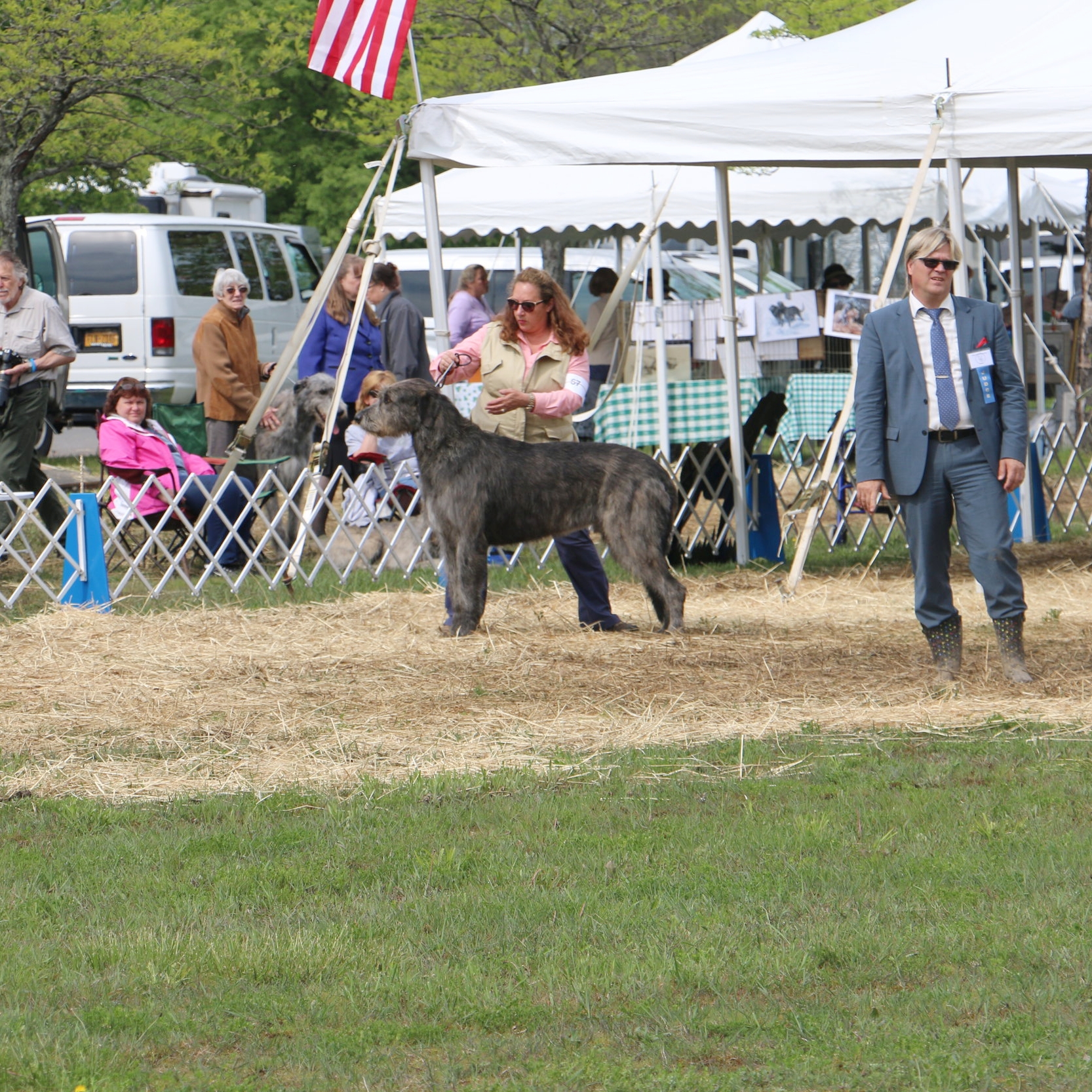


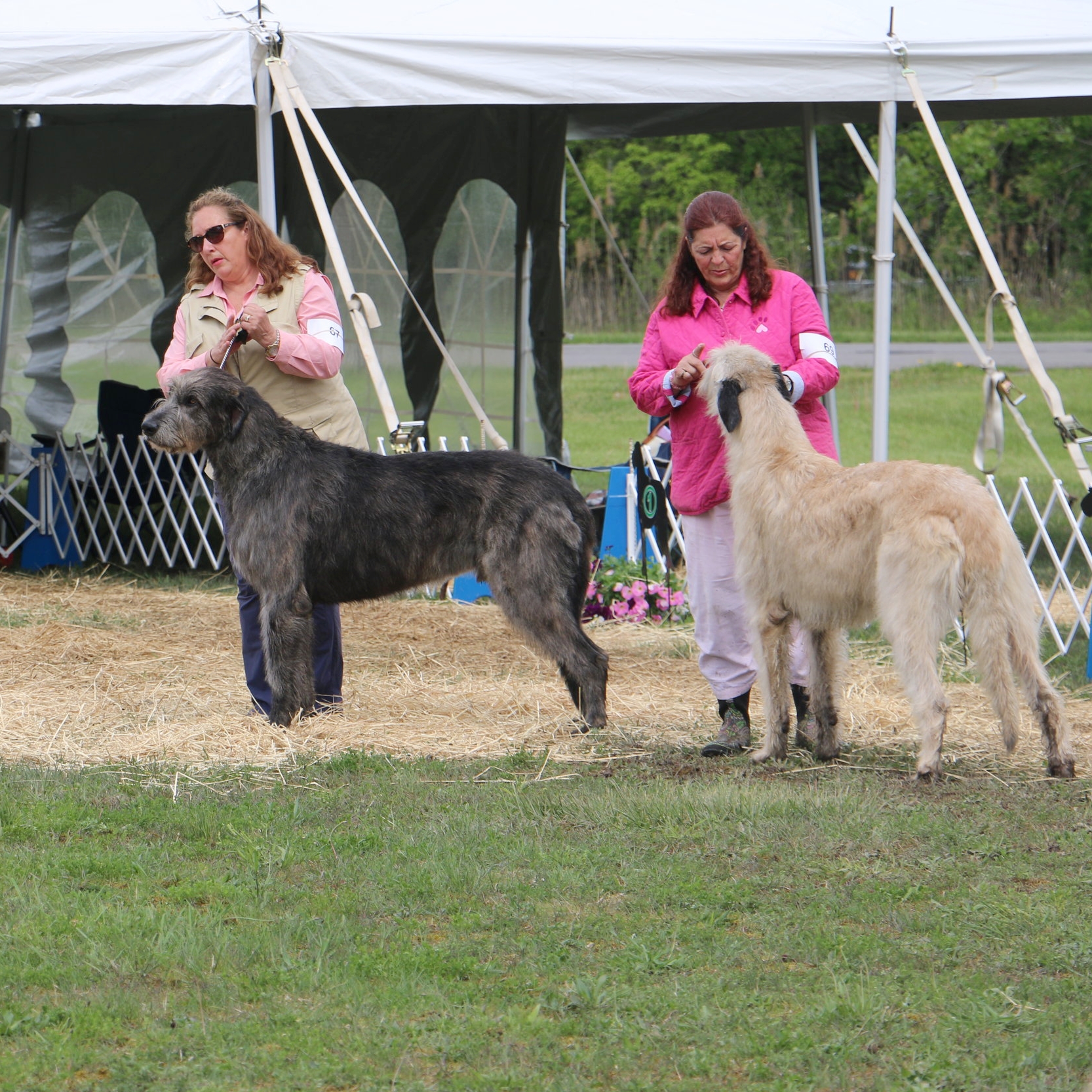


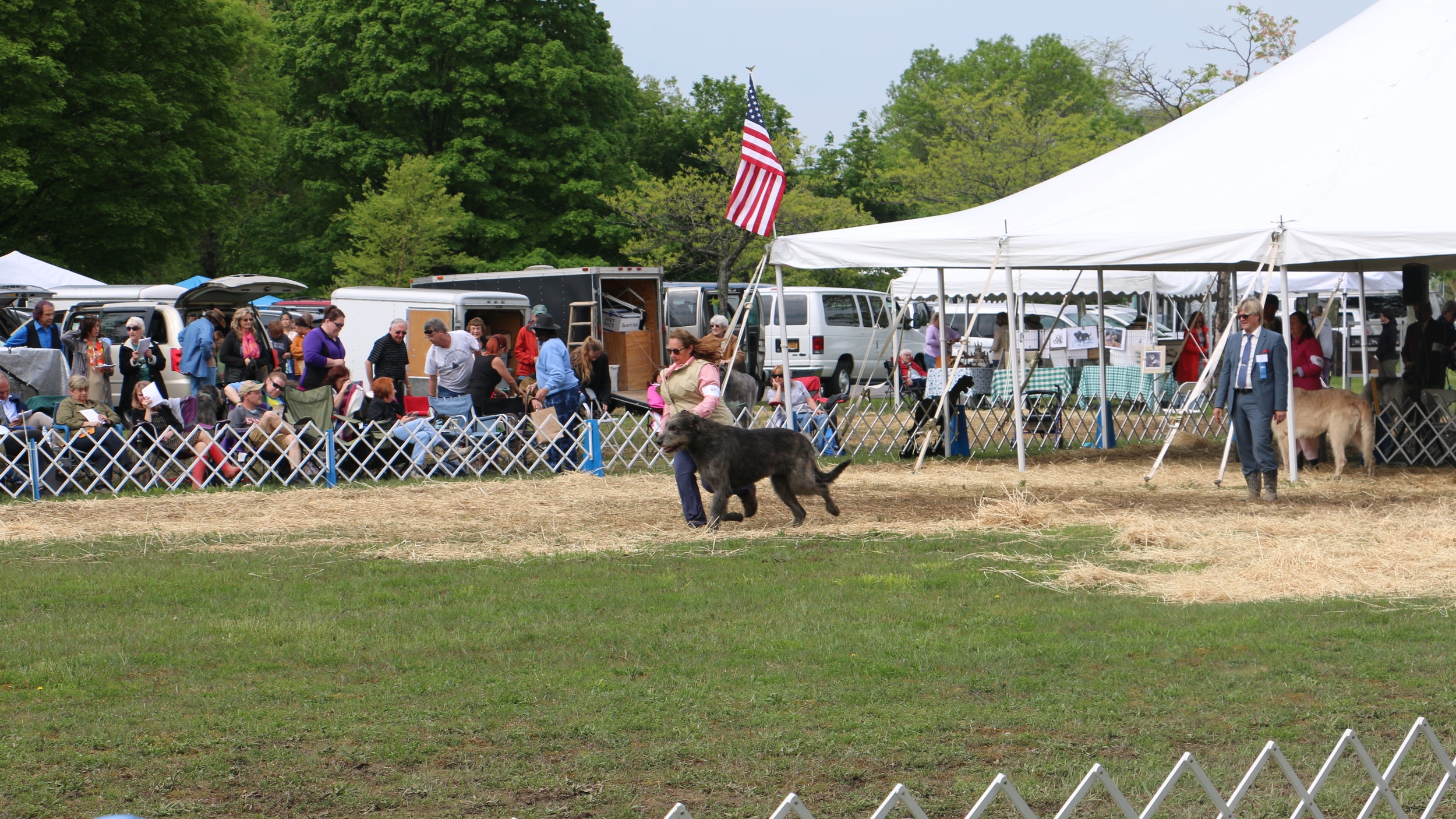


Several of these photographs at the end were taken by Lauren Swick. Our appreciation to Laura for sharing these as I had a knee injury and my husband Bobby had to gait the hounds so we could not take photos ourselves.
Another Important Note on Blastomycosis
Last week I forgot to include that the areas in which Blasto is frequently diagnosed includes Upstate New York! In fact, the Merck Manual Consumer Version states that:
"Most cases of blastomycosis occur in areas of North America where the fungus lives in the soil near river beds:
The Ohio and Mississippi River valleys (extending into the middle Atlantic and southeastern states)
The northern Midwest
Upstate New York
Areas of southern Canada that border the Great Lakes and Saint Lawrence River

Moreover, I wanted to especially highlight a remedy included in my last post from Dr. Becker at Mercola about Blasto as it may have been overlooked by some. That being Oil of Oregano which is an excellent support for a body fighting a fungal infection. More on the benefits of such can be found here.
In fact, my family uses Oil of Oregano at the first sign of a cold, as well as I have used it if my pollen allergies start acting up. This remedy is remarkable and we swear by it. Taken in its purest form via a dropper in a glass of water at the first sign of a sniffle or cold coming on, we repeat it up to four times daily for a day or two. Be forewarned, it is absolutely awful tasting, and you must hold your breath while downing the water but it works magic for us. You think I am exaggerating but I am not -- its awful tasting -- however, I sure as heck prefer taking Oil of Oregano than cold medicine to lessen the severity of constant sneezing, coughing, stuffed-up nose, sore throat and on and on...
Blastomycosis
Blasto, the short term for this fungal disease has very serious repercussions not just for dogs but for humans as well. This disease has been dreaded by many, many dog breeders and farmers in the endemic areas of the country as depicted in the Center for Disease Control (CDC) map below. First, what is it? The CDC reports........
Blasto, the short term for this fungal disease has grave repercussions not just for dogs but humans as well. This disease has been dreaded by many, many dog breeders and farmers in the endemic areas of the country as depicted in the Center for Disease Control (CDC) map below. First, what is it? The CDC reports:
“Blastomycosis is an infection caused by a fungus called Blastomyces. The fungus lives in the environment, particularly in moist soil and in decomposing matter such as wood and leaves. Blastomyces mainly lives in areas of the United States and Canada surrounding the Ohio and Mississippi River valleys and the Great Lakes. People can get blastomycosis after breathing in the microscopic fungal spores from the air. ”
What should be understood is that, if left undiagnosed, the spores can spread from the infected lungs to other parts of the body, such as the brain and spinal cord. People have fever, chills, drenching sweats, chest pain, difficulty breathing, and coughing. Other symptoms include:
- Muscle aches or joint pain
- Weight loss
- Fatigue (extreme tiredness)
According to the CDC, Blasto is NOT contagious from animals to people, however, recently, a dear friend was advised by a Pulmonary Specialist that, indeed, in his opinion, Blasto can be transmitted from dog to human as interestingly, my friend had a dog with Blasto. I suppose it could be possible that in the event of confirmed diagnosis, the infected dog had spores on their coat and perhaps while interacting with the dog they may have breathed them into their lungs. Or, while handling a dog with skin lesions -- a typical symptom of Blasto -- that those secretions then transmitted the fungal disease onto the person.
Nonetheless, dogs contracting Blasto face very serious health issues. Merck reports that large breed male dogs, especially hunting and sporting breeds, are most commonly affected. Blastomyces fungus thrives in wet environments like swamps, lakes, and on riverbanks where damp soil and lack of direct sunlight encourage its growth.
The fungus is also found in locations that harbor decaying organic matter like wooded areas, forests, and farms. Blastomycosis infections are prevalent in locations near water, and apparently studies have shown that most dogs who do contract the fungal disease live within a quarter mile of a river.
Symptoms in Dogs are very serious. Healthy Pets by Mercola provides the following:
“Blastomycosis infection in dogs include loss of appetite, fever, weight loss, depression, inflammation of the iris of the eye and discharge from the eyes as well, coughing, wheezing, and pus-filled skin lesions. More serious symptoms can include sudden blindness, lameness, inflammation of the testicles, enlarged lymph nodes, and seizures.
Unfortunately, blastomycosis is often misdiagnosed — even by the best veterinarians —sometimes as cancer and sometimes as a bacterial lung infection. Needless to say, treatments for cancer and antibiotics for bacterial infections will not address the fungal infection and can lead to permanent damage or even death, if your pet doesn’t get an accurate diagnosis.
If your dog has been showing any of the above symptoms for six weeks or more with no noticeable improvement, and if he could have been in an environment that harbored the Blastomyces fungus, your veterinarian should test for a fungal infection.
Blastomycosis is best diagnosed through examination of a lymph node, a fluid drain from skin lesions by a transtracheal wash, or by examining lung tissue. Tissue samples may need to be taken to check for fungal organisms.
There’s also a blood test called an AGID test or antigen ID test for exposure to Blasto. But a positive result doesn’t mean your dog necessarily has the infection, only that he’s been exposed.
Chest X-rays of a dog with blastomycosis often reveal a sort of snowstorm-type pattern. Urine screening tests can also be very beneficial for diagnosis.”
Take heed. If you have a dog that is diagnosed with Blasto, then proceed with cautionary measures while treating. I would assume that immediate bathing of the dog is in order and as skin lesions present themselves, gloves are necessary during treatment as spores can enter through the skin. The experts state that after infection, the disease transforms into a modified phase and is no longer contagious. I wonder though because Blasto occurs as two different forms. It grows as a mold with spores and as yeast in the tissue and lungs.
Yes, there is a treatment, however, in cases of dogs with advanced Blasto, it is usually fatal. Mercola's recommendations appear to be the most updated and are as follows:
“Traditional treatment for a blastomycosis infection is oral administration of an antifungal drug. These medications all require long-term treatment, sometimes for many months. They are very expensive. And of course, all of them carry serious potential side effects.
The preferred antifungal at the moment for dogs diagnosed with this infection is Itraconazole, which is better tolerated and has fewer side effects than older antifungal drugs. I also recommend a nutraceutical called quantum nucleotide, which helps to stimulate an immediate immune system reaction, as well as oil of oregano in capsule form, which is excellent support for a body fighting a fungal infection.
For many dogs, the critical period during treatment is the first 24 to 72 hours, as the antifungal drug begins to kick in and kill off the fungi. Since there are typically a large number of organisms in the lungs, there can be an overwhelming inflammatory response that can result as the fungi die off. Respiratory distress can be a big problem during the first few days of treatment.
Whatever drug is used, it must be given for a full month past all signs of infection. Dogs with severe breathing difficulties may require supplemental oxygen until their lungs return to normal function.”
2017 Irish Wolfhound Quebec Regional Specialty & Underage Puppies
Saturday, June 10, 2017, was another lovely day for a Specialty in Quebec, Canada. This year, however, there was a sad sight to behold. More to the point, we were very upset as we saw a small waif of a puppy trying to walk on a lead with his owners.
Saturday, June 10, 2017, was another lovely day for the IWCC Regional Quebec Specialty in Canada. Herr Jurgen Rosner was adjudicating, and it was a pleasure seeing him again, especially since the last time I saw him was 21 years earlier when he judged the 1996 Irish Wolfhound Association of Delaware Valley Specialty! Remarkably, he has aged gracefully and has changed very little.
Ballyhara Kellyanne IWCC Quebec Regional Specilaty 2017
This Quebec Specialty is comfortable and pleasant though exhibitors experienced an issue with parking as a huge sports tournament was being held simultaneously on the military grounds. The Quebec club graciously provides a delicious homemade smorgasbord with soda, wine, and water which is so refreshing to see in this day and age. An overall, friendly atmosphere that keeps exhibitors and spectators coming back.
This year, however, there was a sad sight to behold. More to the point, we were very upset as we saw a small waif of a puppy trying to walk on a lead with his owners. Shocked, we inquired as to the age of the wolfhound pup, and were informed he was nine weeks of age! Upsetting, to say the least, and our disapproval was shared by several people sitting close-by who noticed him as well. The male pup was so small that my husband was convinced he was seven rather than nine weeks old.
Regrettably, the alarming trend of placing puppies at FAR TOO EARLY AN AGE is not new. I addressed this very concerning problem in my December 2015, "Caveat Emptor" Blog Post. It is unethical to sell or place a wolfhound puppy at the age of eight or nine weeks, especially because this is a giant sighthound who is underdeveloped — both mentally and physically -- at such an immature stage. It is paramount that Irish Wolfhound puppies are well socialized and spend quality and quantity of time with their Dam and siblings.
Mentally, the Irish Wolfhound breed is a slowly maturing hound. His overall weight and height at three months can be deceiving. You cannot compare him to other breeds at the same age. I have always informed students that this sighthound breed is unlike popular breeds such as Poodles, Golden Retrievers, Labradors or Shepherds. During growth stages, in a mental maturity comparison, for instance, a six-month-old wolfhound is comparable to a three-month-old Labrador. Even a yearling -- a phrase attributed to a wolfhound aged 12-24 months -- is still more immature than a similarly aged dog of another breed. The contrast has nothing to do with intelligence as an Irish Wolfhound is a clever breed which is always sensitive to his surroundings. Wolfhound puppies should be confident, poised, comfortable, and friendly. Traits that develop from various stimulations deriving from social interactions in the company of his littermates with the dam teaching them acceptable behavior during their twelve weeks of growth and companionship. There is no justifiable excuse for placing any puppy at less than 10-12 weeks of age, and this practice has to stop.
What has become of our wolfhound society if breeders feel justified and are emboldened to sell wolfhound puppies at 8 or 9 weeks of age? This puppy was not obtained from a commercial puppy farm in the American Midwest but from a person who was attending the Quebec specialty! For the record, my policy is that no puppy leaves before a minimum of 12 weeks and frankly, many times not until 16 weeks. Releasing underage wolfhound puppies is motivated by financial and opportunistic purposes. Commonly, this individual needs to move the pups out as quickly as possible because caring for them requires food, money, and work. Sometimes, they need to make room for a new litter, or frankly, they are too lazy and indifferent to support the young hounds adequately. Other times, many of these people are living hand to mouth and have no business raising expensive Irish Wolfhounds. What will be next -- placing them at seven weeks? Who is going to stop them then? My recommendation to these guilty people is to find another giant breed. Get out of Wolfhounds.
Reputable breed fanciers need to stop "tsk, tsking," while wringing their hands. We as a whole are obliged to speak up and express our concerns to these individuals. Many of these people are only masquerading as "breeders;" when they are only mating dogs. What do they know of genetic modes of inheritance? What do they know about anatomy and muscling physiology? What do they know of the breed founders and the Coefficient of Relationship of ancestry? What do they know of genetic diversity?
It is our obligation to explain their wrongdoings and the harm to both the puppy and the breed, especially if they are members of our breed associations. Our actions are not meddlesome -- we are NOT interfering in someone else's affair. On the contrary, it is our duty to moralize, as honorable, caring, responsible breed guardians. Placing underage puppies is NOT someone else's personal business -- it most certainly is not their prerogative to do so because it is harmful to the breed. These animals cannot speak for themselves, and as such, we are their custodians.
Bear in mind; amoral people prosper because their actions are unfettered. Your silence condones their behavior.
They know not of the commitment, the shared obligation we have as conservators for what was once a highly revered ancient sighthound. Their imprudent deeds are an offense, and we all need to unify against this growing malignancy. Ask yourself is this the standard of behavior that we foresee embodying the principles of our breed society?
Nostaglia for the Good Old Days
We often hear people say how different life or events were in yesteryear. Often we reflect on things or people that we miss, our nostalgic memories vivid as if it were just yesterday. I frequently find myself doing so as I reminisce about how our breed society once was and the stark contrast to what it is today. The consequences of such disparities are substantial being that today we now have the lowest standards of acceptability and accountability within our organization and society. The 2017 IWCA National Specialty recently provided several instances that aroused my sentimentalism........
We often hear people say how different life or events were in yesteryear. Often we reflect on things or people that we miss, our nostalgic memories vivid as if it were just yesterday. I frequently find myself doing so as I reminisce about how our breed society once was and the stark contrast to what it is today. The consequences of such disparities are substantial being that today we now have the lowest standards of acceptability and accountability within our organization and society. The 2017 IWCA National Specialty recently provided several instances that aroused my sentimentalism.
My husband and I very much looked forward to the National held in Geneva, New York. Despite my having attended many, many Nationals over these 33 years, I have only been able to attend, due to their location, just five in recent times. However, this relative absence provided a unique perspective on the changes that have occurred within the Club, in the hounds, as well as the personal character of some fanciers. Allow me to first preface my thoughts by extending my appreciation and respect for the effort, toil, and convictions of Show Chairpersons. I know first-hand the work involved as I have chaired a double-header in 1997 and 1998. Chairpersons do the absolute best to make certain that the event runs as if it were a well-oiled machine. However, mere mortals cannot control the weather which, once again, was uncooperative at this Specialty location with copious rain showers on the first day that sabatoged the grounds for the remainder of the four-day show. The Grounds Chairman, David Milne, was faced with a mud bog and attempted to find solutions. The show ring and surrounding grounds were mostly ruined requiring scores of hay bales spread everywhere for navigability, though cedar shavings would have been a better resolution. Unfortunately, the hay did very little as our shoes sunk in 3-inches of mud and worse, while gaiting, in many areas it was thick enough to suck the shoes off the back of your heel.
This experience leads me to a story, told by a good friend, who had learned of the conditions at this show and felt compelled to describe a similar incident that occurred decades past at a previous IWCA National. The year was 1978, and Miss Noreen Twyman was adjudicating. The weather was terribly uncooperative, with significant rain creating mud bogs in the show ring. As was told to me, Miss Twyman decided not to gait her entries in the show ring but rather to move them under the tent. She explained later at an informal "get-together" that running hounds in such treacherous conditions could injure the hound's tendons and or ligaments. Similar to post holing, if one is an experienced hiker.
Oh, how I miss those good old days where we had knowledgeable, wisened advisors such as Miss Twyman, who was not only a breed authority but a skilled large and small animal veterinarian. Genuine sportspeople who were experts in animal husbandry who could quickly size up a situation and determine the best course of action for the Hounds.
Even more significant and disturbing divergences from years gone by were observed at this past IWCA National Specialty. I witnessed a female wolfhound wearing a Prong obedience/training collar! Wolfhounds should not wear prong obedience/training collars. Period -- no ifs, ands or buts about it. These are not Doberman Pinchers, Rottweilers or Staffordshire Terriers. The woman was not disabled nor handicapped; she was not elderly, small or frail. The Wolfhound was not hard to handle, spooky or skittish. In fact, the Wolfhound appeared well-mannered as she was being towed along by this woman. I immediately and quickly sought out and spoke with a show official about the fact that a prong collar was being used on the show grounds, and even though they commiserated with me as to the unacceptability of the collar -- to my knowledge, nothing was done about it.
Oh, if this were the only disturbing incident, but alas, it was not. My husband and I were walking our hounds through the headquarters hotel parking lot when we walked past the open rear doors of a large utility trailer/hauler hitched to a pick-up truck. Much to our dismay, there were Wolfhounds bedded in hay within the hauler. How shocking but unsurprising all at the same time leaving the both of us with a bad taste in our mouths.
Regrettably, the reality is that, more than ever, the moral reasoning and development of character is stymied within many of today's breed fanciers. In years past, neither one of these offenses would have been tolerated at a National or Regional Specialty. As a matter of fact, at the 1990 Columbia, South Carolina IWCA National Specialty, a breeder/exhibitor had arrived with his wolfhounds in a trailer. I still remember to this day that one or more IWCA representatives took the gentleman aside and declared that Irish Wolfhounds were not livestock and therefore, using that form of transportation was completely unacceptable and would not be tolerated on the official show grounds. The matter was handled with grace and civility but make no mistake; the issue was addressed. At the same time, having known many of these old-standing fanciers, I am confident that the mere sight of a prong obedience collar on a Wolfhound would never have been overlooked or condoned.
Presently, it appears that the IWCA and regional club memberships are considered open season for enrollment. Memberships are wide open to highly reprehensible individuals whose primary motivation is profit and focus only on meeting supply and demand. Why are these people members at all? The IWCA, as well as one or more Regional Specialty clubs, chose to accept these highly controversial applicants. They did so despite having performed background checks with local, conscientious breeders as to the morality, ethics, and operations of the candidates. They did so notwithstanding the established Standards of Ethical Conduct for Members of the IWCA, and the Standard of Behavior for Breeders of the IWCA that requires these new members adherence. Let us be clear, according to the United States District Court Minnesota Sixth Division, in Avenson v. Zegart 1984; a puppy mill was defined as a "dog breeding operation in which the health of the dogs is disregarded in order to maintain a low overhead and maximize profits." So, are we being led to believe that these individuals are going to modify their business plans abruptly because they are now members of the IWCA? Of course not!
What is the reason for permitting membership to substandard amateur breeders and commercial puppy farms? As was explained to me -- one of the motives for allowing these dog brokers membership was to educate them. This explanation is outrageous as these hateful, inhumane persons seek only to gain credibility through our association so they can increase the sales price of their merchandise and expand their market. Now they have the ideal vehicle to do so with the backing of the IWCA and regional clubs.
It is so pitiful that the once revered guidelines, the merits, the excellence of our once upstanding association have plunged to such abject levels. Take for example new puppy owners attending a specialty with a 9-week old puppy in tow. Setting aside the offense of placing a wolfhound puppy at 8-9 weeks of age; let us add insult to injury by adding that this poor waif did not resemble any nine-week-old puppy on the Ambleside or Alfred de Quoy Growth Charts with minimum and maximum weights of 23 to 37 pounds. No, this 9-week old pup could not possibly top the scales at 20 pounds -- if that. To my eye, he looked to weigh 15 pounds. Oh yes, long gone are the ole days of principled fanciers. Read more on the placement of underage puppies in my earlier Blog Post titled, "Caveat Emptor."
Permit me to share one more memory that is in direct contrast with today's reality. I recall a time when the IWCA National Specialty Auction dinner event was a suit & tie or at least sports coat affair. Many of us remember the numerous items of excellent quality with unique and incomparable goods, such as an original bronze statue donated by the luminary artist, Dan Ostermiller fetching, if my memory serves me correctly, $1,000.00 or more. Gone now are those uncommon goods and extensive selections which once filled every nook and cranny of the room or outdoor tents such as in Newport and Lake Placid. Long ago, our society affairs were gracious, festive, and very well-attended held with and in stylish decorum. While attending this recent Auction Dinner, I was dismayed and saddened at the unconcerned casualness, humbleness, and smallness of what was once a celebrated affair.
Times have indeed changed. As it concerns our passion and hobby, the resulting developments are extraordinarily worrisome. It is a mystery as to how much of our breed society, as well as our parent organization, have debased themselves while setting new lows. Are we even capable of restoring the previous state of moralistic and respectable community that once was? Pitifully no, not if we were to consider current and continuous actions to form a conclusion. Look at the breeding model that has been followed around the globe resulting in the nearly complete loss of genetic diversity in our breed. According to the data contained on Dr. Silvan Urfer's website, 93% of the wolfhounds, worldwide, are affected by the current Population Bottleneck.
As for we bellwethers, we are blithely ignored.
Update on Canine Influenza from May 27 Post

This notice is being sent out to provide up-to-date and accurate information about the Canine Influenza Virus to help prevent the spread of the virus to healthy (unexposed) dogs. The information provided is not intended to alarm dog owners and handlers.
There are recently confirmed cases of the Canine Influenza Virus (H3N2 strain) that was first brought to and identified in Chicago, Illinois in the spring of 2015. The most recent outbreaks concern the following states: Florida, Georgia, and North Carolina.
Canine Influenza Virus is an extremely contagious airborne disease that is easily spread among dogs, and in rare instances, can be contagious to cats. If you believe one of your dogs may have contracted the Canine Influenza Virus, immediately isolate it from other animals and contact your veterinarian.
Here is some additional information about Canine Influenza Virus and tips for how to minimize the risk and reduce the spread of the disease:
Canine Influenza Virus
- Canine Influenza Virus is spread through:
- Close proximity to infected dogs (it is airborne and can travel up to 20 ft.)
- Contact with contaminated items (bowls, leashes, crates, tables, clothing, dog runs, etc.)
- People moving between infected and uninfected dogs
- 80% of all dogs that are exposed to the virus will contract it
- The virus lives up to 24 hours on soft surfaces and up to 48 hours on hard surfaces.
- Some exposed dogs will be subclinical carriers - meaning some dogs will contract and spread the virus without showing symptoms.
- Dogs show clinical signs within 24-48 hours and can shed the virus for up to 28 days from exposure.
- Most dogs will completely recover with proper treatment.
- Dogs that regularly interact with dogs outside of their own family or frequent places where many dogs gather are most susceptible to exposure to Canine Influenza Virus.
Symptoms
- Dry, hacking cough (similar to kennel cough)
- Lack of appetite
- Lethargy
- Discharge from the nose or eyes
- Fever (normal temperature is 101 – 102)
Prevention
- The best protection is vaccination. There is now a single vaccination for both the H3N2 and H3N8 strains of the virus. The vaccination requires a booster shot two weeks after the initial vaccine. Vaccination provides the best chance of immunity within 7-14 days of booster shot.
- Isolate sick animals and keep them isolated for up to 30 days after symptoms subside.
- Practice good sanitation. Use a bleach and water mixture diluted to 1-part bleach x 30 parts water to disinfect common areas such as tables, bowls, leashes, crates, etc. Allow items to thoroughly air dry for a minimum of 10 minutes before exposing dogs to them. Bleach breaks down quickly so solution should be made daily. Keep in mind that bleach becomes inactive in UV light. If mopping use two buckets so as not to cross contaminate areas
- Wash your hands frequently, ideally between handling different dogs. At the very minimum, hand sanitizer should be used between handling dogs.
- Use disposable gowns or wipe down clothing and shoes with a bleach solution between dogs or after leaving an area where dogs congregate.
- Food/water bowls should be made of stainless steel instead of plastic because scratched plastic is hard to fully disinfect.
Treatment
- Treatment of Canine Influenza Virus requires veterinary assistance. If you believe your dog may have Canine Influenza Virus, please contact your veterinarian immediately. Untreated, the illness may progress to pneumonia or other, more serious problems. H3N2 can lead to severe secondary pneumonia which can cause extremely sick dogs with potential fatalities.
- Most dogs take 2-3 weeks to recover from the illness.
Containment
- Any dog suspected of having Canine Influenza Virus should be immediately isolated from other dogs and should not attend dog shows, day care, grooming facilities, dog parks, or other places dogs gather. Dogs are contagious for up to 30 days once they have started showing symptoms.
- Contact your veterinarian to let them know that your dog may be showing symptoms of Canine Influenza Virus. If your dog is going to a veterinary hospital or clinic, call ahead to let them know you have a suspected case of Canine Influenza Virus. They may ask you to follow a specific protocol before entering the clinic to minimize the spread of the disease, including waiting in your car until they are ready to examine your dog.
- Keep sick dogs at home and isolated from other dogs and cats until you are certain the illness has run its course (typically 3-4 weeks).
Consideration for Event Venues
- Use a bleach and water mixture diluted to 1-part bleach x 30 parts water to disinfect common areas including show floors, grooming tables, ring gates, in-ring examination tables and ramps, and x-pens. Allow solution to completely dry (at least ten minutes in order to assure virus has been killed). Bleach breaks down quickly so solution should be made daily. Keep in mind that bleach becomes inactive in UV light. If mopping use two buckets so as not to cross contaminate areas.
- When wiping down hard surfaces paper towels are preferred over cloth.
- Consider having two exam tables at every ring so that they can be cleaned and allowed to air dry frequently in between classes.
- Provide hand sanitizer in each ring and in grooming areas.
- Exhibitors should consider grooming dogs at their cars instead of using grooming areas where dogs are in very close proximity.
Dr. Jerry Klein is a veterinarian in the emergency room at Chicago’s largest veterinary emergency and specialty center. He was personally involved in treating hundreds of dogs sickened by the H3N2 virus during its initial outbreak in Chicago in spring of 2015. He is also an AKC licensed judge.
Are There Foreign Imported Dogs at Your Local Animal Shelter?
I want to share with you an interesting article that just came through the "AKC Communicates." Written by Patti Strand, President NAIA titled "Animal Rights Legislators Push Window Dressing Laws Instead Of Tackling Real Dangers" the article discusses the absence of regulations on animal shelters, rescues organizations and weak US pet import laws but importantly, the dangers associated with these ineffective laws. We should all be mindful of this problem not just for our public health but also for our dog's well-being.
I want to share with you an interesting article that just came through the "AKC Communicates." Written by Patti Strand, President NAIA titled "Animal Rights Legislators Push Window Dressing Laws Instead Of Tackling Real Dangers" the article discusses the absence of regulations on animal shelters, rescues organizations and weak US pet import laws but importantly, the dangers associated with these ineffective laws. We should all be mindful of this problem not just for our public health but also for our dog's well-being.
Egyptian Homeless Cats
The article is interesting because many of us live in smaller communities, and we may be volunteers at or are familiar with the volunteers and staff at our local pounds or animal shelters. The differences between these are that municipal animal pounds are funded by taxes and licensing fees and must take in any animal that is surrendered. In smaller regions, this responsibility could be contracted out to a local Humane Society or SPCA. The other type, animal shelters, are private, non-profit 501(c)(3) organizations that many of us donate money and attend local benefit fundraisers for as they would not be able to operate without the public's generosity.
It is my hope that our local facilities do not import or accept dogs from foreign countries. Though, I am aware that one of our local non-profit welfare organizations brings in dogs from other parts of the U.S. as my friend, a pilot, donates his time and plane to fly in dogs similar to the Pilots and Paws network. This local foundation called The Joshua Fund brings in special needs dogs from high kill shelters across the country with the majority, as much as 90 percent, being heartworm positive. Others are dogs who have no chance of finding a lifetime home in the area that they currently are housed, such as a Labrador Staffordshire mix brought in from a southern state facility where this dog had no chance of being adopted. Why? Because he was solid black in color and the sad truth is that racism, which is alive and well, especially in the south, also applies to dogs. As was explained to me, in some areas of the south, black dogs are considered only good for target practice. Sadistic but true.
Egyptian Homeless Dogs
Now though, the extent of importing dogs is increasing with Patti Strand citing several cases, but a quick investigation reveals many more not mentioned in her article such as USA Today's "36 abandoned golden retrievers rescued from Turkey" or CNN's report "How Istanbul's abandoned street dogs end up in America" Both of these reports differ as to why this lovely breed, the Golden Retriever, became so popular in Turkey but they both report on the subsequent, significant numbers of these dogs having been abandoned on the city streets of Istanbul as well as in the forests. An Atlanta-based Golden Retriever Rescue organization has imported and rescued over 126 of them already.
Despite these two feel-good stories, we have the flip side of the coin such as Fox News "Could your rescue dog have rabies?" They reported on an outbreak last year in the Midwest of canine influenza that sickened more than 1,100 dogs which was traced to the importation of foreign animals, very likely from a foreign dog or cat. Or, consider the dangers of an imported Egyptian dog with Rabies. In this case, a US-based animal rescue group exported eight dogs and 27 cats off the streets of Cairo to the United States, where, stateside, an adult female dog became symptomatic of rabies and was euthanized. In this case, the rescue organization was found to have falsified the rabies certificate on the female dog and placed her in a Virginia foster home. The dog also had an unhealed fractured leg, yet, was still transported by this rescue group. The threat of Rabies is quite serious and in this case the investigative process was huge encompassing Departments of Health in four states, as well as US Customs and Border Control, the Center for Disease Control (CDC), the Egyptian Ministry of Health and Population, and the U.S. Department of Agriculture's Animal and Plant Health Inspection Service. Dozens and dozens of people had to be interviewed, and according to the CDC, eighteen persons initiated rabies post-exposure prophylaxis (PEP), including ten who were considered to have been exposed and eight who requested PEP despite reporting no clear rabies exposure.
The World Health Organization recommends that when dogs cross international borders, national importing authorities should require an international veterinary certificate attesting that the animal did not show signs of rabies at the time of shipment, was permanently identified, vaccinated, or revaccinated, and had been subjected to a serologic test for rabies before shipment.
Obviously, there are scores of conscientious animal welfare groups, but unfortunately, there seem to be as many unscrupulous ones as well. The analogy about one bad apple is very appropriate here. The CDC states that Rabies, the deadliest of all zoonotic diseases, accounts for an estimated 59,000 human deaths globally each year, and to prevent human rabies exposures and the introduction of rabies viruses, U.S. federal and state regulations place strict rabies vaccination requirements on dogs. However, these importation regulations are difficult to enforce because of limited resources at U.S. ports of entry to inspect dog shipments. These unacceptable shortcomings underscores the current difficulties in verifying any imported dog's rabies vaccination certificate and health status.
Egyptian Street Dog
Stricter import laws need to be enacted and enforced. The legitimacy of ALL these so-called animal rescue groups should be heavily scrutinized by the appropriate legal oversight, and any group(s) who exports and imports a dog with Tuberculosis, Rabies or the like should have their non-profit status revoked, in addition to facing criminal charges. These individuals would think long and hard if they were to face both criminal and financial repercussions for fraudulent misconduct with inclusion of a permanent black-list from any non-profit organizational body in the future.
Equally troubling is how these "rescue groups" are operating. Take for example the Egyptian dog who entered through JFK in New York and was placed in a foster home in Virginia. This foster home already had eight other dogs, nine other undisclosed animals, and was also pet-sitting a neighbor's dog. The logical question is why this foster home was taking in more dogs in the first place? Why aren't limits as to the number of animals that can be housed in a foster home implemented and enforced? We are not talking about a purebred dog breeder being used as a foster home. No, this was a mixed breed off the streets of Cairo, Egypt.
All of this segues to many other documented cases of animal shelters handing over dogs to rescue organizations or foster homes that do not inspect or verify these properties. One such instance was written about in the Fort Worth Weekly titled "Animal Behavior" where they reported that dozens of animals were found in deplorable conditions under the care of a rescue group that was receiving dogs and cats from the Fort Worth Animal Shelter, even after the city had been warned of a potential problem. 91 cats were found in a trailer home, and even more incredibly, this so-called rescue group had received 800 animals from the shelter, mostly cats, over a 10-month period! How stupid can people be? It is cases like these that municipal salaried employees should not only be fired, but criminal charges should be considered for cruelty to animals.
I can understand that a purebred rescue organization in the US seek to protect their breed as in the case of the Golden Retrievers. I am curious though if anybody within the Golden Retriever breed club has investigated who and what the supply chain was, and if so, are they are still milling out "Goldens?" But, the stories of these US so-called animal rescue groups exporting dogs from foreign countries, such as Egypt, into the US are fraught with red flags. Don't we have enough homeless dogs in the US that there is a need for importing dogs off the streets of other countries? Having traveled to Egypt and a number of its cities, I have seen firsthand the population of dogs existing there -- I do not use the word "living" as that invokes the concept of flourishing -- when, in fact, these dogs are not. Nonetheless, I would liken the process of rescuing dogs in Cairo as an exercise in futility. There is a mass surfeit of homeless, feral dogs roaming Cairo with no apparent municipal force such as animal control to keep the population in check. Dogs are everywhere, sleeping in the desert, in every alley, seeking out shade under ancient statues and more as depicted in the photos I have attached. Some caring people feed them, but for the most part, the dogs must scavenge. Is it terribly sad, yes, but the reality is that most of these so-called rescue groups are only preying on Americans generosity. I wonder if the British have this issue? I suspect they do not as they have strict laws enacted and enforced to protect its citizens and country.
What can we do in our local communities? My first thought would be for all of us to start questioning our local shelter organizations if they indeed accept and put up for adoption dogs that have been imported into the US from foreign countries. As a tax-paying resident, you have every right to make these inquiries as these are 501(c)(3) organizations. If they do accept imported dogs or if they do not provide answers, write a letter to the Editor of your local newspaper or contact your local or regional news broadcast station. World Health Organization recommendations must be applied and enforced here in the US because you never know, if a disease such as Mycobacterium Tuberculosis is introduced into your dog community and is not immediately isolated, it could mean a death sentence for your dogs.
Conformation Judges Oral Examinations
AKC strongly advises that all judges should ask the exhibitor to show the bite/open the mouth when conducting oral exams.
It is a shame that our international wolfhound judges having an extreme obsession with dentition are not versed in or with AKC's The Rules, Policies, and Guidelines for Conformation Dog Show Judges. The handbook states, "Study of the approved breed standard will define the proper oral exam for that breed." Note that the current IWCA Breed standard does not denote bite......
As an AKC Judge, I recently received this reminder:
“AKC Judging Operations Department strongly advises that all judges should ask the exhibitor to show the bite/open the mouth when conducting oral exams.
This is being sent to you for the safety and welfare of our dogs in consideration of the fact that reports of cases of Canine Influenza have resurfaced in recent weeks. This recommendation is consistent with information included in The Rules, Policies and Guidelines for Conformation Dog Show Judges under Evaluating a Dog’s Mouth (page 14), “Many exhibitors prefer to open their dog’s mouth themselves for examination. It is recommended that all judges ask the exhibitor to display the bite/teeth/open the mouth as appropriate for that breed. However, you have the authority to personally open the dog’s mouth.”
Example of a lovely underjaw: Ballyhara Dior
It is a shame that international judges who demonstrate an obsession with dentition and who insist on scrutinizing canines, incisors, and molars are not versed in or with AKC's "Rules, Policies, and Guidelines for Conformation Dog Show Judges." If they did they would find that the AKC handbook states, "Study of the approved breed standard will define the proper oral exam for that breed. A necessary component of completing a breed specific examination is to conduct the appropriate oral exam when evaluating the dog’s mouth." Those familiar with the IWCA Breed standard know that it does not denote bite.
Having just attended the IWCA National, yet again, we experienced, first-hand, another international judge who demonstrated a difference of opinion from the IWCA approved breed standard but as well, a streak of independence from the American Kennel Club's strongly worded advisement that all judges should ask the exhibitor to show the bite/open the mouth when conducting oral exams.
This particular judge did sanitize his hands though not routinely. I say this because, despite his having practiced judging methods, judges can miss a step. To illustrate, in Veteran Bitch class I observed the same judge examine one or more veteran females where he did not inspect bites. However, when I presented my nine-year-old, he thoroughly examined her bite. Moreover, over the course of the show I presented two other entries in which the judge did not return to his sanitizer before proceeding with an oral exam. Out of respect as an AKC Judge, I courteously did not point out this inconsistency, but nonetheless, it did occur. It takes just one mistake of not spreading the sanitizer thoroughly or simply forgetting to disinfect one time to spread canine diseases and from this point forward; I will request that I show the bite.
As a disclaimer, my hounds have excellent dentition with strong, squared underjaws, save for just an old veteran whose one canine is awry.
AKC Canine Influenza Warning!
Many of us have just returned from the Irish Wolfhound Club of America National Specialty and should be aware of this recent warning from AKC on May 25, 2017, about a Canine Influenza outbreak in Georgia and Florida. Keep in mind that there were exhibits in attendance from these areas and though I am not aware of any hounds that were ill; remember that dogs may shed the virus without displaying symptoms. So, be alert if you have returned from the National Specialty.
“We have received notice of confirmed cases of canine influenza in dogs that were at events in Georgia and Florida over the past 7-14 days. Please monitor your dogs closely. As you know, the virus has an incubation period of 2-5 days and dogs may be shedding the virus while showing no signs. Dogs with fevers, poor appetites, coughing, sneezing, runny eyes/noses should NOT be exposed to other dogs or people. If your dog is ill or exhibiting symptoms, the best option is to seek veterinary attention and refrain from bringing the dog out in public until they are medically cleared by your veterinarian. ”
For more detailed information on canine influenza, please view this article.
Grass and Our Dogs Fascination With it!
This topic "Why Do Dogs Eat Grass?" was just highlighted by Dr. Jean Dodds in her Hemopet Newsletter, and essentially, gives substance to my long-held belief: that eating grass is a powerful, ancient urge which is very much alive in our carnivores today.......

Couch Grass, an Irish Wolfhound but all dog's favorite!
This topic "Why Do Dogs Eat Grass?" was just highlighted by Dr. Jean Dodds in her Hemopet Newsletter, and essentially, gives substance to my long-held belief: that eating grass is a powerful, ancient urge which is very much alive in our carnivores today. More on this in a minute, but, first, let us address the popular myth that dogs eat grass because they have an upset stomach and need to vomit. This lore, for the most part, is not true, and is not logical. If this were the case, then that means your dog does not get nauseous during the cold months but just in spring and summer?
Dodds newsletter, which prompted me to add my two cents here, cited two different studies. The first by Researchers at the University of New England in Australia who performed tests on two separate sets of dogs in which their conclusion was that dogs do not eat grass to induce vomiting. The second research was performed by the University of California, Davis who conducted three separate reviews on the hypothesis that most plant eating in dogs is associated with illness or a dietary deficiency and that ingestion of plant material is usually followed by a few minutes of vomiting. Their research used 1,573 samples with only 22% who vomited somewhat afterwards, and their conclusion was "Grass eating is a common behavior in apparently normal dogs and is unrelated to illness or vomiting." As for those who did vomit afterwards, I want to point out that dogs will wretch to dislodge something caught in their throat, as blades of grass can do. So, in my opinion, it is more than likely that a number of these dogs who did vomit did so to force out the grass stuck in their throat and not because they needed to purge.
The results revealed that this was regardless if a dog was fed kibble or raw diet. More to the point, my hounds have been Naturally Reared for 20 or more years, and they eat grass every morning and afternoon and do not vomit except on rare occasions. Their menu covers nearly every base of high-quality nutrition, except for insects, and dispels the idea that diet deficiency is involved. But, I will be quick to point out that most commercial kibble usually is deficient in natural vitamins, quality protein & fat, and minerals.
Dogs eat grass because they not only love it, but it is an excellent source of minerals. Yes, some herbs and grass do possess medicinal qualities and carnivores, including, yes, your best friend, instinctively seek out Mother Nature's offerings. Eating herbs and grass is an ancient trait still very much prevalent today as in the studies carried out by wolf authorities and researchers who revealed that wolves eat grass and berries in addition to meat. In fact, wolf hunts are mostly unsuccessful, so they require alternate food sources to sustain them.
BBC Discover Wildlife reports that Wolves hunting are successful only 14 percent of the time and even then, this will vary depending open their terrain and prey. Involving Moose, the rate drops to a mere 6 percent, and if they are in Minnesota hunting White-Tailed deer, the kill rate rises to 20 percent. They will consume fish, beaver, squirrels, wild berries, and even grasshoppers. Yes, grasshoppers; just as bears seek out grubs, ants, termites -- wolves eat grasshoppers for an excellent protein source. Insects, by the way, have more protein than meat.
I have seen one or more websites claim that wolves do not eat stomach contents of their prey. On the contrary, researchers, and biologists, for example, with the Wolves & Moose of Isle Royale study scat but also fresh kills to gauge the percentage of a carcass eaten. They report that by and large, "Organ meat is the first to be eaten. Except in rare cases, all significant pieces of muscles are eaten. Ribs are typically eaten, bones are often partially consumed, and nearly all the hide is commonly eaten. Even the muscles that make up the lining of the stomach are eaten." Feast or famine mostly dispels the fiction that wolves do not consume nearly all of its prey.
For those seasoned dog fanciers, consider another favorite dog treat; the desirability of horse manure! Dogs love horse manure containing grass and grain fibers from pastured horses and those who eat rich green or alfalfa hay. Why? Because of hay's content and goes to the point that dogs are genetically predisposed to consuming manure because of the nutrients, high protein, vitamins and minerals in the plant material. Many holistic scientists recommend that people grow wheat grass for their dog(s) to satisfy this urge because the grass in many areas is unsafe for a dog to consume due to conventional pesticides and other chemicals on lawns or in the water runoff by culverts.
Consider growing wheat grass for your dogs. Alternatively, let your dog eat grass but only if you are confident that the area has not been sprayed with insecticides and fertilizers, which will cause serious health issues. Do not fret if your dog eats grass!
POW -- A New, Very Frightening Tick Disease
POW -- This is the acronym for the Powassan Virus that is transmitted by ticks which are mostly carried by deer. Do not be mistaken -- POW is very, very dangerous. Recently, I heard about this once believed rare virus on a news report and that the spread of the virus, by tick bites, is increasing. Worse, transmission is within the first 15 minutes of contact......

POW -- This is the acronym for the Powassan Virus that is transmitted by ticks which are mostly carried by deer. Do not be mistaken -- POW is very, very dangerous. Recently, I heard about this once believed rare virus on a news report and that the spread of the virus, by tick bites, is increasing. Worse, transmission is within the first 15 minutes of contact. On many occasions, headlines are alarming which, sometimes, is hyperbole, such as the first one by Worldnetdaily.com who writes:.
POW! The tick virus far deadlier than Lyme -- CDC warns of disease that kills 10%, permanently disables 50%
But here is the thing: though at first glance the headline appears sensationalized -- it really is not one you learn about this new threat. Forbes Magazine and NPR both have had recent articles on this disease, yet it seems that POW is not getting that much attention -- when, in fact, it should.
Beyond Lyme: New Tick-Borne Diseases On The Rise In U.S.
POW: Here Comes A Tick Disease That's Worse Than Lyme
I went to the Center for Disease Control which at first, seemed not to convey alarm to the Reader beginning with what I thought was a bland introduction stating that there were only 75 cases in the past ten years and that they mostly occurred in the Northeast and Great Lakes region. It is further defined, for clarity but does not have less of an impact on humans, as lineage 2 POW virus. But, then, the CDC in an understated manner reveals alarming information concluding that there are no vaccines or medications to treat or prevent POW virus infection.
Symptoms
- Many people who become infected with Powassan (POW) virus do not develop any symptoms.
- The incubation period (time from tick bite to onset of illness) ranges from about 1 week to 1 month.
- POW virus can infect the central nervous system and cause encephalitis (inflammation of the brain) and meningitis (inflammation of the membranes that surround the brain and spinal cord).
- Symptoms can include fever, headache, vomiting, weakness, confusion, loss of coordination, speech difficulties, and seizures.
- Approximately half of survivors have permanent neurological symptoms, such as recurrent headaches, muscle wasting and memory problems.
- Approximately 10% of POW virus encephalitis cases are fatal.
- Persons with severe POW illnesses often need to be hospitalized. Treatment may include respiratory support, intravenous fluids, and medications to reduce swelling in the brain.
Let's read that again: Half of the survivors have permanent neurological symptoms?! I certainly do not want to have permanent memory loss and muscle wasting from a tick bite that can INFECT a person within 15 minutes with symptoms manifesting themselves within one week to one month!!
I do not understand why we are not doing more to curb the deer population in this country. Our urban sprawl has decimated predator wildlife areas, and as recently as five years ago, according to Field & Stream magazine, there was a White-Tail boom. In 2016, the magazine complains that buck harvesting was down by nearly 40 percent in some Midwest states, though the news was not all bad as the female deer population has increased.
Nonetheless, in my personal experience, I see more deer than ever before. I live in New York where much of the deer population have either maintained or increased. According to the Connecticut Department of Environment, because deer have a high reproductive potential and few natural predators, deer populations have the ability to increase rapidly. In the absence of significant mortality, deer populations can double in size in two years. Let us not forget the danger they pose to driving. It is a rare occurrence when I drive the Interstate and have not come across a roadkill scene at least once with the visible signs of blood on the highway and often the carcass of the deer on the shoulder. What we do not know is what happened to the driver.
Deer are pests whose population needs to be controlled in a more productive and innovative manner than simply hunting season. I wonder what new exotic diseases are coming our way, and why aren't there more people worried about these new infections that demand emergency care to reduce the swelling in your brain and that 50% of the people contracting the disease will face permanent neurological impairments.
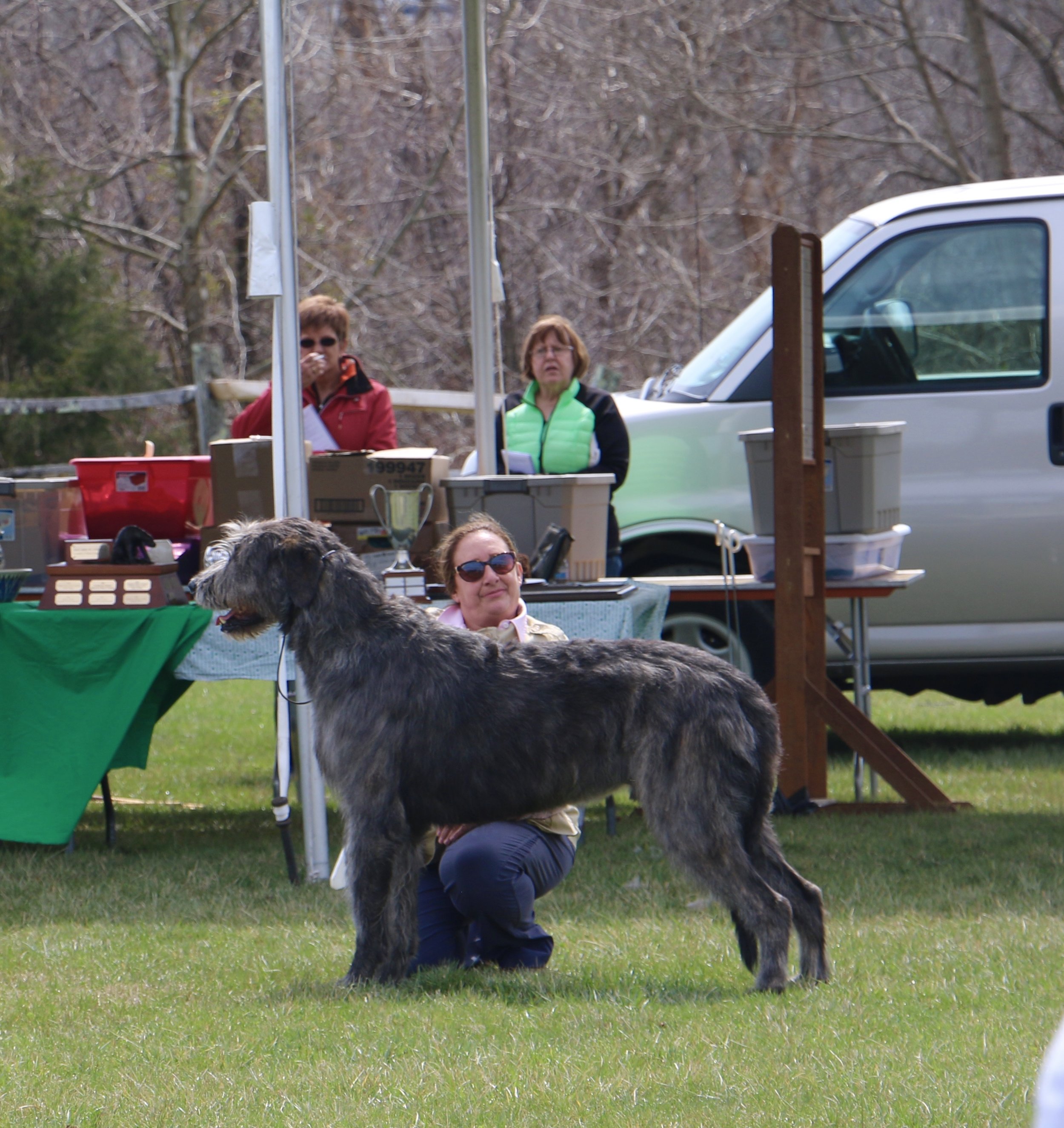
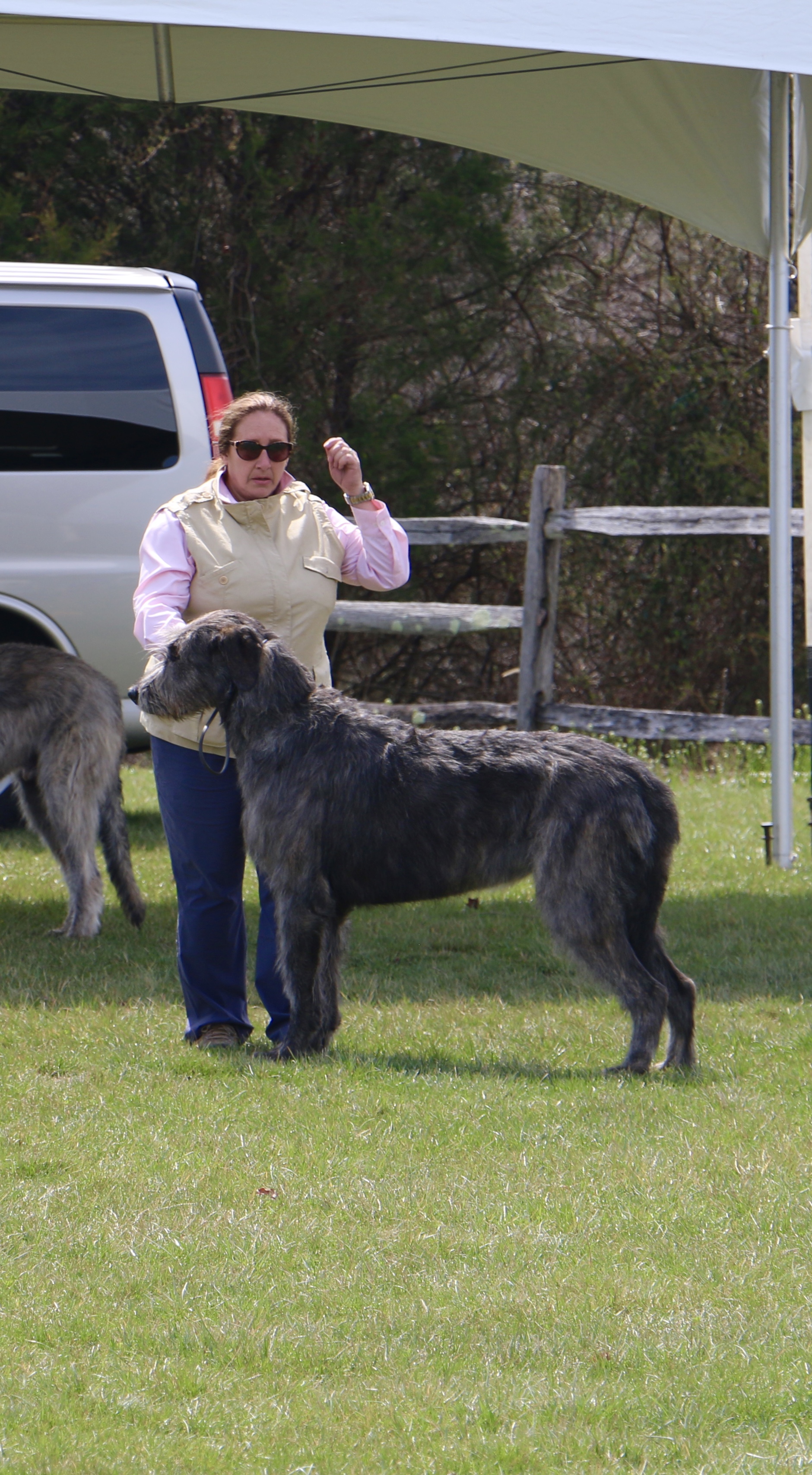
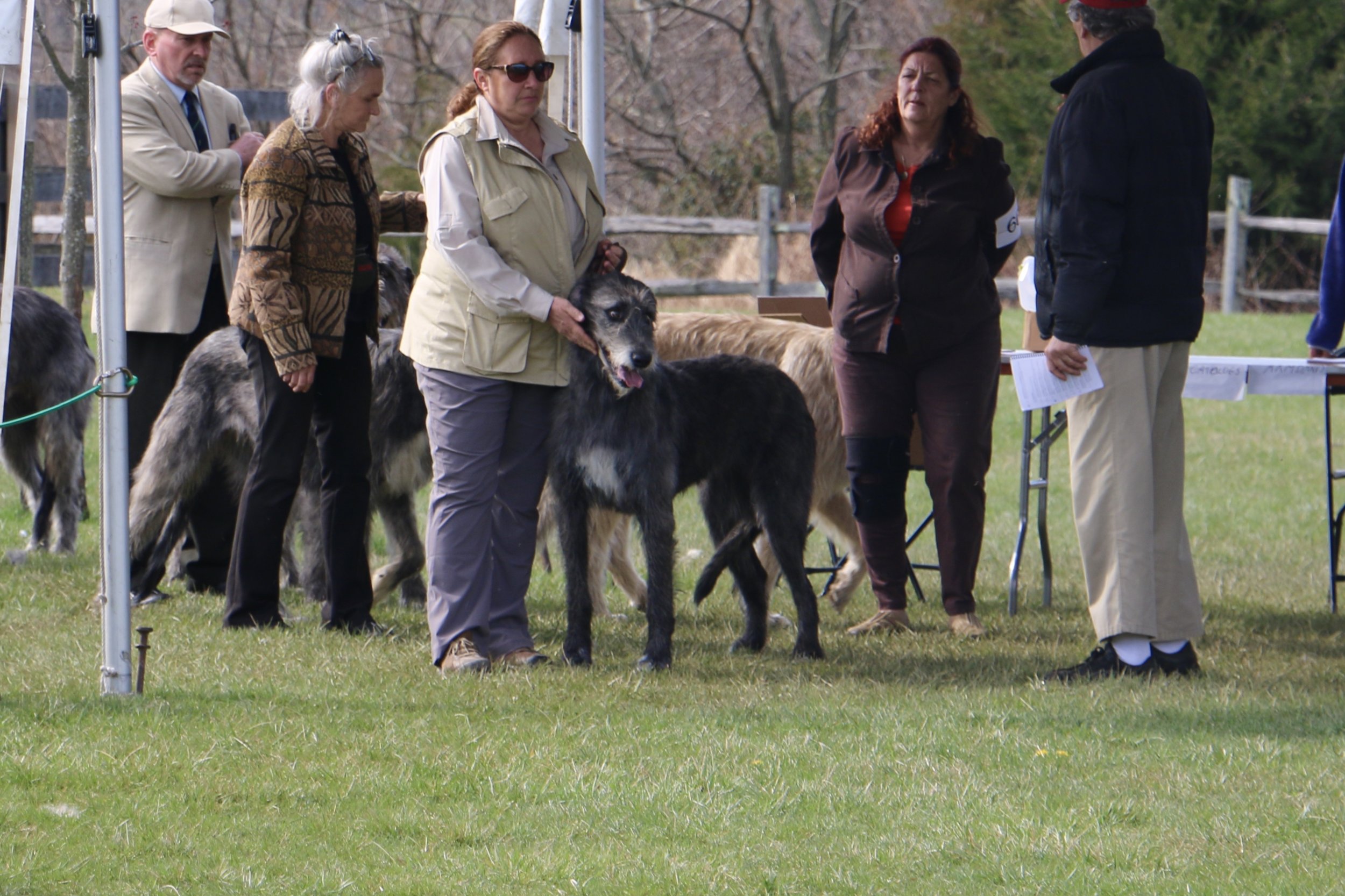
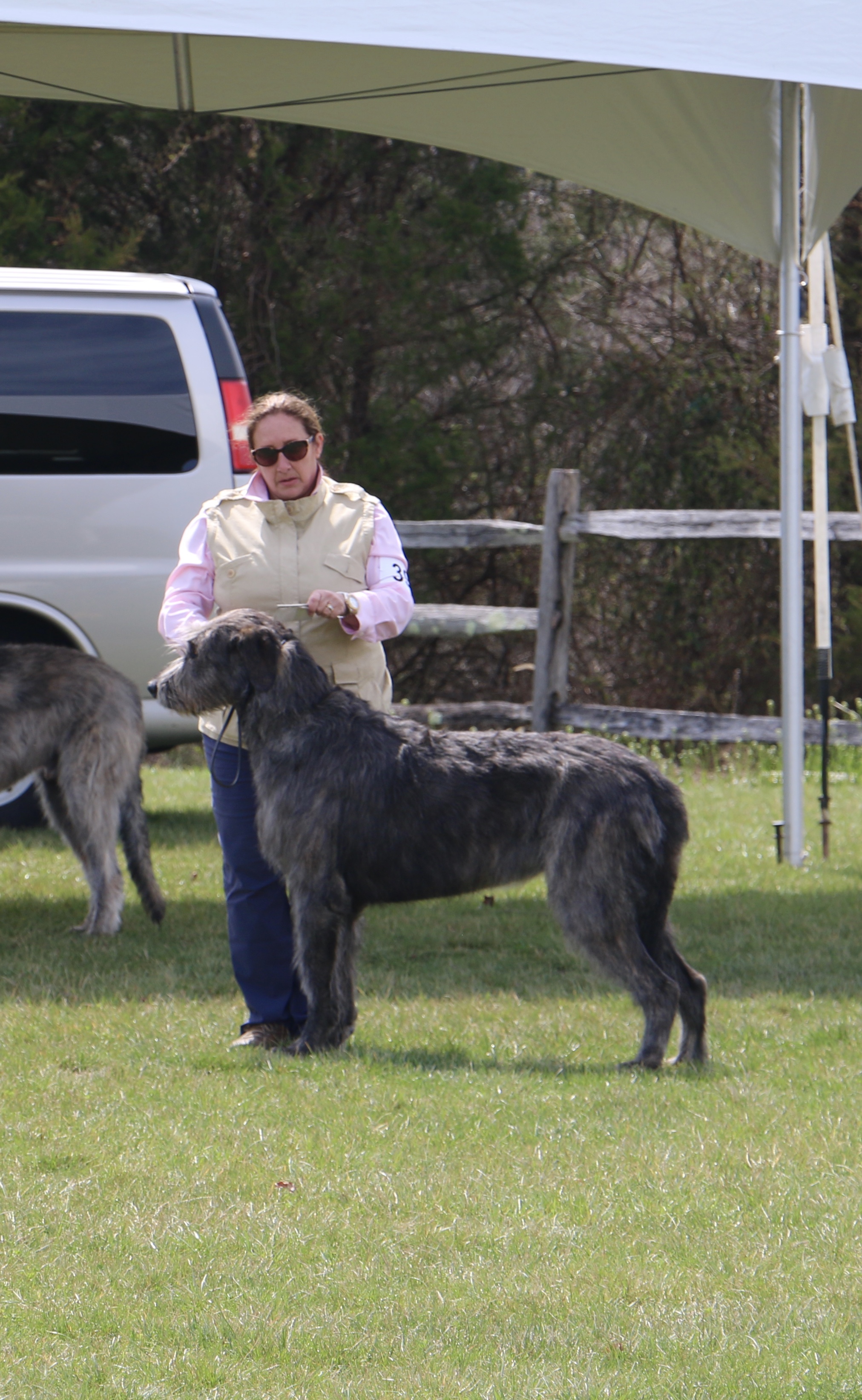
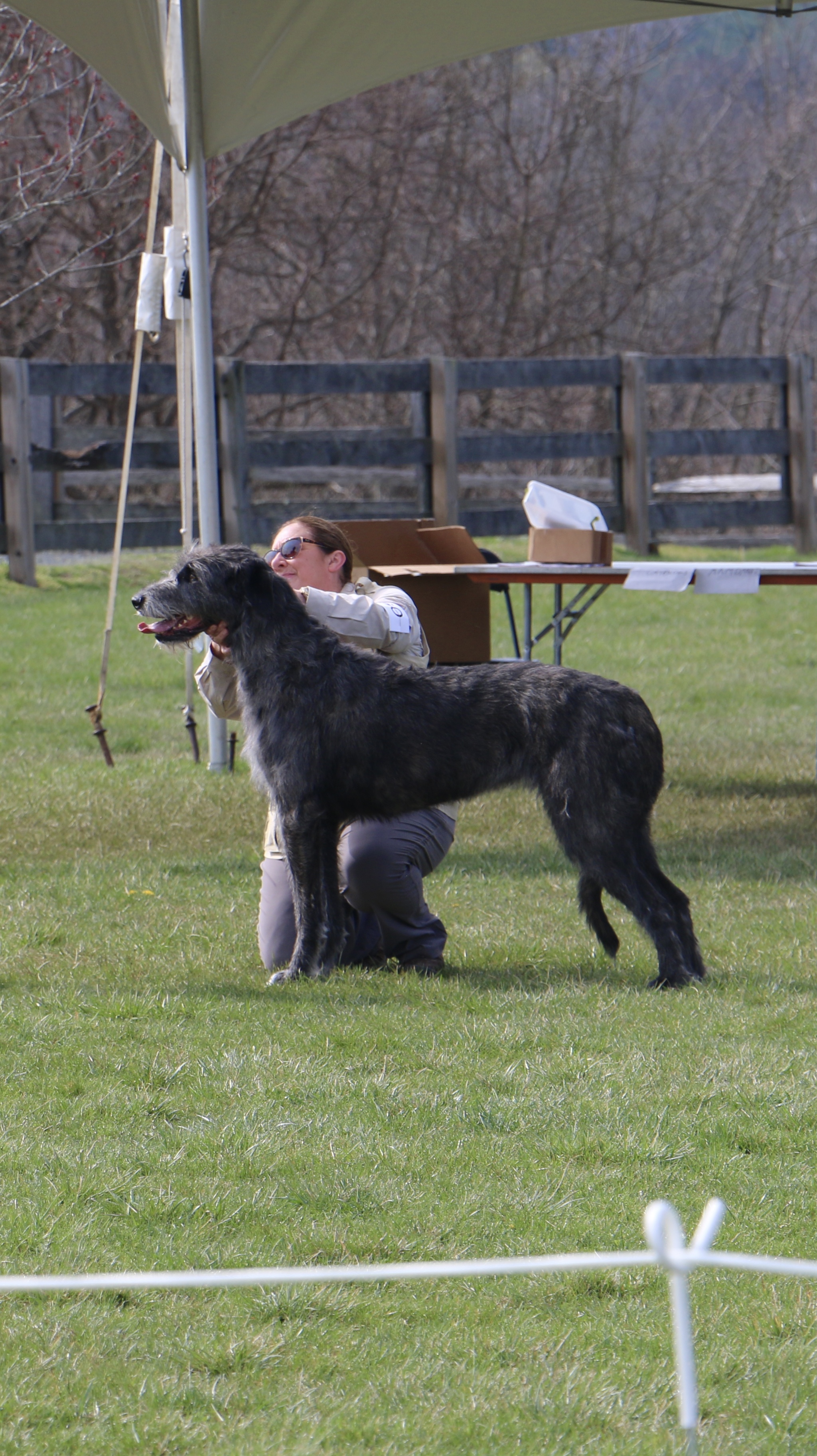
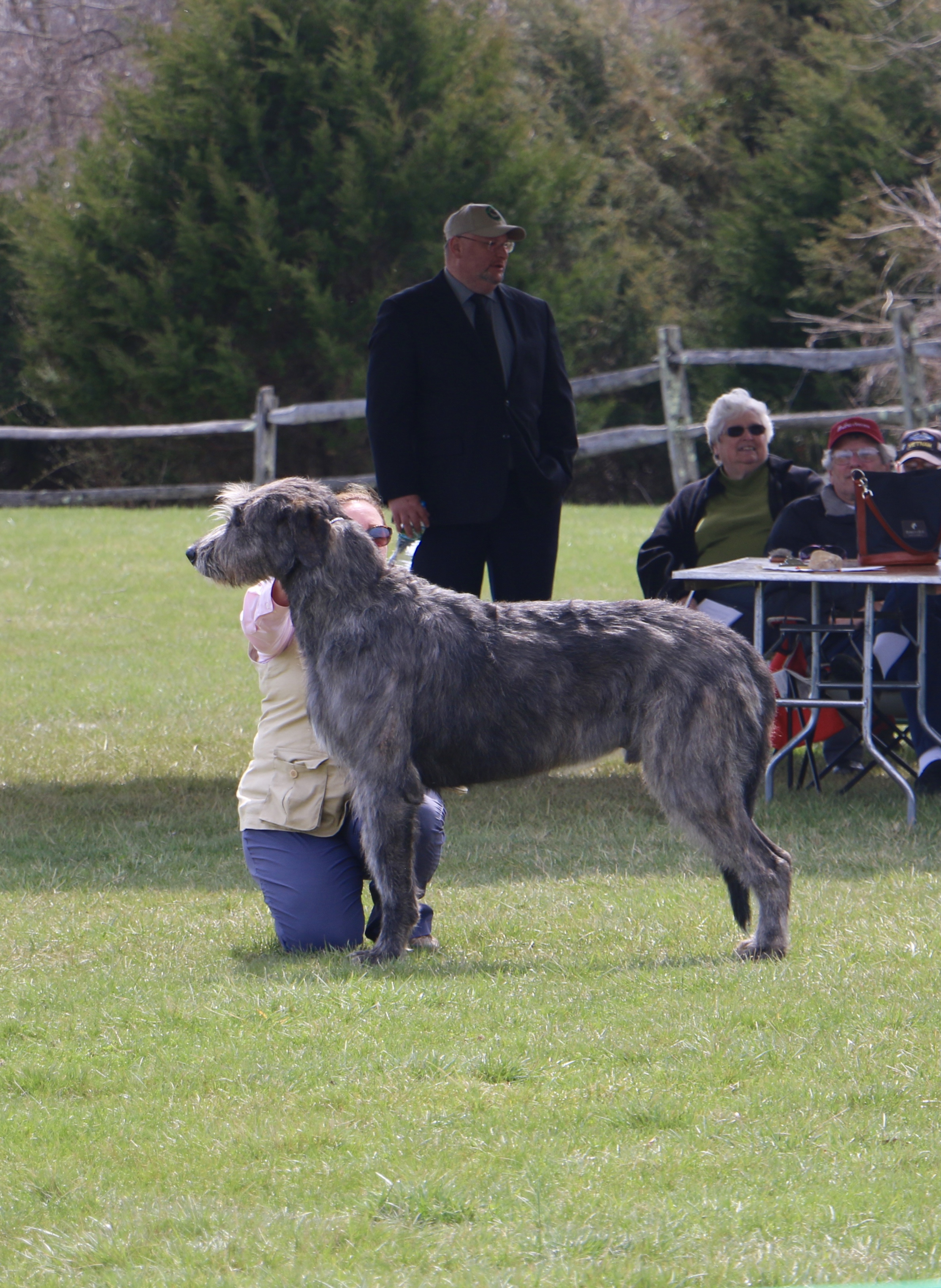
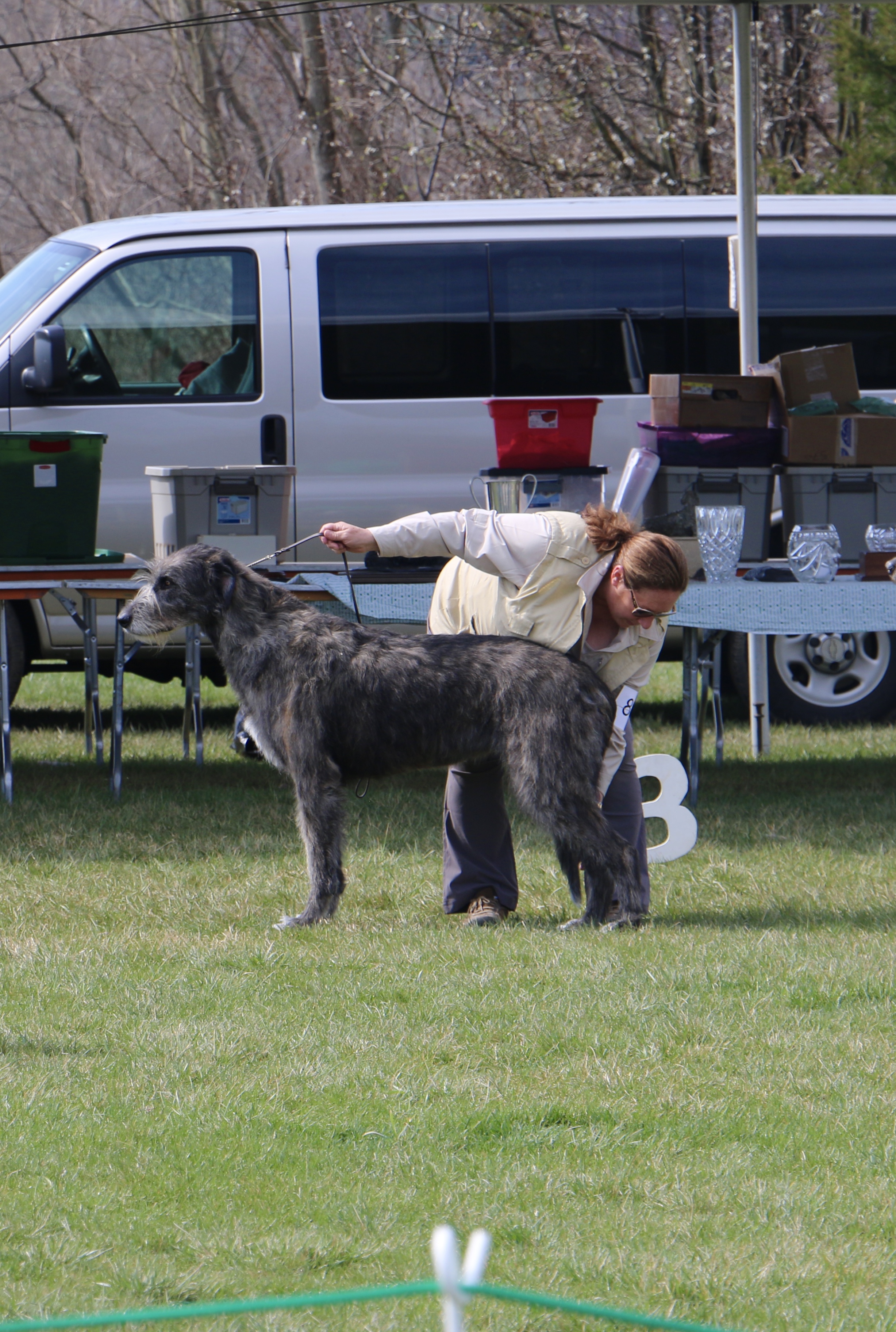
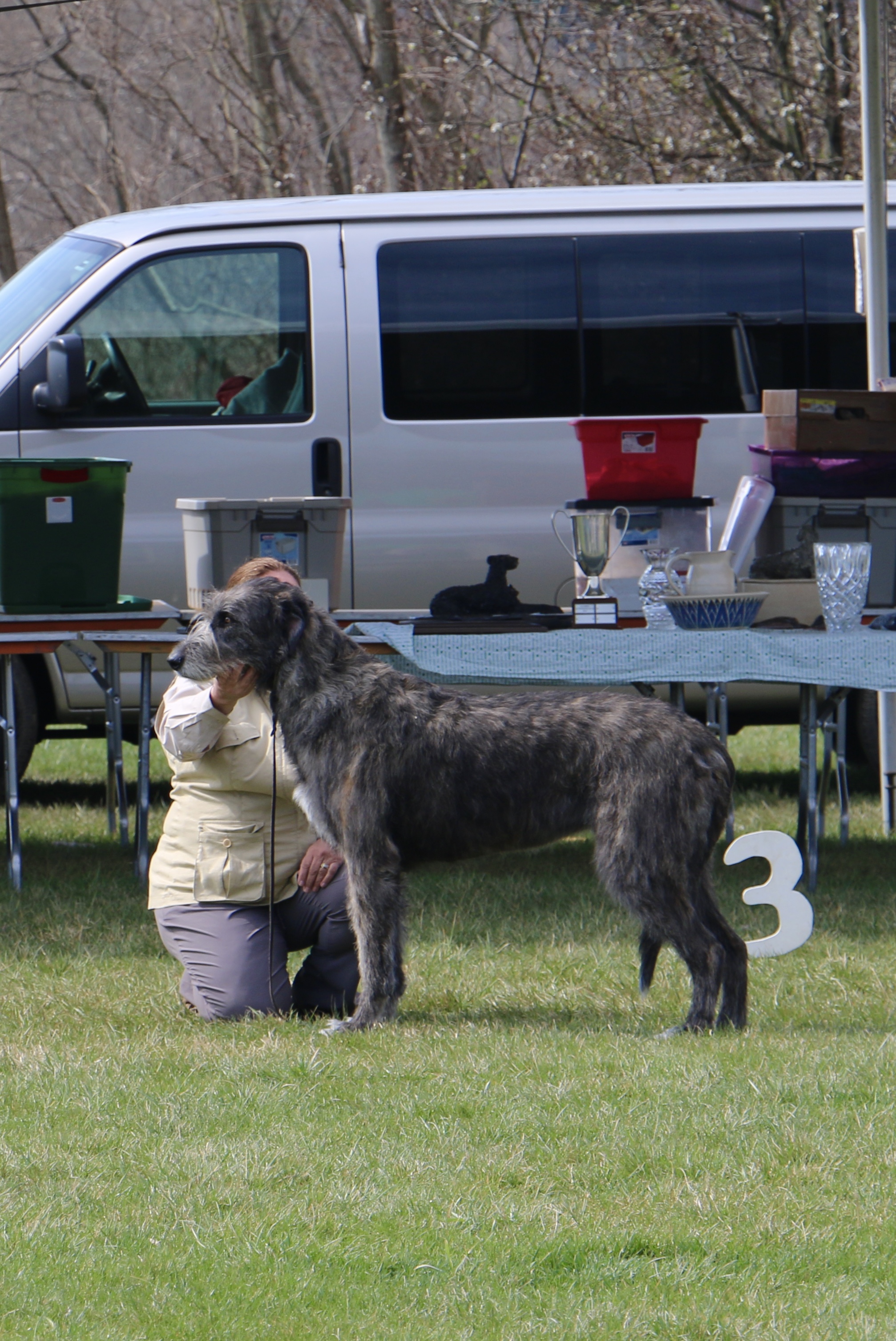
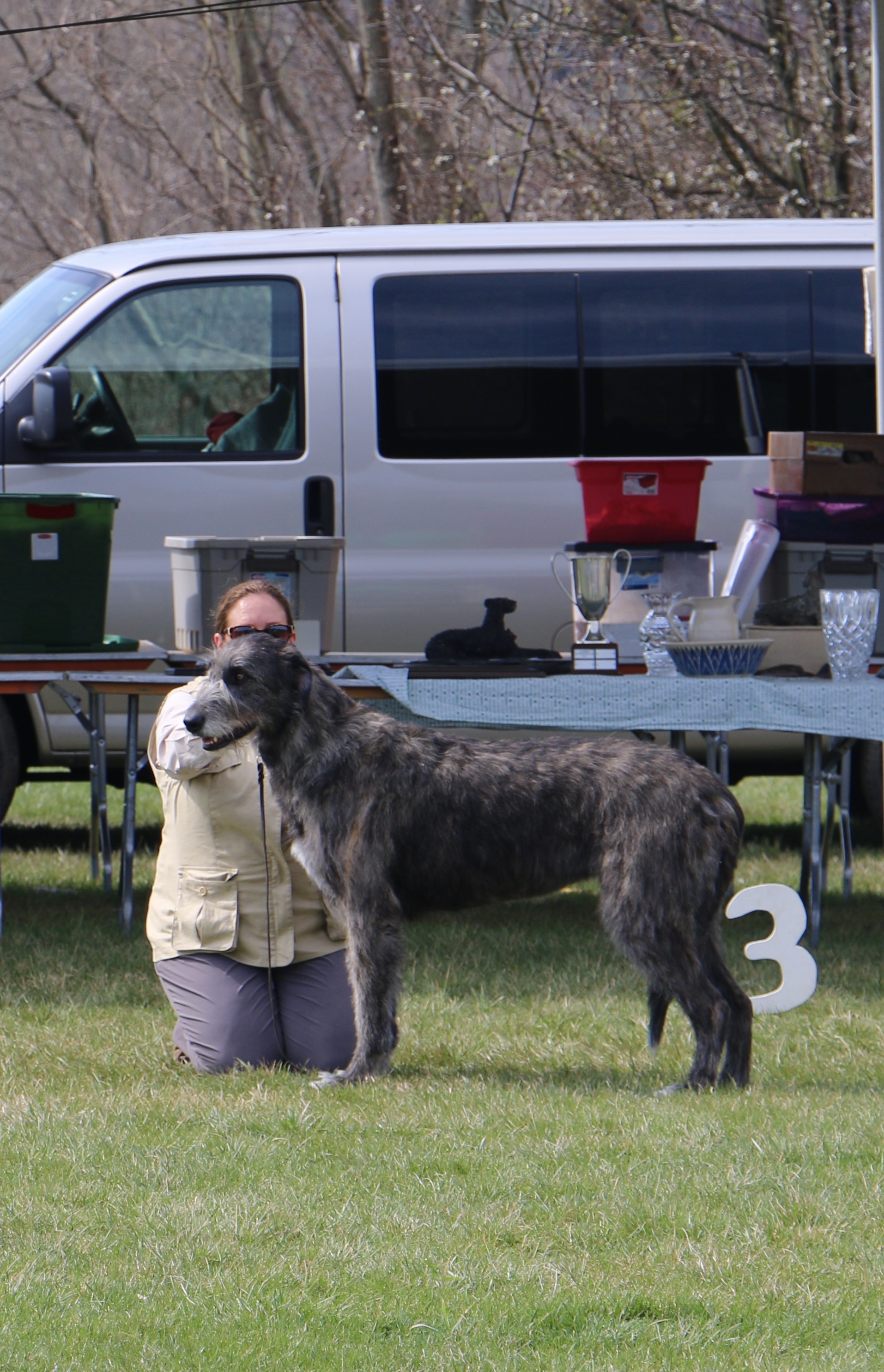
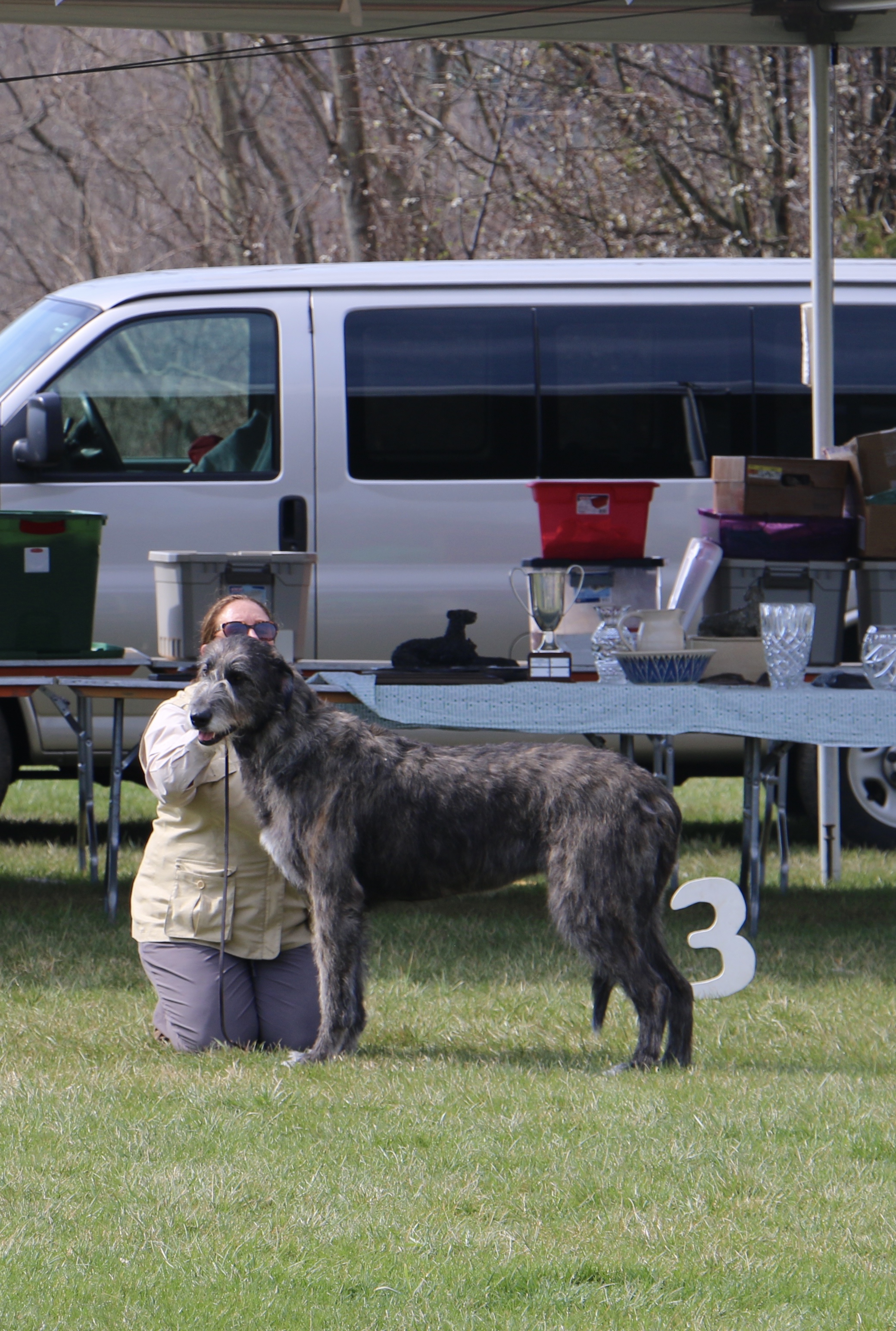
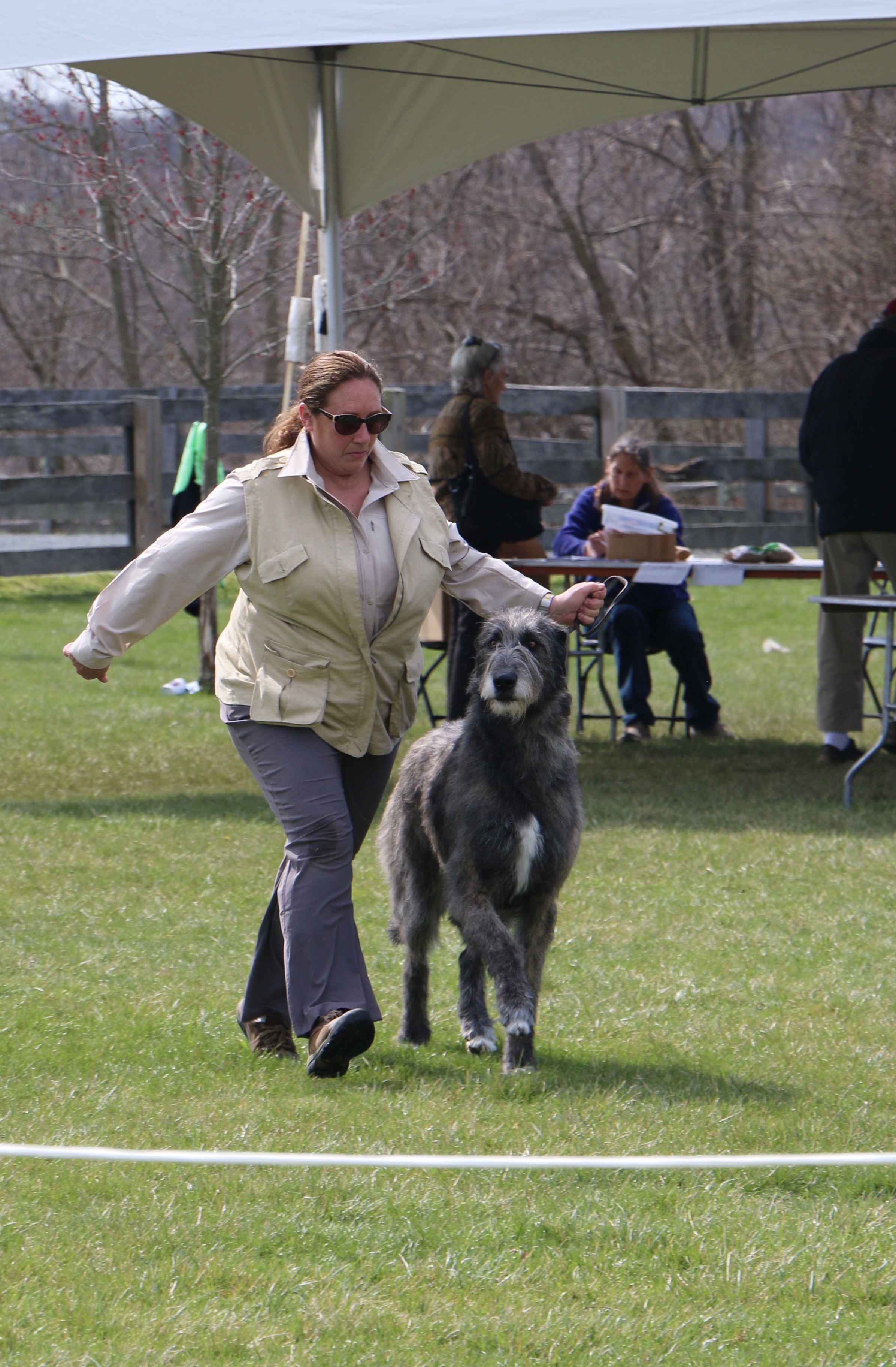
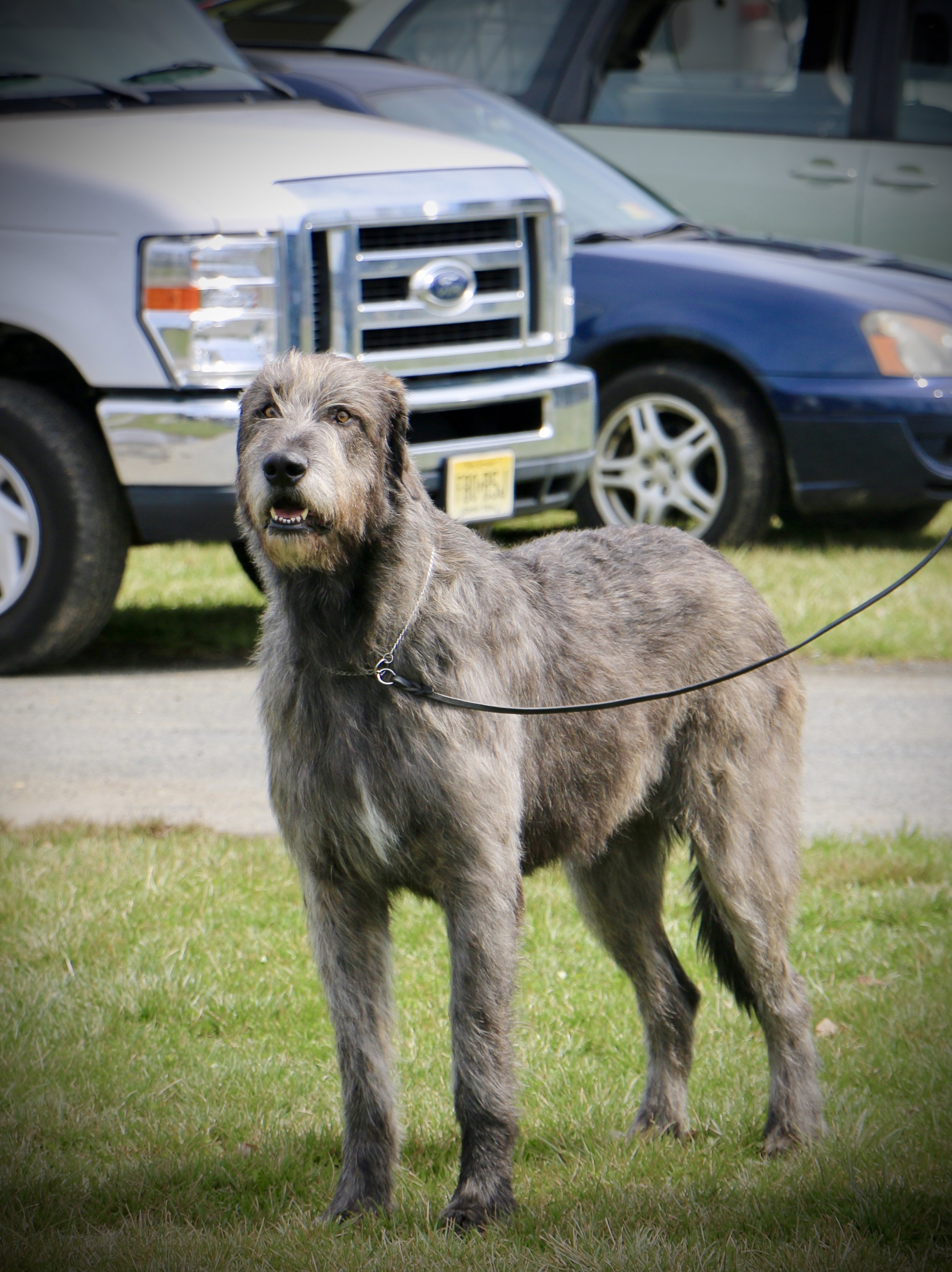
Ballyhara Candid photos from recent Potomac Specialty Show
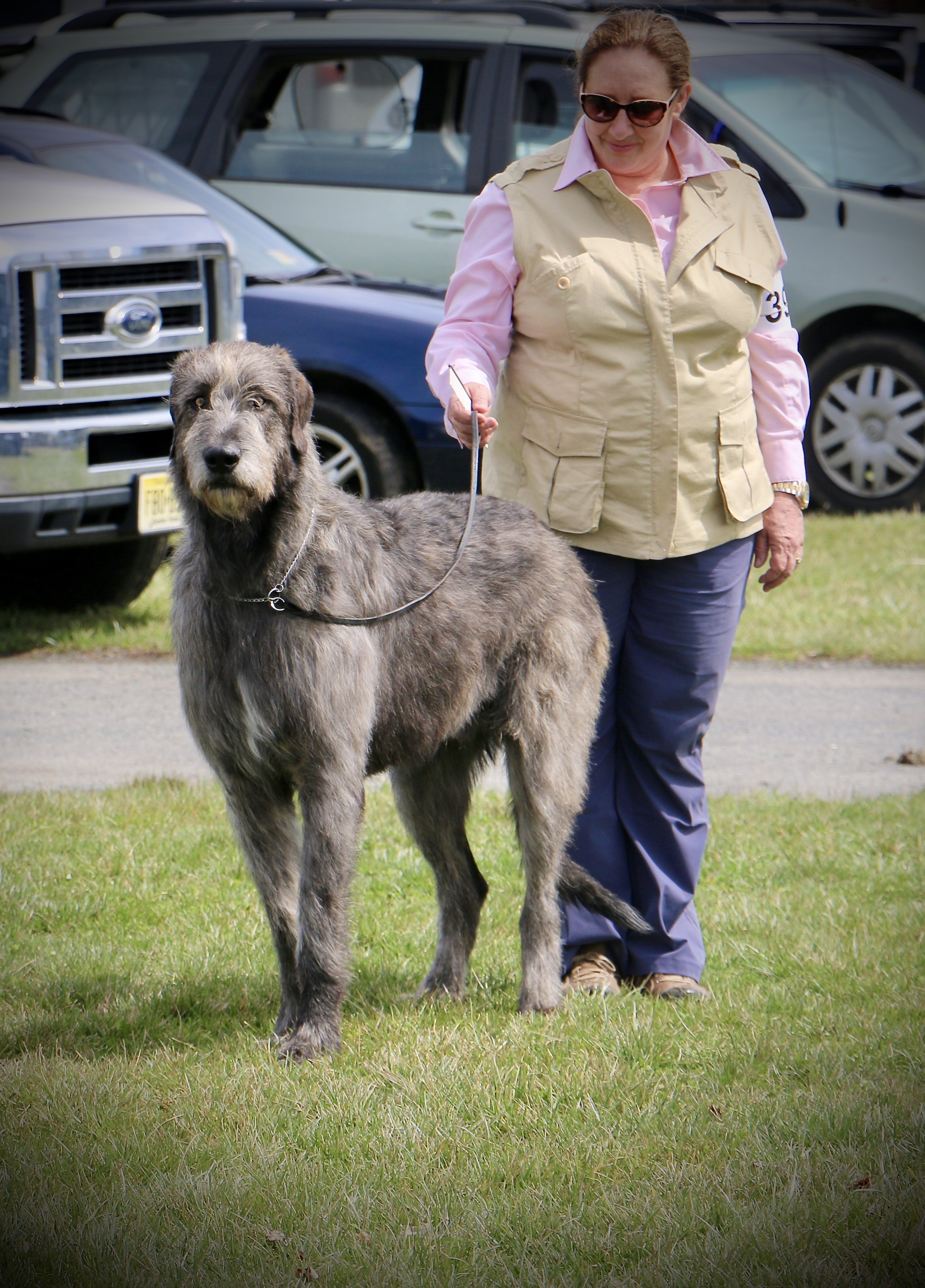
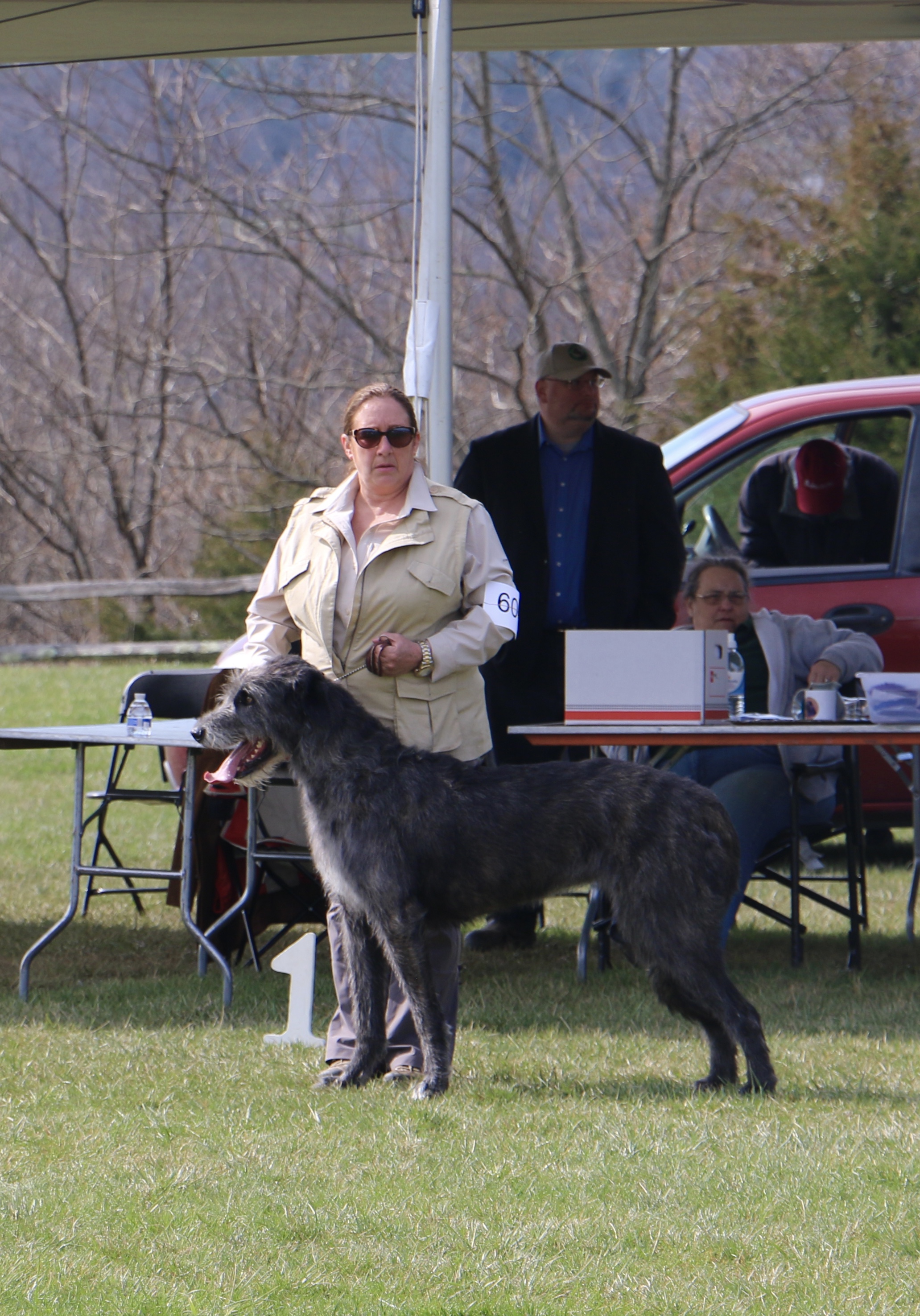
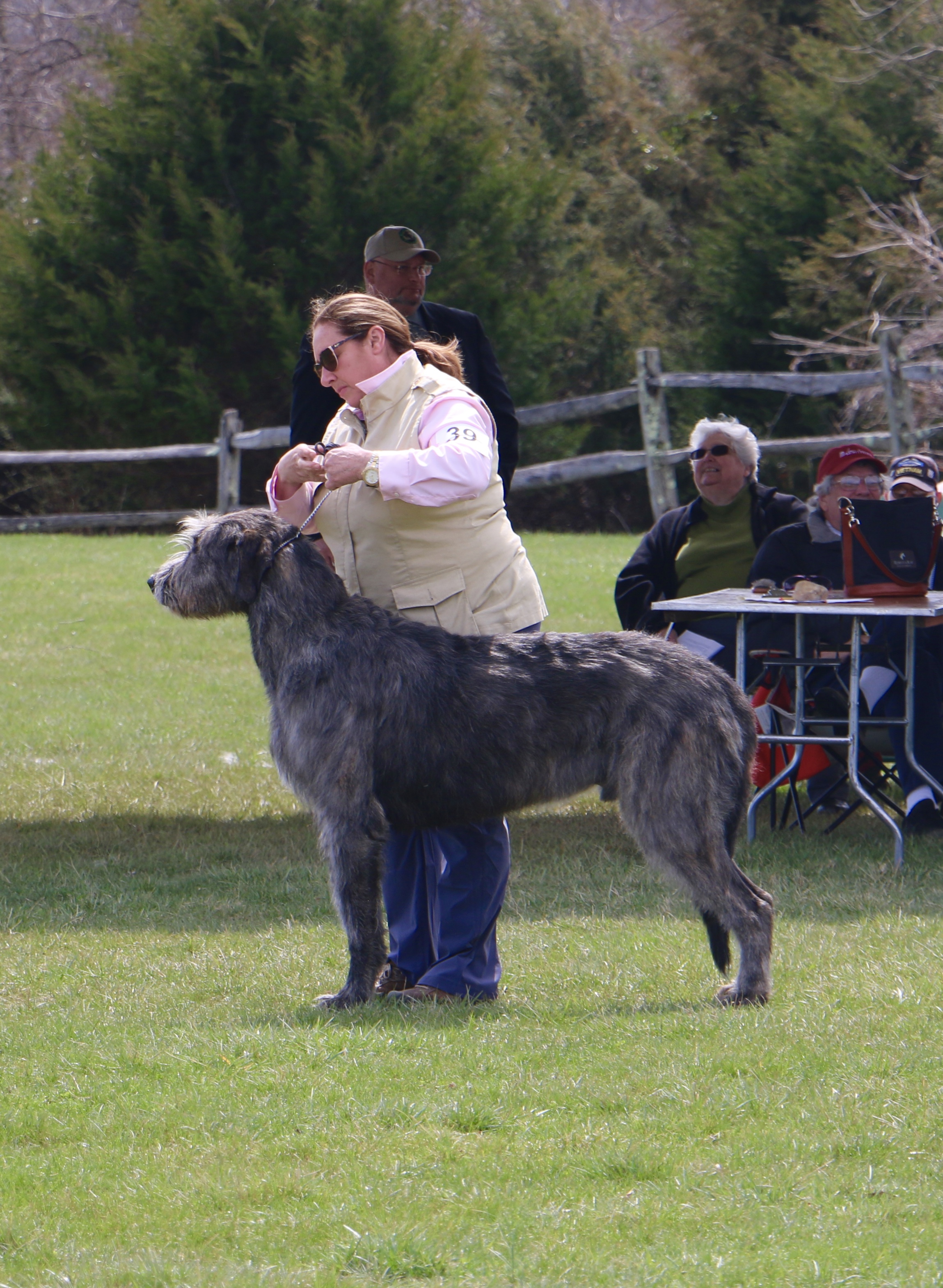
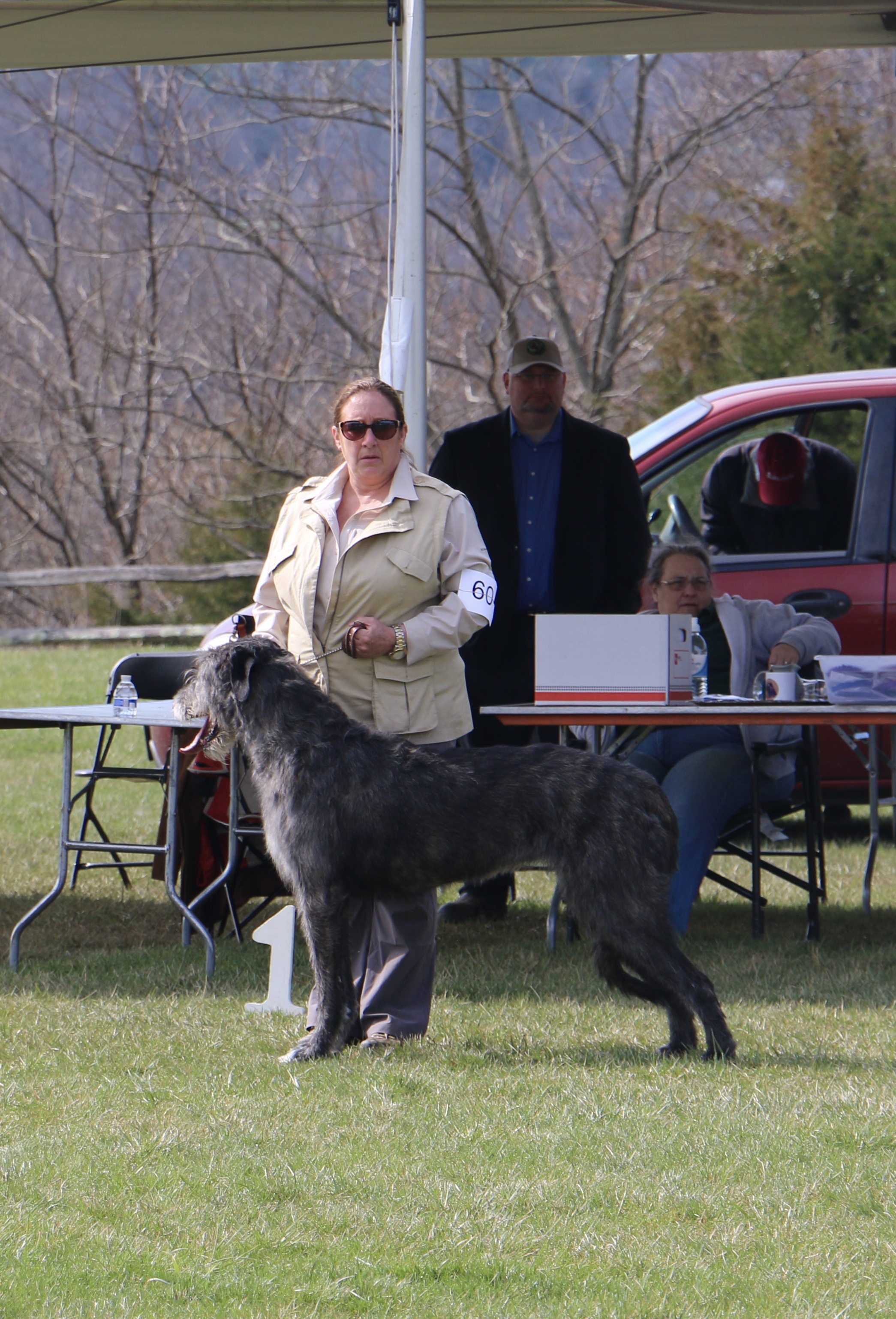
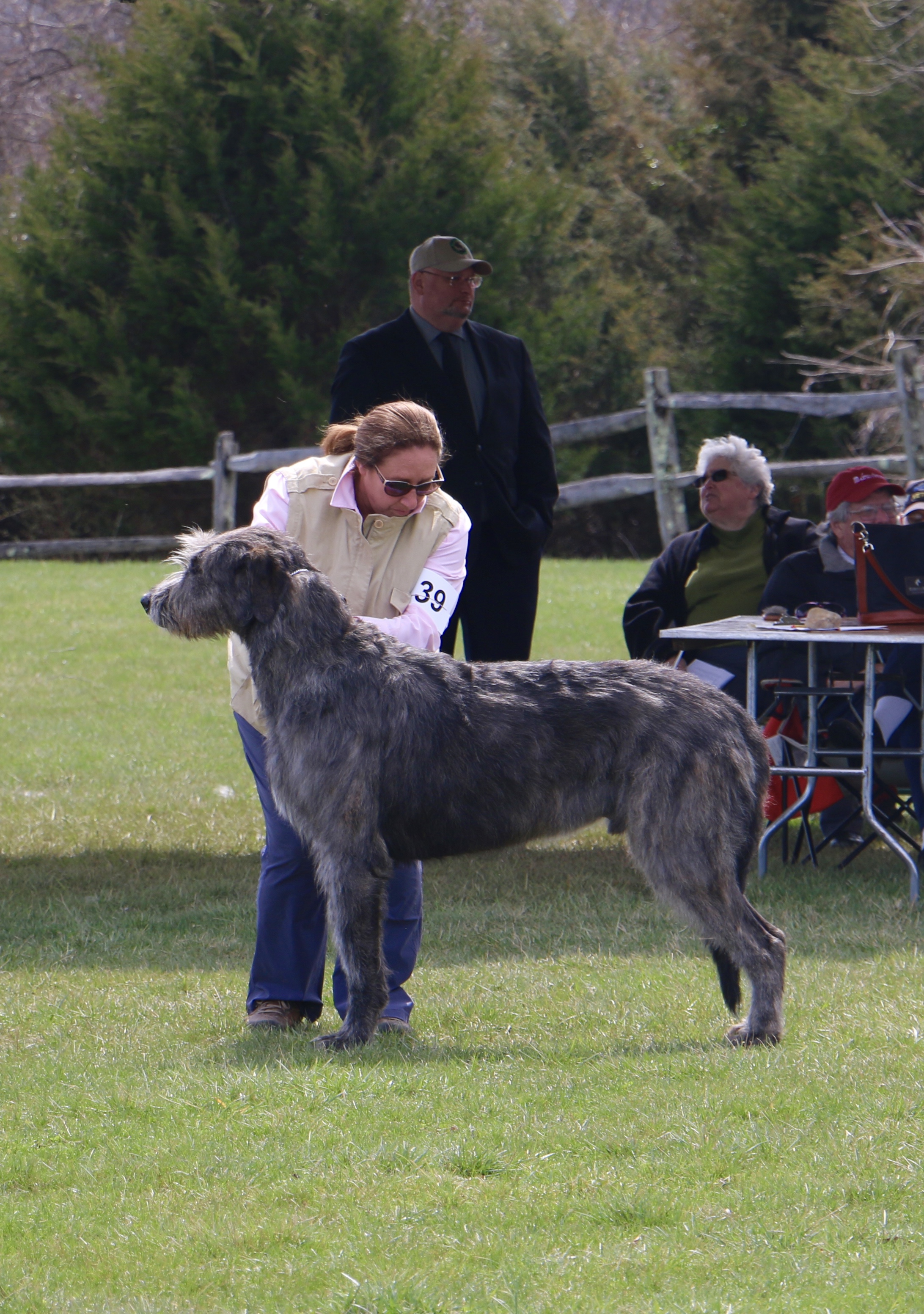
Here are a few candid photos of my Irish Wolfhounds from a recent specialty show.
Dogs in Review Point/Counterpoint
A recent conversation in Dogs in Review Point/Counterpoint topic of the month section that I thought was engaging as the guest panelists answered in a thoughtful, meaningful manner. The subject matter is not new:
"In your experience, is the average exhibitor today more knowledgeable or less knowledgeable about breed standards, canine structure, and gait than he/she was 10 years ago?"
I know that this problem has been debated for at least 15 plus years alone in my circles, despite the ten years the point/counterpoint mentions......
The following attachment is a recent conversation in Dogs in Review Point/Counterpoint topic of the month section that I thought was engaging as the guest panelists answered in a thoughtful, meaningful manner. The subject matter is not new:
"In your experience, is the average exhibitor today more knowledgeable or less knowledgeable about breed standards, canine structure, and gait than he/she was 10 years ago?"
I know that this problem has been debated for at least 15 plus years alone in my circles, despite the ten years the point/counterpoint mentions. Seasoned fanciers everywhere around the country frequently discuss the matter with the same predictable results: head shaking because many considerably experienced breeders have given up saying there is not much we can do about it now.
However, there are those of us who still attempt to educate neophytes and the instant "Know-it-all's" with articles on anatomy and muscling physiology -- replete with diagrams and dialogue meant to overcome the obstacle of complicated medical terminology. Case in point, my work with Wendell Sammet over these number of years on several educative articles regarding anatomy (currently our newest is in progress concerning joints), has not been just for our health nor glory. We break down the language in canine anatomy that consists of many interconnecting parts and convert it into lay terms so that it is easier to understand for today's average breeder and fancier. His and my efforts are intended to teach today's average Reader/exhibitor/breeder in the least ornate manner in the hopes that they retain what we explain and illustrate via diagrams to propagate better dogs.
Still, many people tell us that our endeavors are a waste of time as the outcome has already been decided. That is to say, the sport today with its majority of uninformed exhibitors and fanciers and the primary focus now being on achieving ratings and points is irreconcilable with the sport of yesteryear, its design, and mission. Irreconcilable being that the two vastly different ideas are incompatible. What is more, I believe that many long experienced AKC Judges have crossed over to the other side further bolstering the new representation of the sport. They have participated in the "dumbing down" of the sport because they are complaisant, and they do not want to rock the boat. Unfortunately, I along with others are now simply considered quaintly nostalgic.

Terrific Meat Grinder for Preparing Fresh Dog Food
For those owners who prepare their meals for their dogs, I have provided a review on our new meat grinder. I purchased the Weston Pro Series™ #32 Electric Meat Grinder (2 HP) 1500 watt unit.
For those owners who prepare their meals for their dogs, I have provided a review on our new meat grinder. I purchased the Weston Pro Series™ #32 Electric Meat Grinder (2 HP) 1500 watt unit.
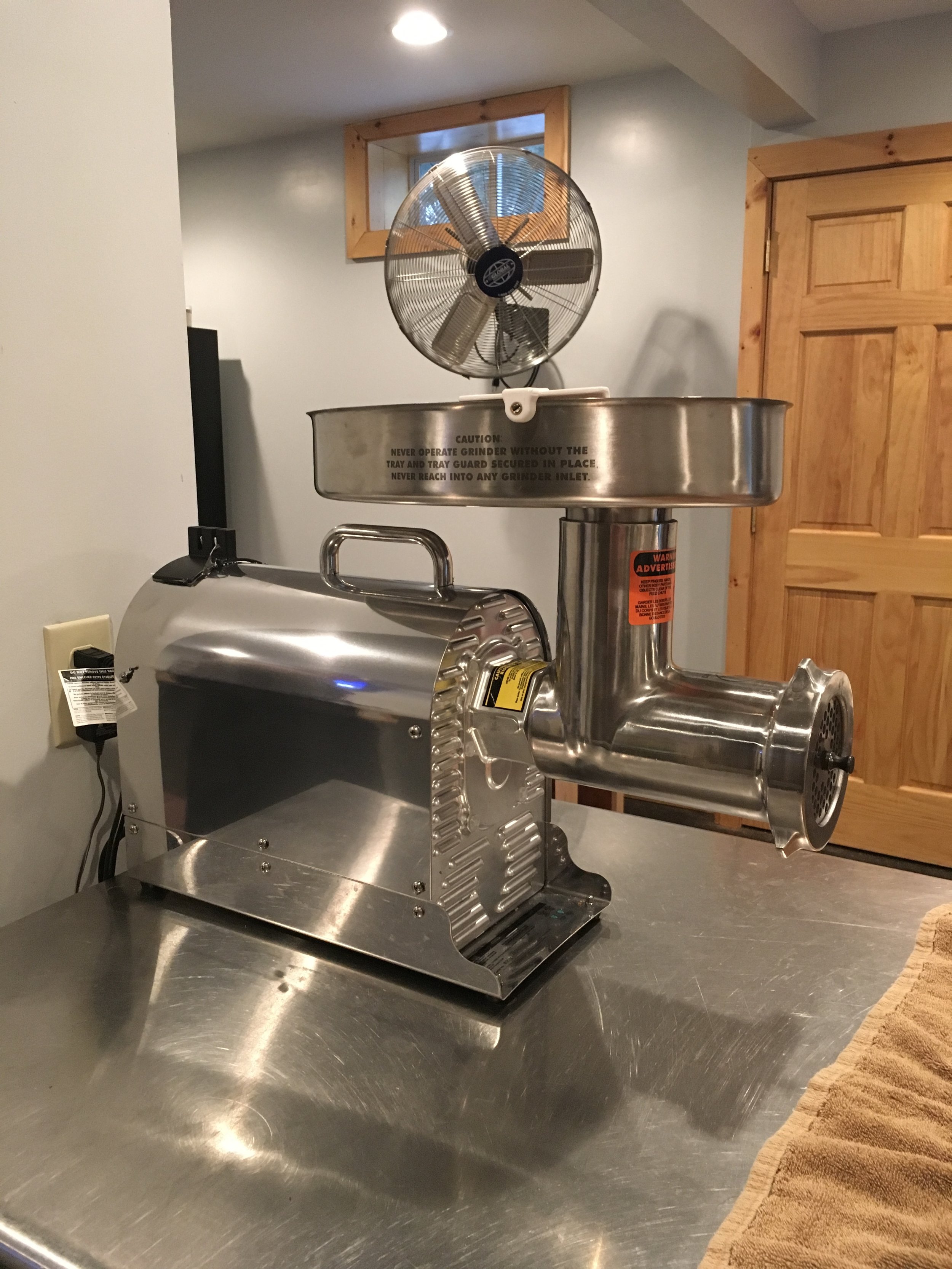
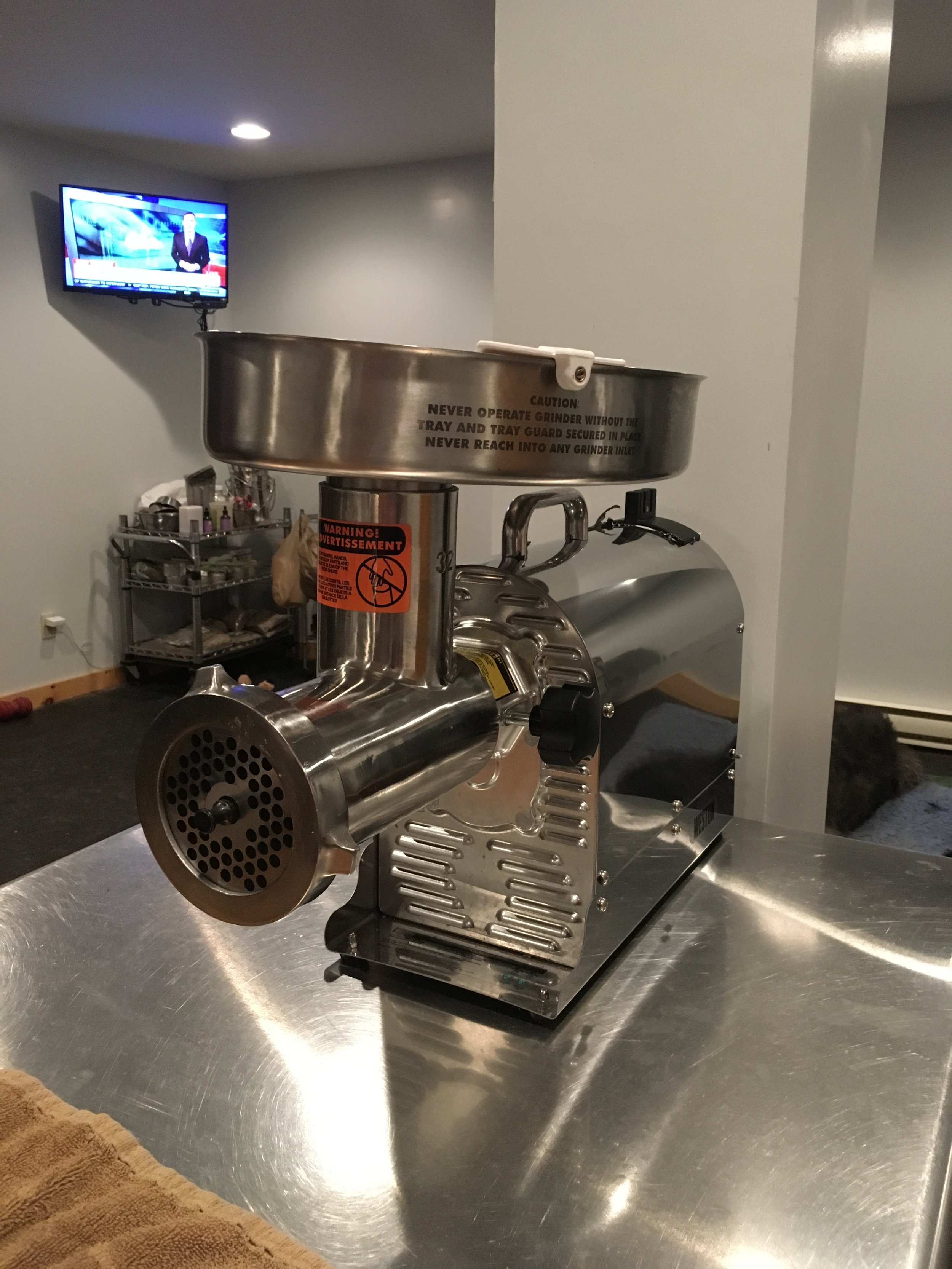
FeaturesIncludes:
- Permanently lubricated, 2 HP / 1500 watt air cooled motor (120 volt, 60 Hz) runs smooth for a lifetime of use
- Grinds 12-18 lbs per minute
- Offset head design (patent pending) promotes high speeds
- Precision engineered steel gears for quiet performance & rugged durability
- Five Year Limited Warranty
- Disassembles for easy cleanup
- Non-slip rubber feet for added stability
- Sturdy handle for carrying & transportation
- Reverse function on #22 & #32 models
- Tray guard on #22 & #32 models helps keep your hands safe
- #22 & #32 warrantied for grinding raw pet food - See warranty section for further details.
- Auger Grabbing Stomper for simple disassembly and cleanup
- Built-In Knife Sharpener for sharpening your favorite butcher knife
- Tray-Nested Accessory Tray for storing your plates, knife, stomper and sausage stuffing kit
- Tray Dust Cover
- Tray Safety Guard
- Stainless steel grinding knife
- Two stainless steel grinding plates: Coarse (7mm) and Medium (4.5mm)
- Sausage Stuffing Kit:
- Set of three funnels: 20mm, 30mm and 40mm
- 10mm Snack Stick funnel & high-speed auger
- Stuffing star/spacer
To date, I am a fan as this machine makes very quick work of raw beef meat grinding 12-18 pounds per minute! Amazingly fast but the best feature and one of the reasons why I invested in this machine is that it can grind small animal bones such as chicken or rabbit. In fact, the 5-year warranty states:
Weston Pro Series Electric Meat Grinders (#22 and #32) are capable of grinding smaller, softer animal bones such as rabbit, whole chickens* or chicken quarters, and other birds, due to both the power and all metal construction of the units. Avoid grinding large, dense animal bones as they are very difficult to process (i.e., bones one would find in large game, pigs, or cows).
When we travel we bring our Irish Wolfhound's meals with us. We were just preparing for an out-of-state dog show and before buying this unit, I had to purchase ground beef. Depending on the season, the price per pound could run from $2.39 to nearly $5.00 per pound. I actually checked the price of meat at our chain grocery store and at this time of the year, a family-pack of 80/20 ground beef was approximately $4.97 a pound. Thankfully, I am no longer held hostage having to buy ground beef. Instead, I purchased Chuck Roast that was on sale for $2.79 pound and ground my own hamburger meat. I ground 14 pounds of chuck roast in less than one minute. A simple switch to the finer grinding plate and back through the large, ground 14 pounds of meat went and out it came just like the product we buy in the butcher meat department. Frankly, it was marvelous having saved approximately $41.00 not having to buy pre-ground beef. Wow!
BTW, I also make my own chicken meatballs as we bring a variety of meatballs for traveling to feed the wolfhounds on the road. This is one of the reasons why I bought this 2 hp, 1500 watt meat grinder. I purchase either chicken drumsticks or chicken wings and the machine grinds the boned-in chicken in seconds. There is no need nor do I recommend passing the chicken meat through the finer grinder plate a second time as chicken meat is wet and sticky, just like ground turkey. I add oregano, wheat germ, fresh eggs and chopped garlic, roll them up and freeze and away we go.
Tips & Considerations on this particular Weston Supply Pro-Series unit.
First, it is a hefty unit and I do not consider it portable. We have it in one location and do not move it. Next, make certain that you purchase Food Grade Silicone spray to lubricate the working parts. I only use Weston brand spray as it is:
VOC compliant
Protective anti-rust film
Heat-stable
Odorless / tasteless
Sanitary
Non-Toxic
Ozone friendly
As for considerations, assembling the unit for each use must be done carefully. You cannot overtighten the knife nor the nut that holds the auger, knife and grinder plate in place. If you make a mistake and insert the knife backwards (which is not that uncommon and I believe happens more often than not) then the result is the machine's motor can and will seize up as there is no room for error within the design. Also, if you overtighten the nut placing too much stress on the knife and grinder plate then the motor will seize up as well and you will be left with an expensive, heavy, paper-weight.
Holter ECG Ambulatory Monitor
My last Blog article, Irish Wolfhound Heart Health, stressed the importance of the portable, ambulatory ECG device called a Holter Monitor. A portable 24-hour ECG that is an essential tool for diagnosing, screening, and eventually managing canine myocardial dysfunction, tachyarrhythmias, and congestive heart failure. Here is what they look like and how they are worn.....
My last Blog article, Irish Wolfhound Heart Health, stressed the importance of the portable, ambulatory ECG device called a Holter Monitor. A portable 24-hour ECG that is an essential tool for diagnosing, screening, and eventually managing canine myocardial dysfunction, tachyarrhythmias, and congestive heart failure.
How it works is that it provides heart rate and rhythm information over a 24-hour period and some, up to 48 or more hours, depending on the model that your Veterinary Board Certified Cardiologist utilizes. The ECG records the frequency of any arrhythmias, if any, and the cardiologist assesses the data for rapid heart rate (ventricular tachycardia) and the complexity of any arrhythmias, if there are single or multiple contractions or runs of couplets, triplets, as well as their duration. Sustained, malignant couplets or triplets can be life-threatening, however, in most cases, wolfhound owners are unaware that these are occurring unless the wolfhound collapses and loses consciousness (syncope).
In the attached photo gallery is a photo of a Holter monitor. This model is approximately 2.5 inches by 2.5 inches and is attached to 6 leads via electrodes. Models vary and depend entirely on which type your cardiologist uses. This equipment is quite expensive and depending on the size of their practice; many cardiologists will only have a limited number to apply to patients. The software for the monitors is an additional and costly expense and is required so that the cardiologist can assess the data. For example, our Board Certified Specialty Practice is housed in their own a 37,000 square foot multi-story building, and they only have five Holter monitors available at one time. We purchased our own Holter Monitor model that our Cardiologists use in their practice as we have several wolfhounds and the cost warranted our purchasing our own. Besides, I have lengthy experience in applying the Holter monitor with its electrodes and wrapping the equipment to the chest, though it is not advisable for others unless they too have extensive experience with the hardware and knowledge of the specific positioning of the electrodes on the each side of the dog.

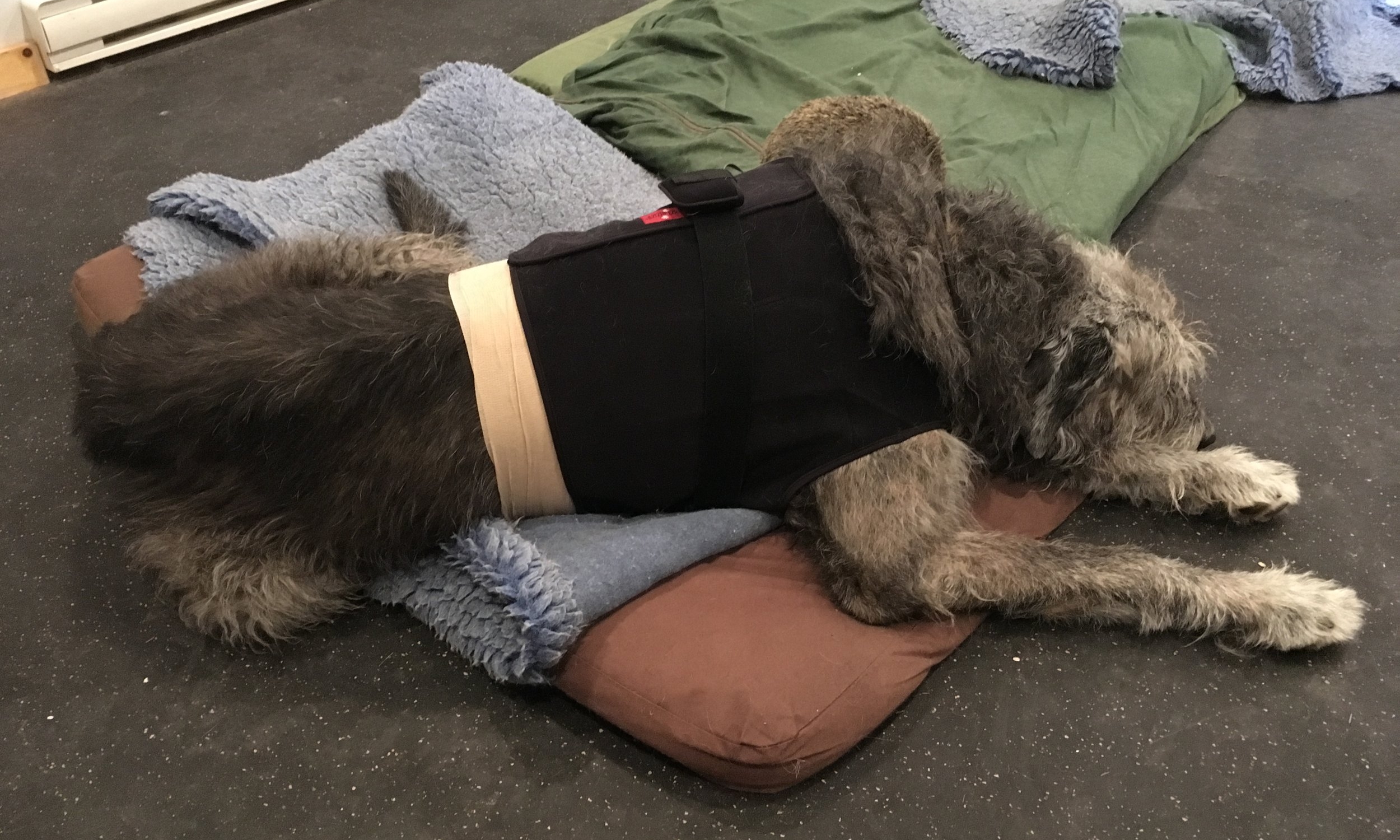


The hound is entirely comfortable wearing the device and goes about his routine. A diary is kept by the owner who records the time of any and all activity, such as feeding times, exercise and administering medications, if any. Once the 24 hours is up the dog owner returns to the facility to have the monitor removed or if living a distance away, their local veterinarian removes it for them and the owner then ships the monitor and equipment back to the Veterinary Specialist for review.
What I wanted to share with Readers and other wolfhound owners is the availability of cardiac vests for Holter monitoring. My cardiologist's practice has these as well, but once we purchased our very own Holter monitor equipment, we decided that we should go all in and buy the vest as well. These jackets cover the lead wires and electrodes to the monitor protecting them from the elements, and it also saves a good amount of VetWrap. The average wolfhound owner can purchase these vests if your Cardiologist does not have them for their patients or perhaps they do not have the correct giant size for your Irish Wolfhound.
I purchased ours from DogLeggs which provides coverage & support solutions for veterinary practices. The Holter monitor case seen on the back of Danny is custom sized to fit my Holter monitor model. You too can have one custom-fitted, even though your Cardiologist administers the Monitor on your wolfhound. All you need is to tell the DogLeggs company the dimensions of the Holter monitor, and they will produce one for you as well. The company is located in Virginia -- ask for Erin and tell her I sent you! I love ours.