
DOG BLOG
Musings
Sighthound Necessities
The Importance of Free Exercise for Large Sighthounds
Sighthounds love to gallop, to chase and stretch out. They experience unmistakable, sheer glee as they are bending, folding and leaping. You can see it in their expression. So, why is it that so many of these admirable Sighthounds are found living in unsuitable homes, having little or no fenced, secured acreage?
The Importance of Free Exercise for Large Sighthounds
Sighthounds love to gallop, to chase and stretch out. They experience unmistakable, sheer glee as they are bending, folding and leaping. You can see it in their expression. So, why is it that so many of these admirable Sighthounds are found living in unsuitable homes, having little or no fenced, secured acreage? As responsible fanciers and hobbyists, fulfilling their needs should be a primary concern when we place our hounds in their new, permanent homes. Our stewardship of these unique breeds obliges us to proceed with utmost care and concern while considering a new home.
I am not an elitist who snubs a potential puppy owner, turning up my nose at those whose accommodations are not ideal for our Sighthounds. On the contrary, I encourage them to contact me so that I may educate them about the exceptional needs and characteristics of our breeds. More importantly, though, I am aware that urban population growth has changed significantly over the past 60 years in our nation. We all live in an evolving landscape. "Metropolitan areas are now fueling virtually all of America's population growth," as reported in the Washington Post by Emily Badger. In an interesting article, unwittingly she corroborates what many conscientious breeders have realized, that ideal Sighthound companion homes are harder and harder to find. Small population centers with less than 50,000 people have had infinitesimal growth changes. Rural populations have dwindled. Today, one in three Americans lives within the metro areas of 10 cities — or just a few spots on the nation's map. The relevancy of the census data must not be under-appreciated, as this means that, slowly but surely, there are fewer opportunities for us to find homes for our galloping hounds.
The reality I face is that significantly more inquiries than in the past hail from people with no land. From the 36 puppy requests I have received in the past six months alone, 32 (90%) were from persons who did not have what I consider sufficient area to accommodate a Sighthound. Furthermore, this percentage includes some individuals who either currently have or previously owned a Sighthound — from another breeder — in their home.
I readily anticipate the question "How much land does she require?" Ideally, a home for a large breed Sighthound should have at least one acre of property secured with breed-appropriate fencing, but from my experience of three-plus decades in dogs, this often seems like an unrealistic requirement. A bare minimum of half an acre of open land, again properly fenced, not including the house, is my condition. I have received some requests from potential puppy buyers who own half an acre of land that included the home as well as an accessory building; one memorable inquiry offered half an acre of land that included the house, an in-ground swimming pool with a cabana and what appeared to be a Bocce ball court. All that was left was a postage-sized space for the hound to defecate in, without any area to run and play.
I politely refuse to place my large Sighthound puppies in these environments, notwithstanding the usual promises of the on-lead daily exercise that the hound would receive. You must be familiar with this type of dialog. A potential owner asserts that, although there is no acreage for free running, they regularly walk so-and-so many miles and they also live near a park where the hound can be off-lead. Almost all of us understand that Sighthounds are not candidates for off-lead running on public grounds. Simply, this is a hazardous situation due to their prey drive — a good subject for another article I plan on writing.
As for good intentions and best-laid plans, how many times has life thrown us curve balls? Life has a habit of bringing unexpected, unwanted changes or accidents. If a hound’s principal caregiver is injured or becomes ill, ultimately the hound is handicapped as well. The Sighthound will no longer have lengthy walking excursions to release energy and obtain needed exercise. Likewise, if an owner’s work responsibilities increase, this almost invariably impacts the time spent with the hound on a leash. Regrettably, because the properly fenced acreage was initially sacrificed, the hound does not have an area for self-exercise and running. So, ultimately, he suffers.
Self-exercise for a Sighthound is not only the freedom to stretch out his legs, to leap, twist and turn, all of which releases energy. It also is key to a Sighthound's development, both physical and mental. Strong, hard muscles are vital to proper maturation and longevity, as well as to protecting the body from unwarranted injuries. Secured exercise provides valuable mental stimulation: simply, it is good for a Sighthound's psyche or soul, mind, and spirit. His personality and character can develop to their full potential, which is especially crucial in the powerful, giant Sighthound breeds where it is especially important that they must be even-tempered and well adjusted.
Some may feel that placing companion-quality Sighthounds in a loving home where they receive individualized attention is far better than allowing these hounds to languish in a kennel environment. To a great extent, I agree, but the compromises that some breeders make are worrisome. The trade-offs are unfair and incompatible for galloping hunters bred for running, especially when we hear that Wolfhound puppies are placed in townhomes, not as temporary but as permanent quarters. Where is the line drawn for responsible breeders to reject a potential home?
Others may belittle this discussion by stating that one cannot keep every puppy, and who am I to decide what is enough space for a Sighthound to live on comfortably? Some may claim that leashed exercise is sufficient for our hounds and that many of the hounds exercised only on leash are in better physical condition than a hound with acreage. Now and again, this statement could prove true. Having been a longtime Wolfhound fancier, I know from first-hand experience that, on occasion, some Wolfhounds will not use the available space for running but just sit at the gate. Despite having one hundred fenced acres, there they were, lying on the opposite side of the fence gate waiting for me. On the other hand, Sighthounds living on considerably less acreage may happily explore and bound about their areas.
Today's average homeowner does not have acres of property, in fact, much, much less. For those fortunate to have some but still acceptable amount of property, it can be transformed to accommodate a galloping hound, as long as the homeowner is willing to do so. Indeed, the initial fencing investment is costly, but our sighthound breeds can be expensive. Expenses are a certainty all prospective puppy owners must be prepared for, though, in the end; these hounds are well worth the investment.
Returning to the subject of alternative leashed exercise, I frequently pose this logical question. Which athlete would have the better overall cardiovascular condition? A person who runs or walks daily? Granted, walking is far superior to no workout and also offers benefits. I always recommend puppy owners frequently walk with and socialize their hounds, regardless if they have one or ten acres of fenced land. However, what about the muscle-toning obtained while the Sighthound enjoys fenced but free exercise that is not achieved by just leash-walking? While placing a Sighthound, maybe future fitness is not a priority for some breeders, despite the health benefits. If care, love, and clean accommodations are all that a breeder requires from their puppy owners, they are, in my opinion, doing a disservice to our Sighthounds.
If we cannot respect these breed's noble heritage, why then do we bother having them? There is a myriad of other Group breeds who require only small areas and some exercise who are entirely satisfied residing on the couch. In fact, AKC generates several suggested dog breed lists that correspond to homeowners lifestyles. You can see the links to these from my website page, Irish Wolfhound Breed Character. Several times in these past years, after I called attention to inadequate property conditions and discussed such concerns with a few rational, prospective owners who had fallen in love with the Irish Wolfhound breed, they did, in fact, resist the urge of instant gratification. These people understood my objections; they respected my advice and my decision, recognizing that it would be simply unfair for them to have a giant, galloping hound. As a long-standing breed custodian, a rational resignation like this is one of the best things that I could wish for my wonderful sighthound breed, the Irish Wolfhound.
Multiple Organ Failure and Acute DIC
Sadly, we lost our much loved Danny several weeks ago at 9 years 11 months of age. Though we did not perform a post-mortem, the suspected cause of death was multiple organ failure and possibly acute DIC (disseminated intravascular coagulation)…..
Lisa and Ballyhara Danny 2018
Sadly, we lost our much loved Danny several weeks ago at 9 years 11 months of age. Though we did not perform a post-mortem, the suspected cause of death was multiple organ failure and possibly acute DIC (disseminated intravascular coagulation). My primary vet believed it to be Hemorrhagic Gastritis as it had a very sudden onset with black tarry sludge pouring out of him. This color is caused by iron in the blood becoming oxygenated when it passes through the ileum and colon. One minute he was healthy, running around the paddock and he came into the house to rest, slept soundly, and when I entered the room again, he had just gotten up and had black sludge flowing out of him. I had never seen anything like it and can best describe it as turning on a faucet. There was no vomiting, and his gums were very pale. The quantity was so vast that I had to hose the lawn down where the black coal revealed itself as blood with a foul odor. Danny was rushed to the veterinarian, and we ran bloodwork diagnostics on him. His red blood cell count was low, and his white blood cell count was very high. Generally, with Hemorrhagic Gastritis, the red blood cell PCV (Packed Cell Volume) is elevated and often they have normal or low blood protein levels. As a result, this diagnosis was set aside. My gut feeling was that an organ(s) was shutting down as a result of the heart medications and nerve pain medication he had been taking over several years, on a daily basis. He had been taking 1500mgs of Mexelitine 3x daily; 80mgs Sotalol 2x daily; Pimobendan 40mgs daily; Enalapril Maleate 40mgs daily; Gabapentin (for his Cervical neck injury see other posts) 400mgs 2x daily.
Ballyhara Danny
I must deviate here to point out a relevant topic. All novices and students of Sighthound breeds should be acutely aware that CBC (complete blood counts) and blood chemistry as related to Sighthounds, in general, are different than other breeds. Typically, Sighthounds have WBC (white blood cell counts) values usually at the very low end of the normal range. So, for example, IDEXX Laboratories values state that average WBC counts (Reference Interval) are 5.05 to 16.76. Danny's was 17.23 which indicated either extensive inflammation, infection or other stresses. Typical Sighthound WBC should range from 5-6, and everyone should be aware of this idiosyncrasy. If their sighthound's WBC is elevated above this 5-6 range then, indeed, a WBC of 8 is considered raised for this genre of dogs and should be of concern.
Even if my gut feeling were correct, there would be no hope for Danny, but my vet wanted to proceed if he had a massive infection, though he had no temperature. We started with an injectable Baytril along with an intervenous dosage of Metronidazole (Flagyl), and IV fluids over the course of several hours after which I brought him home. That early evening as he relaxed in the shade on the patio he again had a small amount of black stool leach out of him. I take great care in making sure that my hounds are well-hydrated; therefore, I gave Danny an organic low-sodium warm chicken broth (8 ounces to start) via an oral syringe to provide him with energy and nutrients. The next morning, I began organic baby food purees such as simple chicken and rice along with small amounts of applesauce and yogurt but he would not freely eat it, and I had to hand feed it to him. This was entirely out of the ordinary as in the past when he had a bout of diarrhea after picking some virus up at a dog show he would still freely eat food if it were offered to him.
Note: On the topic of diarrhea and fasting, I DO NOT subscribe to the notion of fasting a dog who has diarrhea. I especially do not Fast an Irish Wolfhound, even more, a 10-year-old male weighing 173 pounds (without an ounce of fat on him!). Many of today's mainstream vets still recommend fasting the animals for 24 hours. Nonsense I say, as this only enhances the misery, it weakens them further and makes them feel even crummier. More shamefully, some Internet columnists recommend no water which is dangerous as diarrhea causes dehydration and the loss of electrolytes. Also be aware that there are one or more studies that show that Microbiota modulation changes occur due to a negative impact on gut physiology from fasting. The loss of microbiota is very concerning, and in my considered opinion, it is JUST ONE of several determinants in Gastric Torsion or Bloat (I have no data to prove this, but it has been a theory of mine for decades). Additionally, I also give raw honey -- NOT honey purchased in a supermarket but unheated, unprocessed raw, pure honey.
Despite my efforts, it was evident to me that a much more serious underlying issue was occurring. Though Danny's gums regained some color, they remained paler than usual and his Capillary Refill Time was prolonged. Though he was not lethargic and lying on his side, he still remained in the prostrate position up on his elbows which is another sign that seasoned breeders look for depending on the issue we are attempting to detect or determine. He had fight in him, but he was not interested in the food I was giving him which again was remarkable for him. The end of the third day brought no improvement, despite his antibiotic regimes as he, again, had small amounts of the black coal leaching out of him where he lay. By the morning of the fourth day Danny still had black feces coming out of him, albeit in much smaller amounts, and still had no interest in food. It was then that we knew that we had to help him pass on as fluid began accumulating in his abdomen.
Here I must tell the Reader as to how Danny chose to pass on because it was quite extraordinary. At 10 years of age, Danny had always been very astute and had learned that unfortunately on a few occasions, our longtime primary veterinarian's appearance at our home coincided with the loss of one of our wolfhounds. I have always insisted that my hounds leave while at our home where they are comfortable and not frightened. Over the 10 years of his life, he had noted the loss of litter sisters, as well as his Dam and Uncle, and his partner Jane. He also learned very early on to identify our veterinarian's car so that in the past, whenever Darcy arrived for annual exams, blood draws, Rabies vaccinations or Titers, even before she exited the vehicle, he would bark at her with an unusually high pitch. A bark that was nothing like how he barked when a stranger arrived, or at the neighbor's dogs when they walked by the house, or while trying to play with the other hounds. On the 4th day, as Darcy arrived for the euthanasia, we were outside in the garden that he loved, resting on a blanket as he was up on his elbows, and as she drove in the lower driveway, he watched her carefully and silently. He did not attempt to bark, he did not try to raise himself up to greet her, just silence. It was not because he was weak or sickly as he lay there proudly arching his neck with the most magnificent gaze while watching her enter through the gates to examine him. He simply knew it was his time to leave us. He was not frightened, but instead, he was ready. And as he looked me in the eyes for the last time, he licked me and said farewell and was gone within a few brief seconds. He was a remarkable animal, and my exceptional friend, one I will never forget.
Danny died 4 weeks short of 10 years of age and 10 days before his grandchildren being born. We would have loved for him to have been able to be here for his grandchildren as we have Danny's mate and the pups Grandmother, Kennedy, still with us who is 10 and a half years of age. I firmly believe that the organ failure was due to the extensive medications he was taking for his late onset, adult Ventricular Tachycardia heart disease, without Dilated Cardiomyopathy. He had undergone a final echocardiogram four months earlier as well as a 24-hour ambulatory Holter monitor in which the Cardiologist had increased his Sotalol to 80mgs 3x daily. Some forms of heart disease are considered a chronic disease in which some dogs can live for years on medications, but there are consequences to this. I believe there are long-term effects from the drugs that develop over time and can result in organ failure.
Ballyhara Cinneide (Kennedy) 10 yrs 4 months with grandpup
Amicar and Post-Operative Bleeding in Irish Wolfhounds
Irish Wolfhounds bleeding-out after surgery and untimely deaths. Amicar is a drug that is strongly recommended for ALL Gazehounds for use immediately following surgery!
Within the Ballyharaiws.com website, I have an entire section dedicated to Irish Wolfhound Health Concerns along with Spay Neuter Concerns, in which both contain essential recommendations and precautions all Wolfhound owners should take BEFORE any elective surgery on their Sighthounds. You will find reports about the Greyhound and Scottish Deerhound authored by John Dillberger, DVM on the dangers of Post-Operative bleeding in Sighthounds and the drug that should be administered immediately following any surgery.
In the late 2000s, disproportionate cases of postoperative bleeding were taking place in Greyhounds one or two days after surgery in which affected dogs formed normal blood clots but then dissolved too quickly resulting in early deaths. Foremost, in the Greyhound studies, Blood Clotting Function was tested before surgery, and results were normal as were their Serum Chemistry Profiles and Complete Blood Cell Counts.
Aminocaproic Acid (Amicar) is a drug vital to Sighthounds most often when you least expect it such as after routine spay neuter surgery or more complicated operations in areas prone to more profuse bleeding. The drug prevents or treats delayed postoperative bleeding usually given every 8 hours for five days. Without having taken Amicar, I know of at least two Wolfhounds who, after surgery, one or two-days later "bled out" and died and their blood clotting tests, CBC, etc. were also normal.
According to the report, Gazehounds with high-performance circulatory systems have thick blood moving at high speed and under high pressure. Consequently, they have more frequent blood vessel damage and micro-clot formation. As a consequence these Gazehounds almost certainly have fibrinolysis systems that are hyperactive, putting them at risk for delayed
postoperative bleeding. The clots form but begin to dissolve far too early leaving the hound in jeopardy. Typically, the hound goes home with the owner, but complications begin approximately 24-36 hours later, and hounds have been found dead having bled-out.
The Board Certified veterinarian I spoke with explained that they believe it is a recessive genetic mutation which you CANNOT possibly know exists, regardless if "You have never had it before." Remember, each of your hounds do not inherit the same genes as the other another from each Parent. It is possible that one littermate may inherit such mutation associated with high-performance circulatory systems and another does not but one thing is certain, you can never be sure. Do not risk not using Amicar, otherwise, you could wake up one day to find your beloved companion has died.
Keep foremost in mind that Amicar is a SPECIALTY drug that most veterinary practices do not usually have in stock unless they are a specialty clinic. As such, Amicar MUST be ordered in advance and kept on hand at your local facility in case of an emergency such as Bloat surgery, and it is 3:00 in the morning.
ShowSight Presents The Irish Wolfhound
If you missed the ShowSight March 2018 "The Irish Wolfhound" Breed Issue then, fret not as I am including both the ShowSight Breed feature link, https://www.showsightmagazine.com/breed-magazines but also my specific article I wrote for the feature.

Reposting & Revised Vitamin Supplement Warnings: Look at the Ingredients!
UPDATED & REVISED EDITION: Many Readers visit my Nutrition page of my Ballyhara website and review my Natural Rearing methods. The diet information I share is provided as a summary of my practices and this includes Vitamin supplements. Three particular vitamins that I discuss on my Nutrition page are Vitamins C, A & E and Readers should note that all Vitamins are NOT the same....

Many Readers visit my Nutrition page of my Ballyhara website and review my Natural Rearing methods. The diet information I share is provided as a summary of my practices and this includes Vitamin supplements. Several vitamins that I discuss on my Nutrition page are Vitamins C, A & E and Readers should note that all Vitamins are NOT the same.
VITAMIN E
To begin, Vitamin E, can cause much consternation. I caution Readers to use only Natural Vitamin E written as d-alpha tocopherol and NOT the synthetic chemical version deceptively written as dl--alpha tocopherol. These two similar acetates are very confusing and even I sometimes have to catch myself and remember which is the natural and what is synthetic. It does matter because there are studies which show that, in the case of Vitamin E, the natural state is much more effective than the synthetic acetate for absorption. As an alternative, you can use unrefined Wheat Germ oil for your dog purchased at a natural foods purveyor. Buy it as capsules so that it does not go rancid in the liquid form. Note: Wheat Germ oil is excellent for Stud dogs.
When checking vitamin labels, The Life Extension Magazine states "that natural vitamin E is usually stated as the “d” form or RRR- [for example d-alpha tocopheryl acetate or RRR-alpha-tocopheryl acetate, d-alpha tocopherol, and d-alpha tocopheryl succinate]. Synthetic vitamin E will have an “l” after the “d” or all-rac- [for example, dl-alpha tocopheryl acetate or all-rac-alpha-tocopheryl acetate, dl-alpha tocopheryl succinate, and dl-alpha tocopherol]. Remember – “dl” or “all rac-” signifies synthetic vitamin E, whereas “d” or “RRR-” signifies natural vitamin E. If you are getting 400 IU of natural d-alpha tocopherol (d-alpha tocopheryl succinate or acetate), it is equal to about 800 IU of synthetic dl-tocopherol (dl-alpha tocopheryl succinate or acetate)."
VITAMIN A

As for another important variation in Vitamins we look to Vitamin A. Here is a significant and very concerning contrast between sources. The refined or synthetic version of Vitamin A is written as Vitamin A (as retinyl palmitate). It is particularly valuable to know of the Environmental Working Group, a very well-known watchdog group, who provides a searchable chemical and ingredient database. In fact, they state that RETINYL PALMITATE (VITAMIN A PALMITATE) scored a 9 on the High Hazard Level with an Overall Hazard of nearly 10 for health concerns of this synthetic ingredient. One or more animal studies show tumor formation at very low doses and one or more In vitro tests on mammalian cells showed positive mutation results.
Instead, look on the labels for Vitamin A (from Fish Liver Oil) to give to your dog and yourself.
Read more about the Retinyl Palmitate (synthetic version) ingredient's other HIGH concerns: EWG.org states that "Biochemical or cellular level changes; Other LOW concerns: Data gaps, Ecotoxicology, Organ system toxicity (non reproductive). About RETINYL PALMITATE (VITAMIN A PALMITATE): Retinyl palmitate is an ingredient composed of palmitic acid and retinol (Vitamin A). Data from an FDA study indicate that retinyl palmitate, when applied to the skin in the presence of sunlight, may speed the development of skin tumors and lesions."
VITAMIN C
One last but important consideration is Vitamin C. There are several varieties of Vitamin C that you need to know about, such as Calcium Ascorbate, Ascorbic Acid, Ester-C, and Sodium Ascorbate.
But,most importantly,you should be aware that according to numerous investigative resources, 90% of the world's Vitamin C supply is made in China.

I prefer Vitamin C that is not processed or manufactured in China. For this reason, I highly recommend The Wholistic Pet Organics, who offers not just Ester-C but also MSM, Kelp, Green Lipped Mussels and many other supplemental additives for your hounds, horses, felines and dogs.
Why Ester-C? Many veteran breeders use Ester C as the most favored form of vitamin C as it is non-acidic and is gentle on the stomach. Many health practitioners believe that Calcium Ascorbate (Ester-C) provides the best results relieving arthritic symptoms and for stress reduction.
ESTER C's absorption rate and effectiveness information is provided by The Wholistic Pet Organics Company that states, "Ester-C® patented form of Vitamin C is “body-ready” and found to be four times more readily available to body tissue than basic Vitamin C." Another source, Scientific Bio-Logics, reveals also that Ester-C has four times the bioavailability of regular vitamin C.
Ester-C is costly though and great for singleton or just a few dog households but for those supplementing numerous hounds you can consider an additional dual "best" option being Sodium Ascorbate. When given in low doses it is easily absorbed, pH-neutral and stays in the system twice as long as Ascorbic Acid. Sodium Ascorbate is a non-bitter, non-acidic, buffered form of Vitamin C in a highly soluble form and is sold as a powdered form or as a tablet.

Last but not least, the most common source of Vitamin C is Ascorbic Acid, the only naturally occurring vitamin C. Note, however, that in high doses it can cause diarrhea, and, some experts believe it is not efficiently absorbed. However, when given in smaller doses over the course of a day, I have not experienced the typical effects of overdosing which is diarrhea. I supplement 140 through 178 pound wolfhounds, especially the veteran wolfhounds, all each with 3000 mgs daily. Of course, I feed multiple times daily and therefore, I break up the dosage, e.g. 1000 mg in AM and 2000 mg at dinner. Do not give 3000 mgs all at once.
All in all, as I stated health practitioners favor the Calcium Ascorbate (Ester-C) as the most preferable, however, I have a concern with the addition of calcium into a dog's diet who is already being supplemented with bone meal. Calcium Ascorbate in the 1000mg version (one that I favor for convenience) would add 330 mg of calcium to the dog's daily diet if you are supplementing 3,000 mg of Vitamin C daily but without phosphorus. Additional calcium supplementation is not recommended for Irish Wolfhounds and giant breeds consuming commercial foods or Natural Rearing diets supplemented with Bone Meal. Notably, my hounds already derive their calcium needs from raw chicken on the bone as well as calcium carbonate from eggs shells.

I have done further research into alternative options for Chinese-free vitamin c, especially lower cost alternatives. I am using an Ascorbic Acid product that is manufactured in the United Kingdom. It is a GMO-free ultra-fine powder with no other ingredients nor Sorbitol. I'll keep you posted as to the trial results.
Originally, I concluded that in my opinion the Sodium Ascorbate was most likely the best option for our sighthounds if we are concerned about the additional calcium being introduced into the diet. However, I have been unable to find any Chinese-free Sodium Ascorbate. As a result, The Wholistic Pet Organics Ester-C currently is the best option for those individuals who neither have the time or inclination to verify sources of origins of the supplements they purchase. As well as those who are currently feeding a commercial dry dog food as the quality and origins of the supposed calcium found in the manufactured and processed dog food is questionable. Frankly, I would prefer feeding a non-GMO vitamin supplement NOT MADE in CHINA than worry about a small amount of calcium being introduced into my hounds's diet.
Coconut Oil for Veteran Dogs
Coconut oil for our veteran dogs. Yes, many hobbyists are already aware of the enormous advantages of coconut oil for themselves, but it is beneficial for our dogs as well.....

Coconut oil for our veteran dogs. Yes, many hobbyists are already aware of the enormous advantages of coconut oil for themselves, but it is beneficial for our dogs as well.
Recently, as I was making my way through a book authored by Dr. Jean Dodds, DVM, and Diana Laverdure,
I happened upon their suggestion for supplementing dogs with coconut oil, particularly elderly dogs. Espousing its therapeutic qualities, they share its proven ability to improve brain function in older dogs and people. According to their research, coconut's medium chain triglycerides (MCT) readily cross the blood-brain barrier supplying up to 20% of a normal brain's energy requirements. MCT's are also essential for ketone production as an additional source of brain food. One cited study concluded that MCT's improve age-related cognitive decline by providing an alternative source of energy.
Even more, according to Dogs Naturally Magazine, the benefits of coconut are numerous and include those related to aging dogs:
- Eases inflammation and can help with arthritis discomfort
- Promotes good nerve and brain function and prevents dementia
- Contains powerful antibacterial, antiviral, and anti-fungal agents that prevent infection and disease
- May reduce risk of cancer

So, I am now using unrefined or virgin, organic cold-pressed coconut oil as a supplement for my Irish Wolfhound veterans. I have introduced this supplement to my veteran hound's diet by providing about one heaping tablespoon into their dinner and mixing well. Over three weeks I will increase this amount to the suggested daily dosage of 1 teaspoon per 10 pounds of body weight.
For example, my 9.5-year-old Irish Wolfhound male will receive five tablespoons daily!
170 pounds/10 = 17 teaspoons. 17 teaspoons converted into Tablespoons is 17 / 3 tsp per tablespoon = 5.66 Tablespoons.
We are privileged to have four 9.5-year-old veterans here at our home so I will be purchasing quite a bit of Coconut Oil!
The Natural Diet: A Happy Ending for a Very Sick Wolfhound Puppy

I thought I would share this heartwarming story about a wonderful young Wolfhound named Aoife who was very, very ill. Instead of my telling her story, I asked her owner to do so as she imparts the seriousness of the young Lassie's condition. Her owner contacted me for assistance as Aoife's state was grave, and I was happy to help. I am thrilled that Aoife's story has, to date, a good ending and though many times dogs respond in nearly miraculous ways to the Natural Diet, it is necessary to stress that sometimes genetics and autoimmune-mediated diseases can require many more solutions. One such issue that I hear more about is Leaky Gut Syndrome or Intestinal Permeability. Once little-known, it has become more frequent with severe complications and sadly, unhappy endings.

Candid Photographs
Some candid photos from recent Specialties on just a few Ballyhara Hounds.


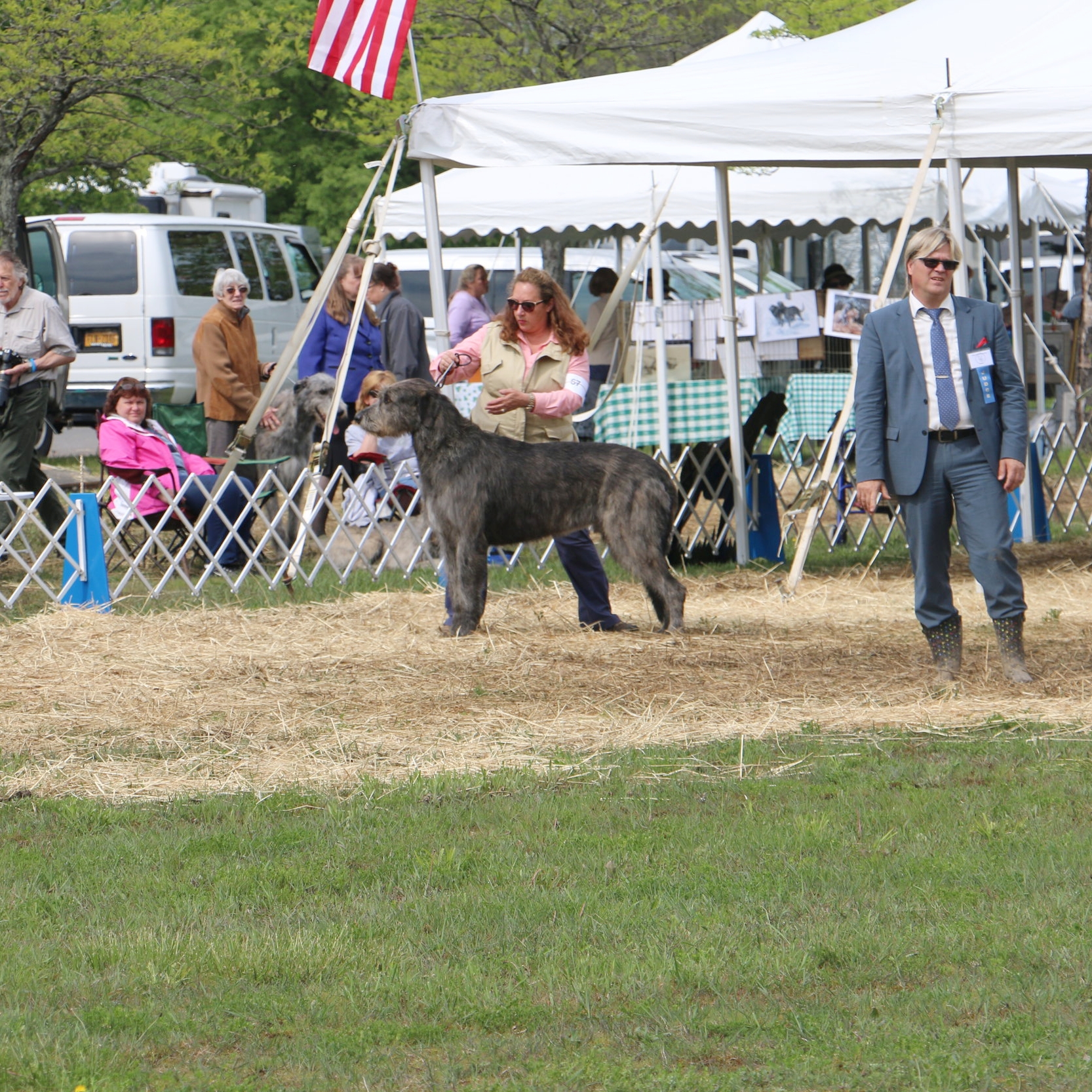


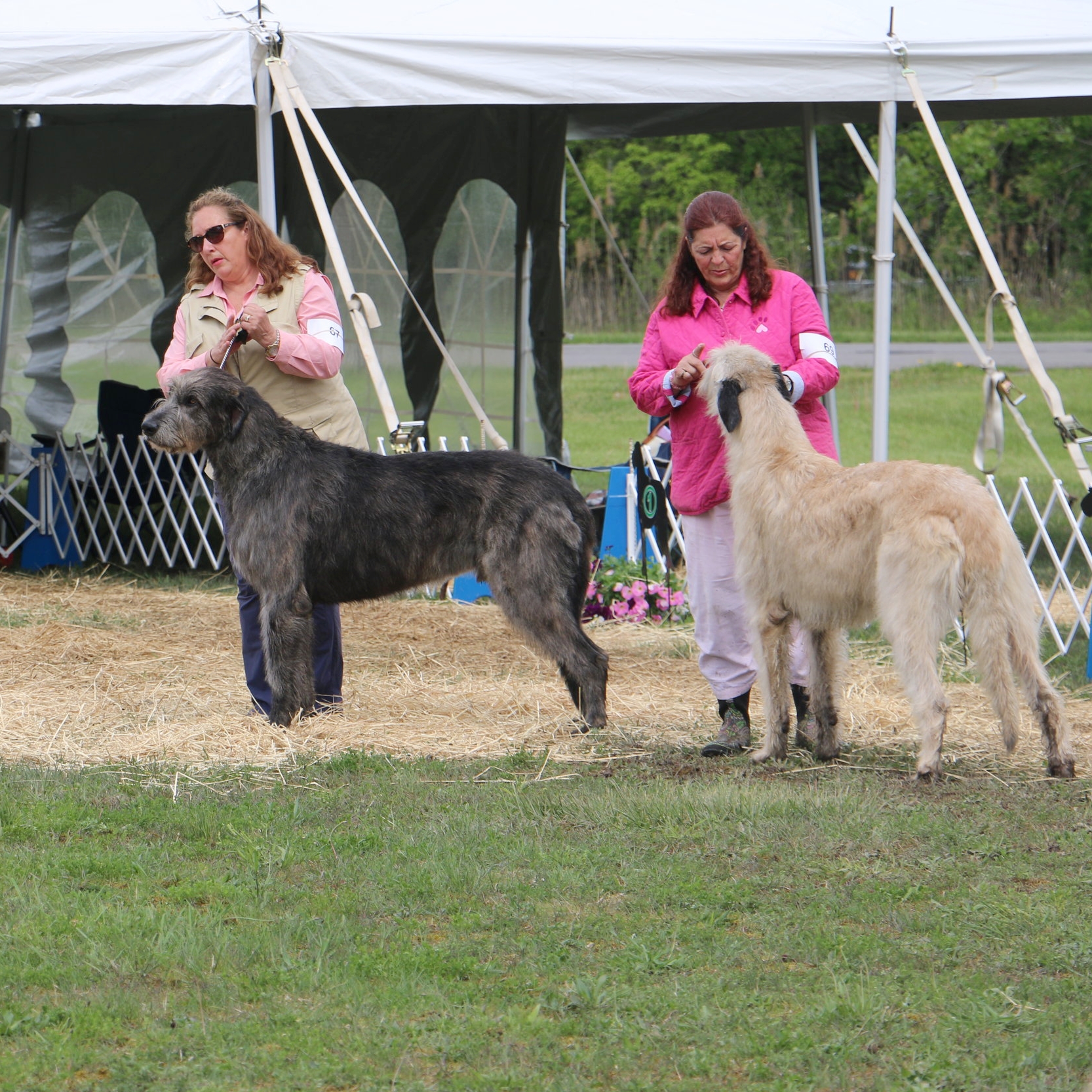


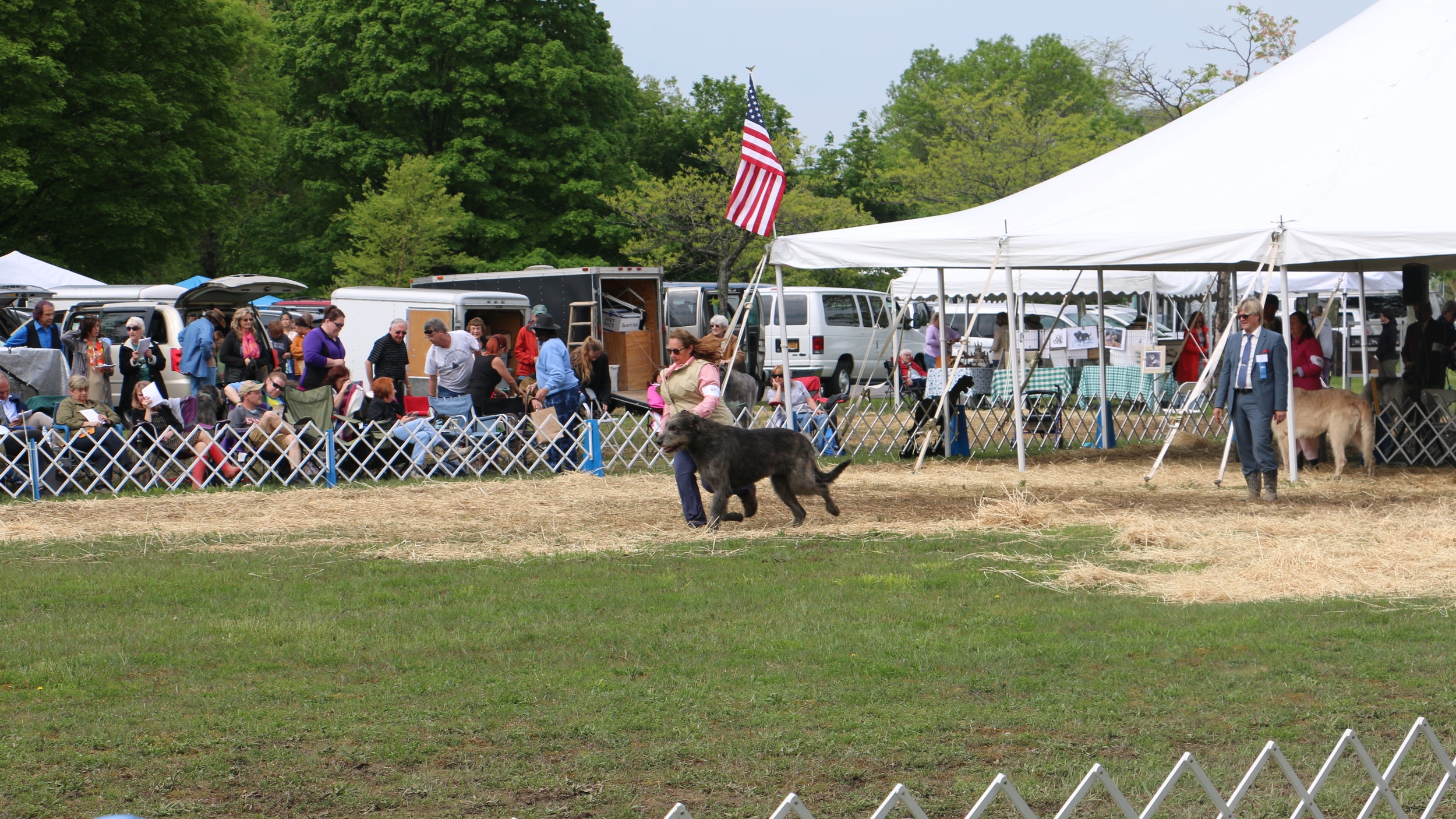


Several of these photographs at the end were taken by Lauren Swick. Our appreciation to Laura for sharing these as I had a knee injury and my husband Bobby had to gait the hounds so we could not take photos ourselves.
Nostaglia for the Good Old Days
We often hear people say how different life or events were in yesteryear. Often we reflect on things or people that we miss, our nostalgic memories vivid as if it were just yesterday. I frequently find myself doing so as I reminisce about how our breed society once was and the stark contrast to what it is today. The consequences of such disparities are substantial being that today we now have the lowest standards of acceptability and accountability within our organization and society. The 2017 IWCA National Specialty recently provided several instances that aroused my sentimentalism........
We often hear people say how different life or events were in yesteryear. Often we reflect on things or people that we miss, our nostalgic memories vivid as if it were just yesterday. I frequently find myself doing so as I reminisce about how our breed society once was and the stark contrast to what it is today. The consequences of such disparities are substantial being that today we now have the lowest standards of acceptability and accountability within our organization and society. The 2017 IWCA National Specialty recently provided several instances that aroused my sentimentalism.
My husband and I very much looked forward to the National held in Geneva, New York. Despite my having attended many, many Nationals over these 33 years, I have only been able to attend, due to their location, just five in recent times. However, this relative absence provided a unique perspective on the changes that have occurred within the Club, in the hounds, as well as the personal character of some fanciers. Allow me to first preface my thoughts by extending my appreciation and respect for the effort, toil, and convictions of Show Chairpersons. I know first-hand the work involved as I have chaired a double-header in 1997 and 1998. Chairpersons do the absolute best to make certain that the event runs as if it were a well-oiled machine. However, mere mortals cannot control the weather which, once again, was uncooperative at this Specialty location with copious rain showers on the first day that sabatoged the grounds for the remainder of the four-day show. The Grounds Chairman, David Milne, was faced with a mud bog and attempted to find solutions. The show ring and surrounding grounds were mostly ruined requiring scores of hay bales spread everywhere for navigability, though cedar shavings would have been a better resolution. Unfortunately, the hay did very little as our shoes sunk in 3-inches of mud and worse, while gaiting, in many areas it was thick enough to suck the shoes off the back of your heel.
This experience leads me to a story, told by a good friend, who had learned of the conditions at this show and felt compelled to describe a similar incident that occurred decades past at a previous IWCA National. The year was 1978, and Miss Noreen Twyman was adjudicating. The weather was terribly uncooperative, with significant rain creating mud bogs in the show ring. As was told to me, Miss Twyman decided not to gait her entries in the show ring but rather to move them under the tent. She explained later at an informal "get-together" that running hounds in such treacherous conditions could injure the hound's tendons and or ligaments. Similar to post holing, if one is an experienced hiker.
Oh, how I miss those good old days where we had knowledgeable, wisened advisors such as Miss Twyman, who was not only a breed authority but a skilled large and small animal veterinarian. Genuine sportspeople who were experts in animal husbandry who could quickly size up a situation and determine the best course of action for the Hounds.
Even more significant and disturbing divergences from years gone by were observed at this past IWCA National Specialty. I witnessed a female wolfhound wearing a Prong obedience/training collar! Wolfhounds should not wear prong obedience/training collars. Period -- no ifs, ands or buts about it. These are not Doberman Pinchers, Rottweilers or Staffordshire Terriers. The woman was not disabled nor handicapped; she was not elderly, small or frail. The Wolfhound was not hard to handle, spooky or skittish. In fact, the Wolfhound appeared well-mannered as she was being towed along by this woman. I immediately and quickly sought out and spoke with a show official about the fact that a prong collar was being used on the show grounds, and even though they commiserated with me as to the unacceptability of the collar -- to my knowledge, nothing was done about it.
Oh, if this were the only disturbing incident, but alas, it was not. My husband and I were walking our hounds through the headquarters hotel parking lot when we walked past the open rear doors of a large utility trailer/hauler hitched to a pick-up truck. Much to our dismay, there were Wolfhounds bedded in hay within the hauler. How shocking but unsurprising all at the same time leaving the both of us with a bad taste in our mouths.
Regrettably, the reality is that, more than ever, the moral reasoning and development of character is stymied within many of today's breed fanciers. In years past, neither one of these offenses would have been tolerated at a National or Regional Specialty. As a matter of fact, at the 1990 Columbia, South Carolina IWCA National Specialty, a breeder/exhibitor had arrived with his wolfhounds in a trailer. I still remember to this day that one or more IWCA representatives took the gentleman aside and declared that Irish Wolfhounds were not livestock and therefore, using that form of transportation was completely unacceptable and would not be tolerated on the official show grounds. The matter was handled with grace and civility but make no mistake; the issue was addressed. At the same time, having known many of these old-standing fanciers, I am confident that the mere sight of a prong obedience collar on a Wolfhound would never have been overlooked or condoned.
Presently, it appears that the IWCA and regional club memberships are considered open season for enrollment. Memberships are wide open to highly reprehensible individuals whose primary motivation is profit and focus only on meeting supply and demand. Why are these people members at all? The IWCA, as well as one or more Regional Specialty clubs, chose to accept these highly controversial applicants. They did so despite having performed background checks with local, conscientious breeders as to the morality, ethics, and operations of the candidates. They did so notwithstanding the established Standards of Ethical Conduct for Members of the IWCA, and the Standard of Behavior for Breeders of the IWCA that requires these new members adherence. Let us be clear, according to the United States District Court Minnesota Sixth Division, in Avenson v. Zegart 1984; a puppy mill was defined as a "dog breeding operation in which the health of the dogs is disregarded in order to maintain a low overhead and maximize profits." So, are we being led to believe that these individuals are going to modify their business plans abruptly because they are now members of the IWCA? Of course not!
What is the reason for permitting membership to substandard amateur breeders and commercial puppy farms? As was explained to me -- one of the motives for allowing these dog brokers membership was to educate them. This explanation is outrageous as these hateful, inhumane persons seek only to gain credibility through our association so they can increase the sales price of their merchandise and expand their market. Now they have the ideal vehicle to do so with the backing of the IWCA and regional clubs.
It is so pitiful that the once revered guidelines, the merits, the excellence of our once upstanding association have plunged to such abject levels. Take for example new puppy owners attending a specialty with a 9-week old puppy in tow. Setting aside the offense of placing a wolfhound puppy at 8-9 weeks of age; let us add insult to injury by adding that this poor waif did not resemble any nine-week-old puppy on the Ambleside or Alfred de Quoy Growth Charts with minimum and maximum weights of 23 to 37 pounds. No, this 9-week old pup could not possibly top the scales at 20 pounds -- if that. To my eye, he looked to weigh 15 pounds. Oh yes, long gone are the ole days of principled fanciers. Read more on the placement of underage puppies in my earlier Blog Post titled, "Caveat Emptor."
Permit me to share one more memory that is in direct contrast with today's reality. I recall a time when the IWCA National Specialty Auction dinner event was a suit & tie or at least sports coat affair. Many of us remember the numerous items of excellent quality with unique and incomparable goods, such as an original bronze statue donated by the luminary artist, Dan Ostermiller fetching, if my memory serves me correctly, $1,000.00 or more. Gone now are those uncommon goods and extensive selections which once filled every nook and cranny of the room or outdoor tents such as in Newport and Lake Placid. Long ago, our society affairs were gracious, festive, and very well-attended held with and in stylish decorum. While attending this recent Auction Dinner, I was dismayed and saddened at the unconcerned casualness, humbleness, and smallness of what was once a celebrated affair.
Times have indeed changed. As it concerns our passion and hobby, the resulting developments are extraordinarily worrisome. It is a mystery as to how much of our breed society, as well as our parent organization, have debased themselves while setting new lows. Are we even capable of restoring the previous state of moralistic and respectable community that once was? Pitifully no, not if we were to consider current and continuous actions to form a conclusion. Look at the breeding model that has been followed around the globe resulting in the nearly complete loss of genetic diversity in our breed. According to the data contained on Dr. Silvan Urfer's website, 93% of the wolfhounds, worldwide, are affected by the current Population Bottleneck.
As for we bellwethers, we are blithely ignored.
Propagating a Breed and the Responsibilities Incurred
This article was originally printed in the Irish Wolfhound Club of America's Harp & Hound magazine Autumn 2016 Issue.....
This article was originally printed in the Irish Wolfhound Club of America's Harp & Hound magazine Autumn 2016 Issue.
Lumps, Bumps, Masses, Tumors and Cysts.
Lumps, bumps, masses, tumors and cysts. On an Irish Wolfhound, any one of these can spark alarm in most people's minds leading to the feared cancer diagnosis. Understandably, many companion owners are not well-versed as to how to appropriately respond and then deal with these issues. Frankly, depending on the location of the "mass," alarm bells may or may not be warranted. However, many Wolfhound owners overreact and fall in step, and I mean every step, of their Veterinarians counsel, some of which I would caution against as it is sometimes improper and overly aggressive......
Lumps, bumps, masses, tumors and cysts. On an Irish Wolfhound, any one of these can spark alarm in most people's minds leading to the feared cancer diagnosis. Understandably, many companion owners are not well-versed as to how to appropriately respond and then deal with these issues. Frankly, depending on the location of the "mass," alarm bells may or may not be warranted. However, many Wolfhound owners overreact and fall in step, and I mean every step, of their Veterinarians counsel, some of which I would caution against as it is sometimes improper and overly aggressive.
Consider, for example, an incident involving one of my Wolfhounds many years ago where my yearling bitch developed a harmless Calcinosis Circumscripta on the outside of her hind foot very close to her outer toe. If you are unfamiliar with these, a Calcinosis Circumscripta is a ball of calcium deposit typically located in the bony area of the body often seen on rear feet and or joint hip areas and is frequent in certain giant breeds. Most all the time benign, they can also be found as small bumps under the tongue of which I have observed them in this area as well.
Having just made a momentous change for my hound's general surgical veterinarian care, I made an appointment to have it removed with my new veterinarian as the calcinosis was bleeding due to its proximity to the ground. Upon exam, this "new to us" veterinarian warned that to resect the mass may also require the removal of her outside digit! Suffice to say that this diagnosis was a practical example of an aggressive, disproportionate determination that consistently occurs today in the field of veterinary medicine. Most giant breed companion or pet owners who are without the support of a competent, breed authority such as myself, would be afraid to question their veterinarian's recommendations, and in this case, a severe and aggressive course of action. Frankly, I would hazard a guess that one or more veterinarians would have proceeded to remove both the mass and outside toe but, thankfully, I was involved in this case, and nothing of the kind took place.
I need to preface this conversation by introducing my several veterinarians and their roles in the care of our hounds. First up, I have an indispensable primary house-call veterinarian responsible for annual check-ups, vaccinations, prescriptions, emergency diagnosis visits, blood draws, and progesterone collections. Next, I have a separate general surgery practice responsible for spay surgery, Cesarean sections, basic digital radiographs, mass removal and biopsies plus any emergency surgery, night or day. Next up, I use a specialty practice made up of board certified veterinarians in nearly every field of practice. I utilize these specialists for heart monitoring, and complicated diagnoses via state of the art radiology equipment capable of accommodating large animals, such as horses, in addition to ultra modern M.R.I and ultrasound technology, and, if necessary, subsequent complex surgery.
At the time of my discovery of the mass above, I had just switched to this new, general surgical practice after having discontinued my association with my former veterinarian of 20 years due to his standard of care being adversely affected following the sale of his practice to a large conglomerate. Our new general surgeon, though one hour's drive each way, was highly recommended by my longtime primary veterinarian who went even further by saying that our new general surgeon was one of the best soft tissue surgeons she had seen in a long time.
Now, that we are all on the same page; I will finish my story on the mass. My new general surgeon listened quietly to my diagnosis of the mass on my Wolfhound yearlings foot as I explained that I had seen many calcinoses several times before over my many years. I went further by describing the substance he would most likely find inside the golf ball-sized mass, similar to that of cottage cheese and that, in my opinion, there remained enough viable skin that could be pulled up and stitched together for proper healing. He accepted and trusted my judgment and proceeded to remove it agreeing under no circumstances to take-off her toe, and he found what I had described precisely. This, by the way, was the first time he had seen a Calcinosis Circumscripta and explains his immediate reaction that it was a tumor. He was very pleasantly surprised and his readiness to listen to me as a skilled and experienced breeder was a sign of an open-minded, progressive physician. Today, we have an excellent relationship, and I rely on his expertise frequently as he is an outstanding general soft tissue surgeon who does not have a God complex.
Over these years we have had many bodies of matter removed from our Wolfhounds. Many of these cysts would scare the pants off of average dog owners and not well-informed veterinarians. Take for example our female veteran Dallas who is prone to benign sebaceous cysts that get quite large and occur on her back and seat bones. Several were bigger than golf balls, yet, we did not remove them until she was scheduled for another surgery such as being spayed. The reason for our postponement was that first, I was reasonably confident that they were harmless and importantly, often you could do more harm overreacting than underreacting. I do not take lightly the process of anesthetizing a sighthound, especially an Irish Wolfhound and prefer to do it only if necessary. You can read my previous Dog Blog Musings post on several cases of dogs having undergone intolerable, agonizing deaths from incompetent intubation of the esophagus instead of the trachea.
We have another veteran bitch, Declan, who currently has a small nodule under her skin on her back adjacent to the spine. We are not concerned about this growth because this particular litter was predisposed for such benign nodules. Both her littermates, Dallas and Darley, both have had large cysts on their backs. Of the many we have had removed from our females, only one was ever infected as it was located on Dallas's seat bone, aka Ischial Tuberosity. The constant interaction with the ground created a secondary infection. However, none of the other cysts found on our Wolfhounds have ever been malignant nor infected.
To illustrate other but concerning tumors, we have had several small, mammary growths removed from our bitches. Regarding these, as soon as they were detected we aggressively responded by removing them. Due to their location in a highly glandular area, often these may experience aggressive growth patterns and can begin small like a pebble and then grow quickly. This rate of sizeable growth is often due to either aggressive mammary cancer or because of its glandular location releasing hormones into the bloodstream. In all cases, the bitches teat were removed as well. Biopsies are always in order for these tumors which takes approximately one week. Often the results are "mixed cells," described as benign mammary neoplasms recommending further observation for reoccurrence. However, there is always the possibility of malignant diagnoses which is hindered only by chemotherapy and or holistic treatments.
Of course, there are swelling and or tumors found on limbs, and these are NOT to be ignored either as they often may be a sign of osteosarcoma. Alternatively, another example might be a soft tissue mass that you may feel, for instance in the neck area of your hound, while massaging with your fingers. Though not just under the skin, these can be deep fatty tissue tumors otherwise called a lipoma -- a benign invasive tumor usually in around muscle or even lymph glands. Fatty tumors, these can be reviewed or diagnosed by a Board Certified Radiologist via ultrasound. Conversely, these could also be soft tissue sarcomas in which the specialist may be able to aspirate the mass drawing out a sample of its composition for pathology. Honestly, though, it has been my experience that aspirations are usually ineffectual since they have mixed laboratory determinations of uncertain origins and usually indicate an abundance of blood.
Nonetheless, in these circumstances, a board certified specialist should be consulted as to options if the diagnosis was a tumor and not a lipoma. This may include either dissecting the mass or leaving it undisturbed due to an awkward location that may require rib spreading and lengthy recovery times. See my health page and the story about our beautiful Dior who passed from thyroid carcinoma. In retrospect, I should not have opted for surgery, and I should have left the tumor alone allowing her to live with some quality of life for how many months she would have had. Instead, she underwent surgery at 7.5 years of age, and three masses were removed. However, in the process, there was slight damage to her trachea and esophagus cords as they had to be moved to the side for access to a large tumor. She lived only for two additional months before I humanely euthanized the valiant girl. It was deeply saddening to witness such a majestic Irish Wolfhound fight every day to overcome such dreadful pain yet still keep such tenderness and devotion in her eyes.
Alternatively, it may also be that surgery is not an option for an older dog. I can vouch for this course of action on our veteran stud dog, Danny. Danny experienced an injury to his neck roughhousing with a littermate and compressed his 6th & 7th vertebrae. My Dog Blog Musings post and the subsequent updates found on this Blog explain what the specialist recommended to relieve Danny's pain. Alternatively, I opted for chiropractic care along with laser therapy and hydrotherapy instead of surgery which would have exacted an enormous toll on my eight-year-old wolfhound and approximately six months of recovery times. He is walking 14 miles per week and visits a certified chiropractor and a canine physical therapy specialist.
Lumps, bumps, masses, tumors, and cysts are frequent on most dogs but particularly Irish Wolfhounds. If you have questions or concerns about a lump, bump or mass then, by all means, have it examined by your veterinarian. The treatment for any of these will vary, but as I explained, in some cases with lumps or bumps, depending on their location, no action is needed.
Update on a Previous Post "Here We Go Again, Foreign Dog Show Judges"
I recently have been told that one or more members of the Potomac Valley Irish Wolfhound Club were allegedly upset that I publicly aired their April specialty show debacle involving the foreign judge, Knut Olav Wille. Although out of politeness, I originally did not mention their specialty association by name, nor the Judge's, I am doing so now for several reasons......
I recently have been told that one or more members of the Potomac Valley Irish Wolfhound Club were allegedly upset that I publicly aired news of their April specialty show debacle involving the foreign judge, Knut Olav Wille. Although out of politeness, I originally did not mention their specialty association by name, nor the Judge's, I am doing so now for several reasons.
Clearly, the situational irony is thick here. This club and therefore, its show officials were happy to accept my hard earned money for my five dogs and their individual entries, yet, they assail me for talking about how their foreign judge was not adjudicating by AKC Rules, Policies, and Guidelines for Conformation Dog Show Judges! As if I were to blame for their failures.
When a specialty club is administered by people who have little to no regard for AKC Rules Applying to Dog Shows, there are after-effects. These by-products are consequential insofar as; first, it makes a mockery of the proceedings. The Best of Breed competition was a parody and several people outside the ring were bitterly criticizing what was happening. Read my Blog Post, "Here We Go Again, Foreign Dog Show Judges" to experience it almost first-hand. Even more, after all was said and done, a few exhibitors mentioned that they were not returning to the show again. If a show giving club does not intend for the Judge to adjudicate in a manner conforming to the established rules of the governing body, AKC, then why not hold your show independent of AKC? Just host a self-governing specialty show without championship points and allow the judge to adjudicate willy-nilly and then let the chips fall where they may.
Why did I mention the foreign judge Knut Olav Wille by name this time? For the very reason that even after his gaffes during the Potomac Valley Irish Wolfhound Specialty's Best of Breed competition, evidently, he did little to nothing to educate himself on how to adjudicate properly according to AKC dog shows. While judging at The Irish Wolfhound Association of the West Coast's two-day specialty in which his assignment was Friday, he allegedly attempted to disqualify an Irish Wolfhound entry for a narrow underjaw. This time, thankfully, there was an AKC Executive Field Representative present who intervened because there are NO disqualifications in the IWCA Breed Standard. How embarrassing for the unfairly censured exhibitor who paid an entry fee and then was publicly wronged. A few may excuse this blunder by saying the judge made a mistake so, what is the problem? These are the same people who are ready to forgive an evident lack of judgment until it happens to them and they are the exhibitors on the end of the lead who are singled out and disqualified in a breed with no DQs at a Breed Specialty dog show. Finally, think about this obvious, uncomplicated reason why this was yet another problem: It was and is disrespectful to the exhibitors and our wolfhounds.
More Thoughts From Florence Nagle on the Irish Wolfhound
Though unique to the Irish Wolfhound breed, this brief conversation with famous sportswoman, Florence Nagle is befitting of all our giant Sighthound hunters. It is solid, basic logic that should prevail within the attitude of good breeders today. Unfortunately, over these many decades, I believe that our sport's mentality has devolved, rather than evolved. Moreover, in the case of the Irish Wolfhound breed, the overall state of mind has degenerated, having lost the mental and moral qualities that were once normal and desirable.
Update on Respiratory Virus
As I posted on April 18, after returning home from an indoor all-breed kennel club dog show (see Possible Respiratory Virus Warning post for more info) I can confirm that we, in fact, had picked up a respiratory virus, a.k.a. Kennel Cough. We have two hounds symptomatic with a cough and nasal discharge and one or more others who are coughing without fever. We are temping everyone diligently because the strain originating in Chicago was and is both stealthy and a killer. As reported by my veterinarian, many dogs in that region were behaving normally and were asymptomatic of a cough yet had fevers, and sadly, some died as it was too late.
My veterinarian and I are pursuing a proactive but cautious approach, using Cephalexin on hound(s) with nasal discharge and temping them several times daily. Though we may be conservative, we urge caution against complacency, especially if it is possible that this is the Chicago strain.
One hound was on Cephalexin for four days and did not respond favorably nor quickly enough to our satisfaction, though his temperature was slightly above normal. Therefore, we chose to switch his antibiotic. Due to his being a yearling, age 21 months, I am cautious about using an antibiotic drug that may cause problems during the developing stages of growth in a dog under 18 months of age, such as Baytril or Ciprofloxacin. Though many people assume that the growth plates are closed by the age of 21 months, I believe, in my considered opinion, he is not entirely grown. In my experience, he still has not fully developed and appears quite youthful. So, instead, we are using a combination antibiotic, Clavamox, to treat the bacterial infection, without the risk to further, if any, growth stages. We did so at a significantly greater expense as the drug had to be purchased at our local pharmacy. Though it can be purchased online at a reputable, veterinary pharmacy, such as Drs. Foster & Smith, we did not have time to have it shipped. Notably, this antibiotic drug has a relatively short shelf-life, so we do not keep it on hand. To treat this particular hound's cough we are using Tramadol with good results.
For a wolfhound without nasal discharge nor temperature, we are not treating with any drugs, but again, we monitor their temperatures closely. In general, we will use a cough suppressant, an excellent choice being Robitussin DM. However, the administration is not easy and must be done carefully, so the hound does not aspirate the syrup. Lastly, I administer a good quality Probiotic in pill form to any hound being treated with antibiotic and I also increase all the wolfhound's Vitamin C supplement to as much as 4000 mg per day, given throughout the day and with food. Any questions, just ask.
Re-posting my blog post "Happy Holidays & Westminster Musings"
For me, it is disappointing that another year has rolled past without what I feel are necessary changes to the membership roles of the Westminster Kennel Club.
If you are unaware, this venerable club is Men Only -- NO WOMEN ALLOWED AS MEMBERS.
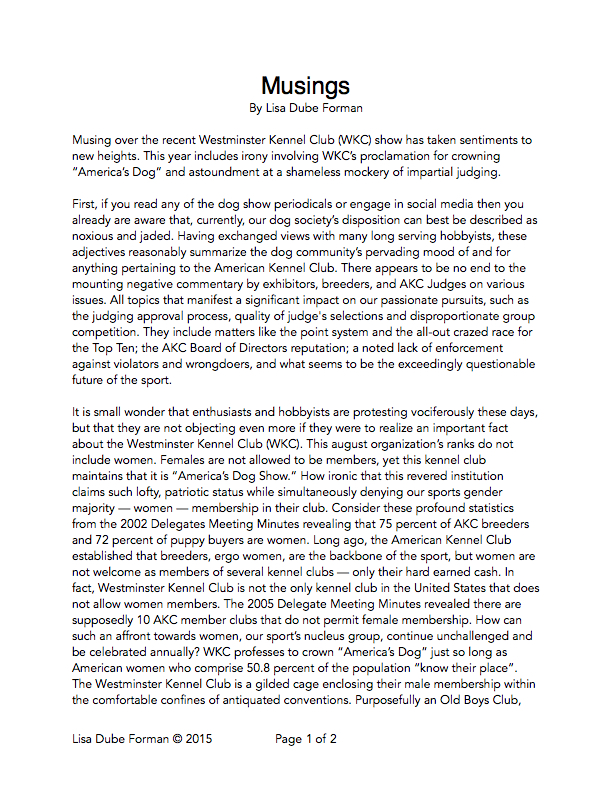
As I was performing chores this morning my thoughts turned to the upcoming Westminster Kennel Club dog show on February 15-16, 2016. For me, it is disappointing that another year has rolled past without what I feel are necessary changes to the membership roles of the Westminster Kennel Club. If you are unaware, this venerable club is Men Only -- NO WOMEN ALLOWED AS MEMBERS. Yes, you read that correctly. This dog club is not the only holdover in the United States, but certainly is one of the most prestigious. Here is an excerpt from my article I penned in March 2015, titled "Musings".
This august organization’s ranks do not include women. Females are not allowed to be members, yet this kennel club maintains that it is “America’s Dog Show.” How ironic that this revered institution claims such lofty, patriotic status while simultaneously denying our sports gender majority — women — membership in their club. Consider these profound statistics from the 2002 Delegates Meeting Minutes revealing that 75 percent of AKC breeders and 72 percent of puppy buyers are women. Long ago, the American Kennel Club established that breeders, ergo women, are the backbone of the sport, but women are not welcome as members of several kennel clubs — only their hard earned cash...
That the majority of AKC dog show participants are of the female gender and are, still, taking a backseat role in the governance of this sport in the year 2016 should be alarming. That in the year of 2016, while humanity is pursuing deep space exploration and a colonization of Mars in the advent of a successful, historic landing of reusable rockets back on Earth, the Westminster Kennel Club still clings to its antediluvian traditions of banning women from membership.
How can such an affront towards women, our sport’s nucleus group, continue unchallenged and be celebrated annually? WKC professes to crown “America’s Dog” just so long as women who comprise 50.8 percent of the American population “know their place”. The Westminster Kennel Club is a gilded cage enclosing their male membership within the comfortable confines of antiquated conventions. Purposefully an Old Boys Club, they celebrate and preserve their gender bias practices. Insofar as women, well, women are only necessary and welcome when the club needs exhibitor participation.
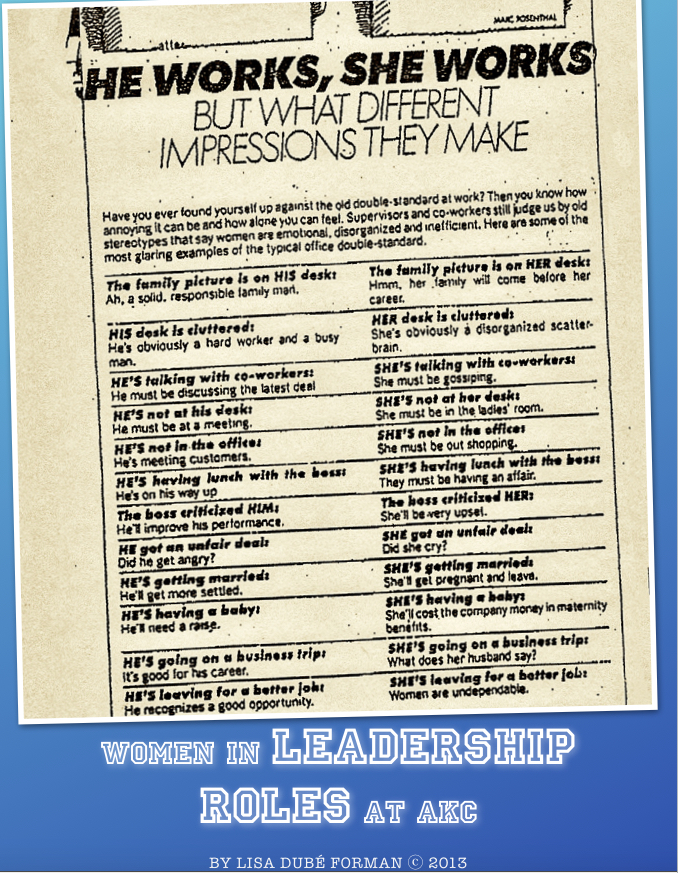
While we celebrate the holidays and give thanks for all that we have in our lives -- ponder on this contradiction and dismissal of women's equality and our rights. Consider that if women took a stand against such blatant gender discrimination, we can make an enormous difference. We did so with the women's suffrage movement resulting in the 19th Amendment to the US Constitution ratification in 1920 guaranteeing all American women the right to vote. In the sport of purebred dogs, it is unjust that women have been continuously denied administerial duties of the American Kennel Club Board of Directors. An excerpt from my investigative article "Women in Leadership Roles at the AKC" follows:
Let us consider first the little known historic, consequential and stunning fact that AKC did not admit women to serve in the Delegate body until the 1970s. On March 12, 1974, a motion to allow women to serve as delegates was seconded and carried by a vote of 180 to 7.
Furthermore, that the administrative part of the AKC has just one female President over its entire lifespan since its formation in 1884, and to date, there has never been a female Chairwoman of the Board of Directors is simply a travesty of equality.
Before I sign off from this post, I also would like to remind people of what had transpired during the 2015 WKC dog show. Another excerpt from my "Musings" article.
Yet, unfairness or bias was not limited to the organization’s constituency roll. A particular incident took place during breed judging that reinforces the dog show community’s prevailing, cynical state of mind. No wonder fanciers are disgusted, throwing their hands up in exasperation. Actions that did not merely give an impression of but created a dense cloud of impropriety.
The ethical transgression transpired when a Judge presided over a Best of Breed assignment which included a dog this judge very recently used at stud. The litter sired by this entry reportedly was whelped already. Destroying any sense of impartiality, the judge proceeded to award this stud dog Best of Breed over the competition and also awarded Select Dog to yet another dog they previously used at stud as well! The basis of sportsmanlike competition is to adjudicate with neutrality, imputing ethics, honesty, and common sense. Instead, this incident exposes a lack of common decency and an illiteracy for the Rules, Policies and Guidelines for dog show judges.
This is an unambiguous example of Conflict of Interest. AKC dog show judges are responsible for situations such as this that require the judge to excuse an exhibitor for causes even known only to them and they were obligated to recognize that a conflict of interest existed. As for the exhibitor(s) who intentionally exhibited their stud dog under this particular judge? The responsibility for entering dogs that are ineligible or create a conflict of interest lies with the exhibitors, so says the AKC Rules & Policies Handbook for Conformation Judges. In fact, the Handbook states that awards won may be canceled, and exhibitors with repeat violations may receive reprimands or fines. Further exacerbating the situation, this competition was video streamed live throughout the world! A great many breed fanciers watched in disgust as the judging unraveled. It most likely has not nor perhaps ever will dawn on the judge that they would have gained a great deal of respect, if, in fact, they had exercised their right and performed their duty by excusing the violating exhibitors from the show ring. However, it is too late as now their repute is justifiably and seriously challenged.
As for the other exhibitor(s) competing in the show ring, in my opinion, they should have filed a complaint without delay with the AKC Executive Field Representative who was visibly in attendance. Until our sport participants slip their binds of submissiveness and possess the courage of one's convictions, violator's such as these described will continue to bully, unhindered. Here are links to both of my articles discussed above.
Fill & Station
Yes, pun intended, I mean filling station. My play on words is tailor-made for this discussion about dogs, particularly on their fill and station. Many hobbyists who are unfamiliar with the phrase ‘station’ are shaking their heads but then so is the notion about filling this station — filling what with what?
Yes, pun intended, I mean filling station. My play on words is tailor-made for this discussion about dogs, particularly on their fill and station. Many hobbyists who are unfamiliar with the phrase ‘station’ are shaking their heads but then so is the notion of filling this station — filling what with what?
In ‘dog speak’ it may help to know the origination of many expressions and anatomy parts we use in describing dogs was appropriated from horsemen. The native language such as station, withers, forehand, fetlocks, pole, ‘standing over a lot of ground’ are just a common few. Suffice to know that we just did not make this stuff up but the terminology has been in use for centuries.
Let us begin with the station a dog must have before we discuss fill. A station is a description we apply to a dog’s depth of chest or specifically, the measurement of the distance from the top of withers to the elbow as compared to the length of the dog’s leg. The distance determines if a dog is of a low or high station. Rather, if this distance largely eclipses the length of leg, we consider the dog ‘of low station.' A length of leg that is decidedly longer than the distance from withers to elbow is ‘of high station.' Ideal examples ‘of high station’ are sighthounds such as the Ibizan Hound and Saluki. Both have an appreciable length of leg with a shorter distance from their withers to the elbow. The Ibizan is both lithe and racy with deer-like elegance, and the Saluki brings down Gazelle, the fastest of the antelope family. In fact, the galloping sighthounds are to have extraordinarily, long legs and will have, for the most part, longer ratios of leg length as compared to their station. As a result, in general, they are appropriately of high station.
Low-station dogs such as the Basset, Dachshund and Dandie Dinmont — the latter being that he is uniquely low in the shoulder — are evident. However, one should also consider the Bull Terrier and the Pug as other fitting examples. Occasionally, a long-serving judge may comment that a dog has either excellent or poor station. To illustrate, if a judge faults a Rottweiler with a shelly appearance, then the judge has noted the dog is lacking the appropriate depth or also width of chest. The correct station for this working cart and drover breed should be 50 percent of the height of the dog. If the dog is too leggy or high in station, then he lacks the necessary chest depth and width measurements for the desired exercise and work tolerances.
One breed standard which refers to a decidedly filled chest or accentuated ‘spread’ is the Bulldog. Indeed, his spread is so valued and emphasized that when viewing the dog head-on, the rear legs are visible from the front. That is to say, if one were low enough to have an unobstructed view! At least, beginning in January 2014, the AKC announced that the Bulldog and Basset Hound judging will take place on the ramp in breed, group and best in show competitions so this may be of advantage to judges.
Function and performance demand quantity and quality fill in a dog’s station. Since fill is not just skeletal parts, particularly the prosternum and sternum (breastbone), but the muscling that protects the vital organs. The fill, more specifically the musculature collection which is both plentiful and very productive, surrounds the bow or keel. I speak of the serratus ventralis muscle, which is the sling and stabilizer of the thorax, the deltoids and brachial muscles, the descending and transverse pectorals, which advance the forelegs and draws the limbs in towards the axis or center line of the body, along with the deep pectoral muscle which stabilizes the forelegs. When a dog lacks the proper breed constitution, such as not being well-let-down in the chest — shallow — or he is narrow — lacking chest width and rib spring — the result is limited fill space. Often these faults also unmask concave or hollow chests, but all affect heart and lung capacity as well as gait. Pinched fronts are a definite fault as stated in the Giant or Miniature Schnauzer standards. As a result of this unique front, there is inadequate fill and a shallow brisket.
For the hunting breeds who dispatch game, poorly designed stations lacking fill put the hound at significant risk. Consider the Irish Wolfhound’s chest was also developed for impact and is part of the dog’s mass. It is another tool provided to injure the prey, but importantly, it is imperative to prevent injury to the wolfhound’s frontal portion of his skeletal structure. In this giant breed, a prominent but never excessive prosternum with a well-spread chest and quality fill operate as a shock absorber. All of this indubitably affects gait which is for another discussion on another day.
This bitch, for me, exemplifies Fill & Station. Even here as a yearling, she exudes being of 'high station.' She has quantity and quality fill in her station, but also her musculature collection is both plentiful and very productive surrounding her bow or keel. The lack of these essentials is, unfortunately, evident in many of today's Irish Wolfhound specimens. An important criterion that I seek out when judging is the fill between the breastbone. I know from first-hand experience that this is sadly lacking in too many Irish Wolfhounds. Disguised by combing hair forward, too many judges are deceived by ingenious grooming, and these judges do not see nor uncover concave or hollow chests with their examinations.
This article was first published on the Canine Chronicle website found at:
Short URL: https://caninechronicle.com/?p=40327
Feet Don't Fail Me Now!
Virtually all of the Dog Group breeds were propagated for and should be functional. Although today many argue that nearly every one of the breeds no longer fulfill their purpose, the truth is that for basic soundness of even our companions and family dogs, their feet factor into sustaining quality of life. Similar to a person whose feet have fallen arches, plantar fasciitis or muscle strains that cause constant discomfort and pain...
One cannot overstate the importance of the feet on our many breeds. I am discussing the shapes, phalanges, claws along with the digital and communal pads. A future essay will discuss the pasterns’ carpal and metacarpal bones.
Virtually all the Dog Group breeds were propagated for and should be functional. Although today many argue that nearly every one of the breeds no longer fulfill their purpose, the truth is that for basic soundness of even our companions and family dogs, the feet factor into sustaining their quality of life. Similar to a person whose feet have fallen arches, plantar fasciitis or muscle strains that cause constant discomfort and pain.
There are three standard shapes of canine feet. The round (cat-compact) foot has well-arched, tightly bunched or close-cupped toes with the center toes just marginally longer than the outside and inner toes. The oval (spoon-shaped) foot, is similar to the round, except the center toes are slightly longer than described in the round foot, which leaves an oval shaped impression. The hare (rabbit) foot has noticeably longer center toes, all of which are less arched and appears almost elongated. There are then a number of variations on these basic shapes.
Here some may ask what’s the big deal -- why do breed authorities and genuinely knowledgable judges complain about feet on our dogs? The foot is foundational. To illustrate, the Alaskan Malamute breed standard demands a snowshoe foot, which is a specialized variation of the oval foot being well-knit, well-arched, but with strong webbing between the toes. If a Malamute has splayed feet, he is going nowhere fast in his place of origin. Splayed feet are flawed, with toes spread far apart and can occur in any shape of the foot. This may be tolerable in a warmer climate, but in time may prove painful as the Malamute’s weight bears down on the defective foot having spread, far apart toes, typically accompanied by thin, flat pads offering inadequate support.
Consider the various gundog foot shapes, such as the Irish Water Spaniel whose benchmark calls for a large, round, somewhat spreading foot, but never splayed. This separation of toes aids the dog in his primary function, which the breed blueprint clearly defines for working in all types of shooting and who is particularly suited to waterfowling in difficult, marshy terrain. His feet are to have pronounced webbing for propelling him through rough waters, mudflats and tidal marshes with ease. Liken this foot to our using webbed flippers in the water. The greater webbed area propels and the stronger we swim forward. Providing that this dog has the obligatory, moderately spread toes and very strong webbing creating a resourceful surface area, he can navigate through mudflats with ease. An Irish Water Spaniel with short, stubby, well-knitted toes is like poking a stick into the mud.
What of the hunting hounds? Pack scenthound and sighthound feet are highly rated. Consider the American Foxhound, whose feet are of tremendous importance rating 15 points on a scale of 20. His are shaped like a fox foot, which is a variation neither hare nor a cat foot, and is known as semi-hare. This shape levels the playing field so the foxhound hunts with the same shaped digits as his quarry to match speed. He has well-arched toes, close and compact, with thick, tough, pads indurated by use. If you are running a foxhound with a paper or splayed foot, the hound will be useless in the hunt as he will quickly break down.
Lastly, we discuss digital pads and the communal pad. Pads provide protection in the simplest form. They are our shoes. The dog or hound will hurt if he has thin, poorly cushioned toe pads. Experiment by walking barefoot for a long period on various surfaces. Some breeds pride themselves on the size and padding of the feet, e.g., Afghan Hounds. They are to have ridiculously large front feet with harmonious, large, thick pads. As an Afghan Hound judge, I confirm the pads of the front feet because the Afghan Hound hunts in both hot, open, hard packed and steep, craggy terrain. If his pads were small and thin, with a weak fibrous tissue then the hound will break down. In his country of origin, breaking down means the hound most likely will die because speed and hunting skills along with proliferating these traits are necessary for his ongoing value to the tribes.
Keep all these factors in mind when you evaluate your litters because feet are mostly unforgivable.
This article first appeared on the Canine Chronicle website: Short URL: http://caninechronicle.com/?p=35454
Head Cases
Depending on the breed, one of the most interesting features is a dog's headpiece. Headpieces glorify the breed by way of expression and shape. The expression is achieved by appearance, rather the dog’s look, set, shape and color of their eyes, set-on of the ear, the planes of the backskull and muzzle or foreface. What makes a great head case is the handiwork of several important elements. First,...
Depending on the breed, one of the most interesting features is their headpiece. Headpieces glorify the breed by way of expression and shape. The expression is achieved by appearance, rather a dog’s look, set, shape and color of their eyes, set-on of the ear, the planes of the backskull and muzzle or foreface.
So many details go into sculpting a marvelous head. Many breeds are considered ‘head breeds’ insofar as the head is synonymous with the breed’s essence. The headpiece instantly identifies the breed, and fanciers place enormous emphasis on this. Frankly, a glorious headpiece can sway many a judge’s opinions viewing it as the pièce de résistance.
What makes a great head case is the handiwork of several essential elements. First is the formation and length of the bones of the skull. Often fanciers mistakenly refer to the skull as the top of the head encasing the brain. In truth, the skull is the composition of ALL the bony components of a dog’s head, including the upper and lower jaws. In lay terms, there are three scientific classifications for all breeds' skulls derived from the base width and skull length. Their names are not easily pronounced nor relevant for discussion save for one, but their overall shapes are fundamental. The first is a narrow skull base with great length, i.e., Borzoi. Next, the medium base width and proportions of length, i.e., the majority of breeds. The third is most commonly known because of its exaggerations — the brachycephalic skull — which has a broad base and short skull length, i.e., Bulldog.
From here, all due to selective breeding, there is a variety of skull sizes and shapes which set the breeds apart from one another. First, breed blueprints detail the overall headpiece and breakdown its components with specifics. Almost all detail the form of the skull with the most commonly cited being apple shaped, arched, broad, coarse, cone or conical, domed, flat, oval, rounded, and wedge-shaped. Prominent examples of some of these types are the American Cocker Spaniel with a top domed skull and the cone-shaped ideally represented by the Dachshund. The Cavalier King Charles Spaniel demonstrates a top rounded skull, and the Bull Terrier is an example of an oval or egg-shaped skull. Two last good examples are the Collie with a wedge-shaped skull and the Wire Fox Terrier whose brick shaped skull is long and rectangular; its width of the muzzle (foreface) and backskull are nearly the same. Other virtuous and faulty head descriptions include blocky, Fox-like, tapering or squared-off.
The other elements of an ideal head are often the first things noticed. Since I have already discussed eyes and ears with their features — see “The Eyes Have It” and “Hear No Evil” — I will not go into detail about them. I will add though that a poor eye can ruin an otherwise correct headpiece. The eyes are windows to the soul and convey disposition, warmth or otherwise. Eyes and ears are intrinsic for both strong points and beauty, or flaws and ugliness. I recommend both articles for reference.
An ugly or atypical headpiece on an otherwise correct frame, in my opinion, is regrettable. “I just can’t get past that head” is a phrase I often use in my breed, especially if I had to look at it every day. I was schooled by old-timers, those who cherished shape and finesse. For clarification, my origins are in a breed designed in curves; the greyhound-like, Irish Wolfhound whose expression is poignant with a faraway gaze.
Almost all heads are an identifier of a breed. So much so, that if the head were masked or removed from the photo, a dog hobbyist might have a difficult time distinguishing the breed. Conversely, with good reason many learned fanciers say that the working, hunting breeds do not ‘run on their heads.’
This argument is not entirely valid because the skull composes all the head bones, including the jaws. Backskull measurements can determine the width of jaws and formation of dentition. Soft mouths are important in the gun dog breeds and narrow mandibles, or lower jaws are detrimental for hunters, not to mention that it produces wry and parrot mouths. Some believe that faulting a dog’s headpiece, effectively removing him from awards, is likened to ‘throwing the baby out with the bathwater.’ However, in some of our ‘head breeds,’ this is not true, as the headpiece is the quintessence of the breed.
Ballyhara Cinneide (Kennedy)
Cinneide -- pronounced 'Kennedy' -- epitomizes the ideal wolfhound's headpiece, take particular notice of her level planes. Here I quote the Irish Wolfhound breed standard:
“Long, the frontal bones of the forehead very slightly raised and very little indentation
between the eyes. Skull, not too broad. Muzzle, long and moderately pointed. Ears, small
and Greyhound-like in carriage.”
This article was first published in an abbreviated version at Short URL: http://caninechronicle.com/?p=46838
Hear No Evil
Save for cropped breeds, most fanciers don’t pay too much attention to their dog’s ears, regarding them as obvious features to have but inessential in the overall genesis of a very good dog. Though this may reflect a modicum of reality for a number of breeds, for instance a few sighthounds, where some repeat the phrase parrot-fashion “he does not run on his ears,” indeed there are breeds who contradict this accepted tenet.
‘Hear no evil’ is just one of the principles of a popular ancient proverb. Our canine friends believe they hear nothing but good things from us mostly due to their unwavering dedication and unconditional love for us. Naturally, we are truly fortunate to have such extraordinary carnivores as our closest allies and guardians. As part of their services, their ears perform one of the most important deeds as they hear at higher frequencies than humans. The frequency range of dog hearing is approximately 40 Hz to 60,000 Hz as compared to humans which is 20 Hz to 20,000 Hz, with Hz being the symbol for Hertz, a unit of frequency. Because of this, their alertness has been extremely useful safeguarding us over the millennia.
Save for cropped breeds, most fanciers don’t pay too much attention to their dog’s ears, regarding them as obvious features to have but inessential in the overall genesis of a very good dog. Though this may reflect a modicum of reality for some breeds, for instance, a few sighthounds, where some repeat the phrase parrot-fashion “he does not run on his ears,” indeed there are breeds who contradict this accepted tenet.
There are approximately 36 assorted ear types from our breed blueprints. Due to space limitations, I will not list them, but summarize their shapes such as drop, pendulous and pendant; erect and pricked; or semi-drop, semi-pricked. On occasion, we see judges have a more forgiving attitude towards the not perfect but somewhat flawed ear type on a specimen. I do not disagree with this compromise providing that this does not occur in breeds where the set-on or shape is important to the breed’s function or essence. We must always keep in mind that ear mobility and shape are factors in how well a dog can hear. An ideal illustration is the Ibizan Hound whose rhomboid ears are highly mobile and at times point forward, sideways, or backward according to mood or if hunting.
The placement of the ear lobe or junction to the head is called the set-on or ear set. The shape, leather, carriage and size of ear lobes vary according to breeds, but ears are all the same in composition. The set-on can have an influence on performance, to illustrate, low set ears on a retriever breed may take on water while the dog is swimming to retrieve game. Waterlogged ears are much more prone to infections and are dysfunctional.
Some breeds, such as the Bloodhound and Basset scenthounds, have uniquely shaped ears vital to their ability and competence. Their ears are tools, not only for hearing but are integral parts of the greater apparatus, the head. Heads with loose, pliable, thin skin with deep folds around the face, dewlap, and neck to aid in capturing, holding scent. The length of the ear, even the leather is crafted to cup the scent, while framing his head as it is lowered towards the ground when he is canvassing, constantly puzzling out a line.
Other sorts of ears are considered highlights as they exert great influence on breed essence. Ear carriage on Whippets and Greyhounds, with distinctive rosed ears folded tightly back against the neck, are contributive to expression. Another excellent illustration is the Papillon, with beautiful, butterfly-like ears, either erect or drop, large with rounded tips, and set on the sides and toward the back of the head. The erect type is carried obliquely and move like the spread wings of a butterfly which is a breed trademark though it is acceptable for the drop variety, a wholly drooping ear called Phalene, to be shown in conformation. There are many AKC recognized breeds which are considered ‘head breeds’ with ear lobe attachment, shape and even mobility influential in their expressions. This includes the Great Dane whose head description is 26 percent of the breed standard or the Neapolitan Mastiff whose head is exceptionally distinctive segregating him from the other Mastiff varieties.
Interestingly, Canidae, which are carnivorous mammals that include dogs, wolves, jackals, and foxes, originally all had prick ears. Due to man’s intervention of selective mating and hybridization, the ears dropped on dogs and later domestic foxes species. In Chapter One of On the Origin of Species, Charles Darwin states
“Not one of our domestic animals can be named which has not in some country drooping ears; and the view which has been suggested that the drooping is due to disuse of the muscles of the ear, from the animals being seldom much alarmed, seems probable”.
This a feature not found in any wild animal except the elephant, states scientist and author Lyudmila N. Trut, Early Canid Domestication, The Farm-Fox Experiment. Mostly, foxes ears became floppy when breeding for tamability and in the process, the researchers observed striking changes in physiology, morphology, and behavior which mirrors the changes known in other domestic animals. Consequently, mankind’s intervention has again proven to be exacting and influential with Trut summarizing,
“Patterns of changes observed in domesticated animals resulted from genetic changes that occurred in the course of selection.”
One message of the proverb “See no evil, hear no evil, speak no evil, do no evil” is associated with good mind, speech, and action. Another gist of the proverb is turning a blind eye — one that is so very à propos while discussing purebred dog conformation events.
This article was first published at The Canine Chronicle website: Short URL: http://caninechronicle.com/?p=39239
He Got a Good Ribbing!
What exactly is the judge feeling for when examining my dog’s chest? Unfortunately, for many exhibitors brave enough to inquire, they do not receive a thorough nor even sufficient explanation. Thus, the reason remains a mystery to many exhibitors. Well, here I will unveil the mystery...
What exactly is the judge feeling for when examining my dog’s chest? Unfortunately, for many exhibitors brave enough to inquire, they do not receive a thorough nor even sufficient explanation. Thus, the reason remains a mystery to many exhibitors. Well, here I will unveil the mystery.
A truly, well-skilled judge is carefully feeling for the curvature or flatness of the ribcage, from the vertebral column down to the sternum. Ribbing is the narrow, elongated bones emanating from the vertebral column that forms the chest wall. The Carnivora, more specifically "Dog", has thirteen ribs on each side, nine sternal and four asternal which connect with the thirteen thoracic vertebrae of the spinal column. The first nine ribs are called ‘true ribs’, the next three -- the tenth, eleventh and twelfth ribs -- are called ‘false ribs’, and the last, the thirteenth rib is known as the ‘floating rib.’ To uncomplicate this, in lay terms the ‘true ribs’ are attached to the sternum, the ‘false ribs’ are hinged at the bottom of the ninth rib and therefore not directly connected to the sternum, and the floating rib -- the shortest rib -- is not connected to the sternum below. Hence, the term ‘floating.’
The shape or contours of these ribs can vary in the many different breeds. To illustrate, well-rounded ribs, also known as barrel-shaped, are well-arched from the upper attachment of the thoracic vertebrae (outwards) to the bottom. An example of this would be the Bulldog, which calls for well-rounded and very deep ribs and is often requested in the stocky ‘Bully’ breeds. The Mastiff also necessitates ribs that are well-rounded with the ‘false ribs’ deep and well set back. A contrasting ribbing shape, such as the Ibizan Hound, requires smooth and only slightly sprung ribs.
The most common rib formation is the egg-shaped or oval-shaped chest which is typical for the majority of breeds. To illustrate, the Briard demands an egg-shaped form, with moderately curved ribs and is not too rounded like the previous working breeds. A formation rarely requested are flat ribs that require less curvature. At the cross section, they lay flat and are not rounded or bowed while radiating downwards. This is illustrated by the Bearded Collie whose ribs, though well sprung from the spine but are flat at the sides or cross sections. This is also true of the Bedlington, who has a deep chest but is indeed flat as the ribs approach the sternum. However, flat ribs are not to be confused with the state of being 'slab-sided' which is narrow throughout. The slab-sided ribcage has very little to no arch, roundness or spring from the spinal column and is flat everywhere, beginning with the articulation from the vertebral and continuing downwards. Both slab-sidedness and flat ribs are atypical for almost all breeds but especially is a serious fault, or antithesis for the endurance hunting dogs such as Beagles, Foxhounds and Wolfhounds. The reason is that rib curvature determines the shape of the chest and influences chest capacity that in turn governs maximum lung and heart development. The flatter the spring or arch of the ribs, the less development of the heart and lungs and tolerance to exercise. Here, I should mention a particular defect in ribbing that is described in the Basset Hound standard, ‘flanged ribs.’ This is a condition in which the ribs are deformed at the bottom, creating a ridge or rim sticking out and it is thought to be common with flat-sidedness. Both of which are faults on a Bassett.
There are other key factors in understanding proper ribbing, besides the shape discussed above. Though all are essential to one another as well as being extremely important. Width often describes chest breadth, as seen in the American Staffordshire Terrier whose blueprint calls for a deep, broad chest. When one looks at the dog from the front, you can observe the well-rounded shape and great breadth of chest. This is the opposite of what you’d find on the Borzoi, who has a rather narrow breadth of chest, although very deep brisket to the elbows, which is depth.
This leads to the next key - depth of chest. The usually desired depth of ribs and chest is to the point of the elbow. In turn, if the chest does reach the point of the elbow it is known as shallow.
The last key factor is the length of the rib cage which frequently is referred to as well-ribbed back, ribbed-up well, well-ribbed up, or long-ribbed back. All of these describe rib cages that are carried or extend well back on the trunk, especially correlating to the length of loin or coupling. Loin or coupling are the powerhouse on a sighthound and their length and depth influences speed and agility. Length of ribbing is crucial for the hunting breeds as it relates to chest capacity that was already discussed. In short, it is vital for superior stamina.
‘Well-developed’ is the compilation of all three key factors including the rib or chest shape. The opposite of being well-developed is known as as being 'shelly' or 'shell-like' referring to a shallow, narrow body, and insufficient chest measurements. For example, the Rottweiler and Standard Schnauzer standards mention these deficiencies as faults.
Summing up, the chest and ribbing are vital as armor for the critical internal organs, i.e. heart, lungs. This armor is key to the development of the organs and in turn, is inextricably linked to endurance and performance. Although we use the expression in jest about ourselves, ‘he got a good ribbing’, in dogs, it is of primary importance.
Ballyhara Rumor
In the photo above, Ballyhara Rumor illustrates ideal symmetry in length of trunk to ribs to loin, as well as depth to elbows and spring of ribs. A seasoned breeder hardly needs to place their hands on the hound to feel that the hound is well-ribbed up and has a powerful arched loin. Notably, also, observe that the thorax is perfectly angled, neither steep nor tubular leaving ample room for the diaphragm's contractions.
This article in ist original version first appeared on the Canine Chronicle website. Short URL: http://caninechronicle.com/?p=37508